



“A Warship With No Crew”: The AIRCAT Bengal MC Can Fire Tomahawk Missiles on Its Own - and It’s About to Redefine Naval Power Forever
 By
Nomvula Dlamini
By
Nomvula Dlamini
| IN A NUTSHELL |
|
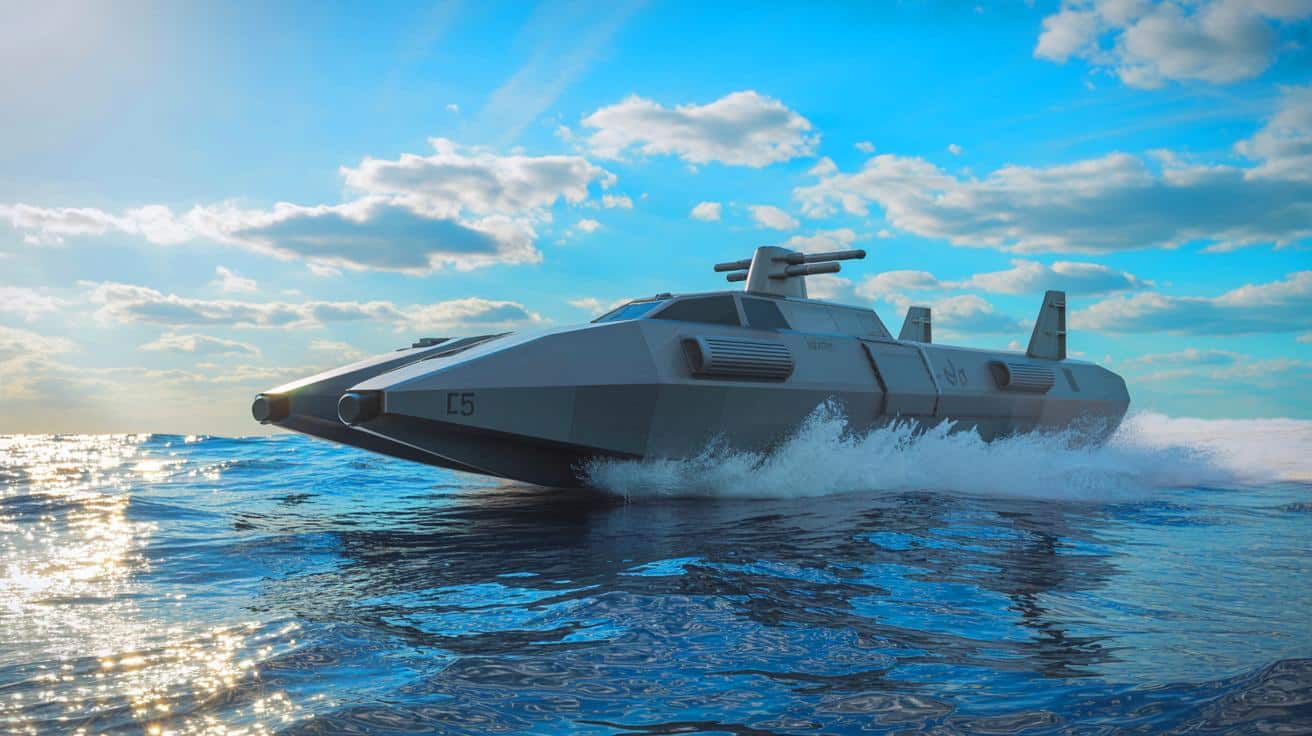
The unveiling of the AIRCAT Bengal MC represents a significant milestone in naval technology, offering a glimpse into the future of autonomous warfare. This state-of-the-art vessel, developed by Eureka Naval Craft in collaboration with Greenroom Robotics, introduces a new level of strategic flexibility and operational efficiency. As global tensions continue to escalate, advancements like the Bengal MC are crucial in maintaining a competitive edge in naval operations. The vessel’s ability to operate both autonomously and with a crew offers a versatile solution for modern navies looking to optimize their resources and capabilities.
Transforming Naval Warfare with Innovative Technology
The AIRCAT Bengal MC is not just another vessel; it marks a new chapter in autonomous warfare technology. Capable of carrying a payload of 44 tons, it can transport two 40-foot ISO footprint modules at speeds surpassing 50 knots. With a range of 1,000 nautical miles, this vessel can reach distant areas of operation without the need for frequent refueling stops. Its versatility is further enhanced by its ability to launch Tomahawk cruise missiles and Naval Strike Missiles, reducing the need for larger, more costly crewed warships. This makes the Bengal MC a valuable asset for navies across the globe.
The vessel targets major naval powers, including the US Navy and allies such as AUKUS and NATO countries. Nations like Singapore, Japan, South Korea, Vietnam, Thailand, and the Philippines could also benefit from incorporating this vessel into their fleets. Its autonomous operation capabilities and compatibility with advanced missile systems make it a powerful tool in contemporary naval warfare.
“Unstoppable Force Rising”: Lockheed’s Cutting-Edge Weapon Ignites U.S. Military Power Surge That Puts Russia On Edge Globally
https://africatimes.com/this-new-grokipedia-battle-exposes-elon-musks-bold-plan-to-crush-wikipedia-and-rewrite-who-controls-what-you-read-online/275/
Enhanced Lethality Through Missile Launch Systems
The ability of the Bengal MC to launch Tomahawk cruise missiles and anti-ship Naval Strike Missiles represents a significant shift in naval strategy. These capabilities allow for missions that were traditionally the domain of much larger vessels, thereby reducing costs and enhancing operational efficiency. The vessel introduces a fast, heavily armed alternative to outdated naval ships, disrupting the traditional market. Bo Jardine, CEO of Eureka Naval Craft, emphasizes the importance of such innovations in the current naval context.
This vessel is not solely about speed and firepower; it also enhances strategic flexibility and adaptability. The capability to carry heavier payloads at high speeds boosts the effectiveness of naval operations. The Bengal MC’s advanced autonomy features enable it to respond to threats with remarkable speed and precision, providing a significant tactical edge.
“This Feels Monstrous”: World’s First Octopus Farm Exposed as Scientists Warn of Unthinkable Ethical Disaster and Ecological Collapse
https://africatimes.com/new-ai-fighter-jet-terrifies-military-experts-this-unmanned-war-machine-reveals-shocking-future-of-combat/131/
Unmatched Efficiency and Versatility
The Bengal MC offers exceptional fuel efficiency and cost-effectiveness, making it an attractive option for budget-conscious navies. Its modular design allows it to perform multiple roles, from troop transport to electronic warfare and mine operations. This adaptability ensures it can be tailored to meet specific mission requirements, offering a customized solution for various maritime challenges.
Collaboration with Greenroom Robotics enhances the vessel’s capabilities with advanced autonomous navigation systems. This integration supports seamless operation across all mission phases, ensuring human operators are backed by cutting-edge technology. The Greenroom Advanced Maritime Autonomy Software system, rigorously tested, guarantees reliability and performance.
“This Feels Deeply Wrong”: Scientists Reel in Horror as First Octopus Farm Ignites Global Outcry Over Ethics and Environmental Devastation
https://africatimes.com/the-us-navy-reveals-autonomous-ships-that-terrify-every-nation-with-their-unstoppable-power-and-potential-threat/212/
Expanding Naval Fleets with Modular Design
The AIRCAT Bengal MC is part of a distinguished fleet designed for specialized missions, including fast attack and reconnaissance. Its modular design philosophy allows for customization, ensuring each vessel can be configured to meet the mission’s unique demands. This flexibility is crucial in an era where naval forces must be prepared to address diverse threats and opportunities.
Eureka Naval Craft’s commitment to innovation is reflected in its expanding fleet and strategic partnerships. The collaboration with Greenroom Robotics exemplifies a forward-thinking approach to maritime autonomy, setting a new standard for global naval operations. As the naval landscape evolves, the Bengal MC represents a bold advancement in military technology, offering strategic advantages that are difficult to overlook.
As the AIRCAT Bengal MC sets sail, it prompts critical questions about the future of naval warfare. How will autonomous technology reshape global naval strategies, and what challenges and opportunities will emerge as a result? These considerations will undoubtedly impact the next generation of military innovation and strategic planning.
Continue reading