


“America Just Fired Back”: Ursa Major’s New Hypersonic Engines Push the Talon-A Past Mach 5 (and China Is Watching Closely)
 By
Nomvula Dlamini
By
Nomvula Dlamini
| IN A NUTSHELL |
|
The aerospace industry is in the midst of a transformative period as significant developments unfold in hypersonic technology. Ursa Major, a U.S.-based aerospace company, has secured a $32.9 million contract to supply advanced H13 engines for Stratolaunch’s Talon-A hypersonic test vehicle. This collaboration represents a critical moment in the United States’ pursuit of maintaining its technological edge in hypersonic capabilities. As global powers such as China and Russia advance rapidly in this arena, the partnership between Ursa Major and Stratolaunch is vital. It serves not only as a business transaction but as an essential component of national defense strategy and technological supremacy.
Talon-A to Get New Engines
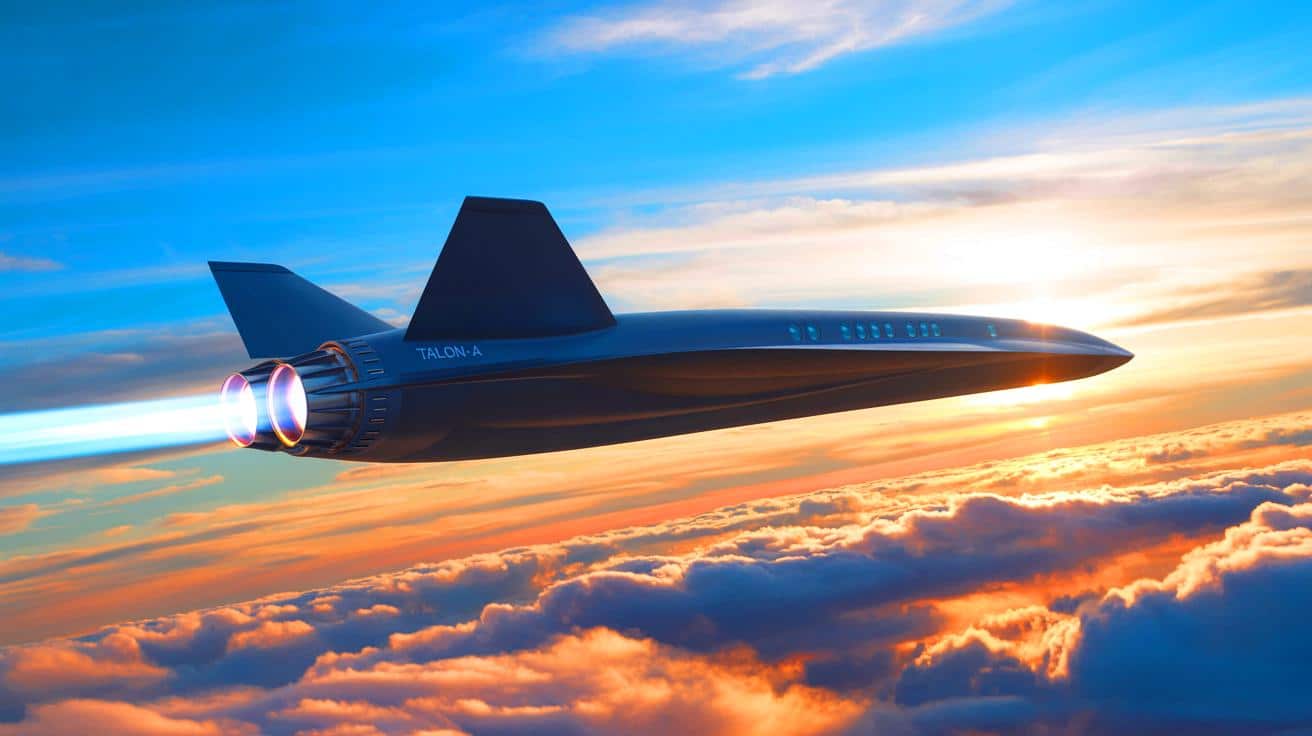
The Talon-A hypersonic test vehicle stands at the forefront of aerospace innovation. It is equipped with H13 engines provided by Ursa Major, making it a reusable vehicle capable of reaching speeds exceeding Mach 5. This capability positions it as an essential platform for testing military hypersonic technologies, a priority for the Pentagon. The Talon-A is launched from Stratolaunch’s massive carrier aircraft, which boasts an impressive wingspan, adding to the vehicle’s unique capabilities.
Recently, the Talon-A achieved its second successful Mach 5+ flight test. This milestone is pivotal for advancing hypersonic research and development. Dr. Zachary Krevor, President and CEO of Stratolaunch, stated, “With the data collected from this second flight, we are able to apply lessons learned to enhance the strength and performance of the Talon-A vehicles.” The new contract with Ursa Major aims to leverage these insights, enhancing propulsion systems for improved performance. This aligns with the U.S.’s strategic focus on hypersonic testing, especially as international competitors like China and Russia continue their advancements.
More Thrust, More Speed
Hypersonic testing is fraught with technical challenges and high costs, making reusable platforms like the Talon-A invaluable. The upgraded H13 engines are engineered to deliver more thrust – up to 5,000 lbf – and offer longer lifespans through oxygen-rich staged combustion. This efficient engine cycle, typically reserved for large space launchers, underscores the sophistication of Stratolaunch’s technology. These engines aim to reduce costs and increase test frequency, facilitating rapid advancements in hypersonic capabilities.
The collaboration between Ursa Major and Stratolaunch strategically enhances the U.S.’s hypersonic testing infrastructure. By providing advanced, cost-effective engines, the partnership seeks to accelerate the development of hypersonic weapons and defenses. This is imperative in a global context where speed and technological superiority are crucial.
Strategic Importance of Hypersonic Testing
This contract with Ursa Major is significant beyond its technological advancements. Hypersonic testing is crucial for national defense as it ensures technological superiority. As countries like China and Russia advance rapidly in hypersonic technology, it is vital for the U.S. to maintain its lead. The Talon-A, with its enhanced propulsion system, positions the U.S. as a leader in hypersonic research and development.
Dan Jablonsky, CEO of Ursa Major, emphasized the contract’s importance, stating, “This contract directly supports U.S. hypersonic test infrastructure and the broader imperative to accelerate high-speed flight programs that deliver for national security.” The collaboration focuses on providing real capabilities in the field, emphasizing speed and efficiency without sacrificing performance. This underscores the strategic importance of hypersonic testing in global defense dynamics.
The Future of Hypersonic Technology
The aerospace industry is poised for transformation as hypersonic technology continues to evolve. The Talon-A, equipped with advanced H13 engines, epitomizes the future of aerospace innovation. The partnership between Ursa Major and Stratolaunch illustrates the potential of public-private collaborations in enhancing national defense capabilities.
The emphasis on reusability and cost-effectiveness is vital as the U.S. seeks to maintain its competitive edge in the global hypersonic race. As these technologies advance, the potential for hypersonic vehicles in both military and civilian applications grows. The developments in the Talon-A project are just the beginning, paving the way for future innovations in aerospace technology.
The strides made in hypersonic technology with the Talon-A and the H13 engines represent a significant milestone in aerospace innovation. As the U.S. continues to prioritize hypersonic testing, the collaboration between Ursa Major and Stratolaunch sets the stage for future advancements. How will these developments influence the future of global defense and aerospace technology?
Continue reading