



China Reveals Shocking New Missile That Terrifies America And Destroys Global Balance: Immediate Threat To Your Security
 By
Nomvula Dlamini
By
Nomvula Dlamini
| IN A NUTSHELL |
|
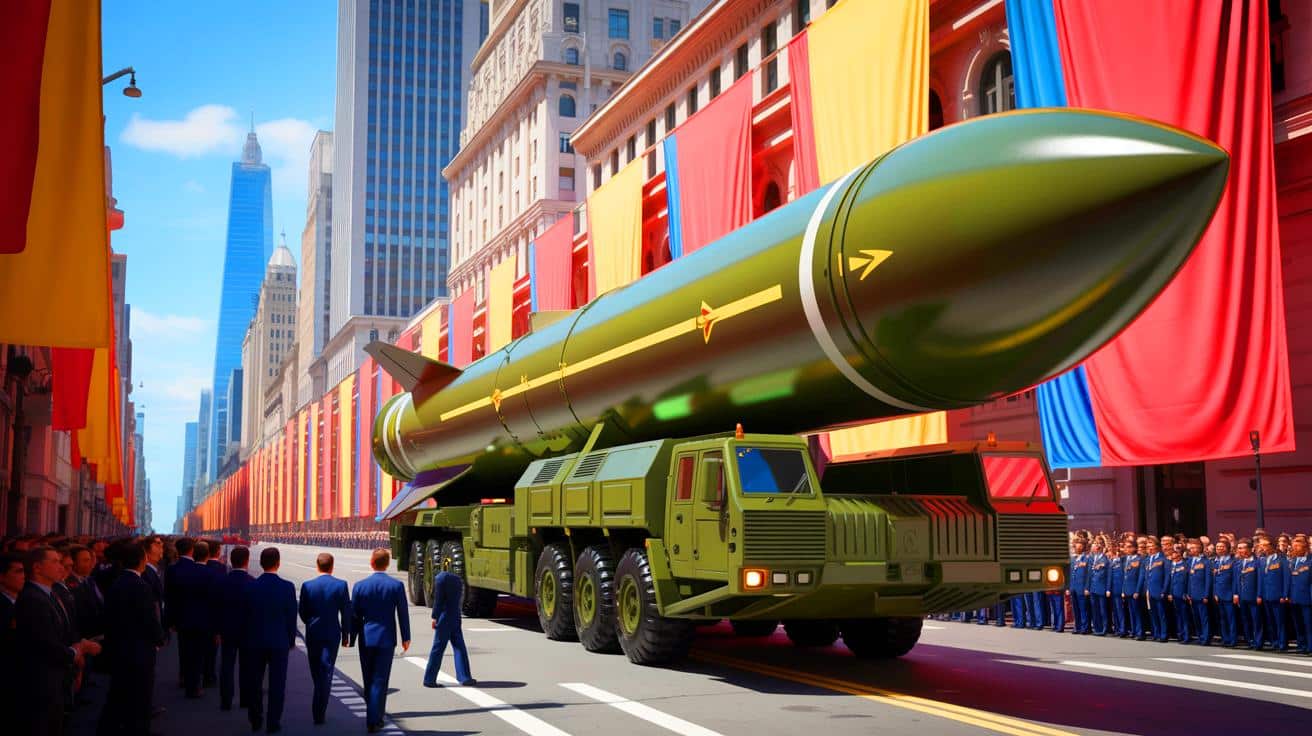
China’s recent unveiling of its Dongfeng-5C (DF-5C) intercontinental ballistic missile (ICBM) during a military parade has captured global attention, signaling potential shifts in the international nuclear balance. This development comes as China commemorates the 80th anniversary of Japan’s defeat in World War II, blending historical reflection with modern geopolitical messaging. The DF-5C, characterized by its hypersonic speed, extended range, and multiple warhead capabilities, suggests a more assertive Chinese posture in the global arena. As analysts scrutinize this display, the implications for global security and power dynamics remain a subject of intense debate and concern.
Technological Advancements in the DF-5C
The DF-5C represents a significant leap forward in China’s missile technology. Unlike earlier models in the Dongfeng series, this missile is a new design rather than a modification of existing systems. With a range exceeding 12,400 miles, the DF-5C surpasses its predecessors by a substantial margin, capable of reaching almost any global target. Its Multiple Independently targetable Reentry Vehicle (MIRV) payload allows it to deliver up to ten nuclear warheads simultaneously, posing a formidable challenge to multiple targets across different continents.
The missile’s advanced guidance system, which incorporates inertial navigation, celestial correction, and Beidou satellite positioning, enhances its accuracy and resistance to interception. These technological advancements make the DF-5C a formidable component of China’s strategic arsenal. Moreover, the missile’s mobility in three segments allows for rapid deployment, a stark contrast to earlier silo-based models. Although still reliant on liquid fuel, the DF-5C’s modular design reportedly reduces launch preparation times, enhancing its operational readiness.
Global Reactions and Strategic Messaging
China’s decision to publicly showcase the DF-5C was not an isolated event. The presence of Russian President Vladimir Putin and North Korean leader Kim Jong-un at the parade highlighted growing alignment among these nations amid strained relations with the West. The display seemed designed to assert China’s standing among the world’s nuclear powers, emphasizing both its capabilities and strategic messaging. U.S. Pentagon officials described the event as a strategic communication exercise, with implications for global security dynamics.
Despite Chinese officials reiterating their “no first use” policy, skepticism persists. Some experts argue that the technical specifications of the DF-5C suggest potential counterforce applications, targeting an adversary’s military and nuclear infrastructure rather than solely focusing on retaliation. This perception is compounded by China’s rapid expansion of missile silos, as observed through satellite imagery and open-source intelligence, indicating a possible shift in Beijing’s nuclear doctrine.
Implications for the Global Arms Race
The DF-5C’s introduction occurs amid accelerating nuclear modernization programs worldwide. The United States is upgrading its Minuteman III missiles, and Russia continues deploying its RS-28 Sarmat “Satan II” ICBM. Meanwhile, emerging technologies like hypersonic glide vehicles and AI-driven targeting systems are compressing response times and complicating strategic calculations. These developments contribute to a tense global arms race, where the introduction of advanced systems like the DF-5C heightens the stakes.
China’s overall nuclear arsenal remains smaller than that of the United States or Russia, with an estimated 500 warheads compared to over 5,000 for both. However, recent assessments by the Stockholm International Peace Research Institute (SIPRI) suggest that China is not merely modernizing but qualitatively enhancing its nuclear forces. The DF-5C exemplifies this trend, representing a strategic shift with potential implications for global security and stability.
Broader Context and Future Considerations
The unveiling of the DF-5C raises critical questions about China’s future role in the global nuclear landscape. As Beijing continues to develop its strategic capabilities, the international community must grapple with the implications for arms control and diplomatic engagement. The interplay between technological advancements, geopolitical alliances, and strategic doctrines will shape the future of global security dynamics.
In light of these developments, how should the international community respond to balance deterrence and diplomacy? The challenge lies in navigating a complex landscape where emerging technologies and shifting alliances redefine traditional notions of security and power. As nations grapple with these challenges, the path forward remains uncertain, prompting ongoing dialogue and strategic reassessment.