

Navi Pillay, ex-UN rights chief, wins Nobel Peace Prize
The 85-year-old South African jurist heard the news in Nuremberg, while the Nobel committee pointed to pressure on international law.
 By
Kwame Asante
By
Kwame Asante
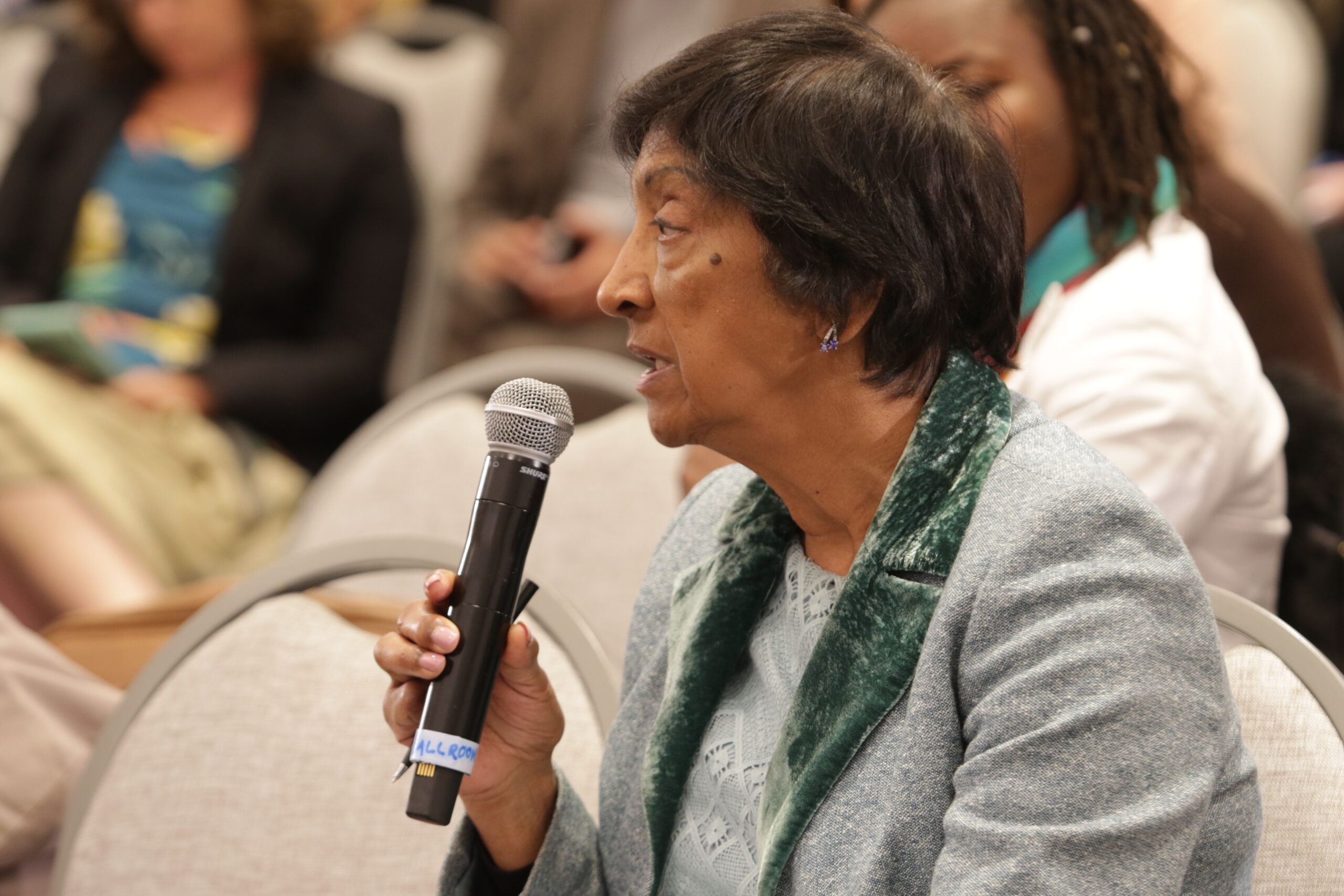
The Norwegian Nobel Committee announced in Oslo on Friday 9 October 2026 that the Nobel Peace Prize goes to Navanethem “Navi” Pillay, the 85-year-old South African jurist who once served as the United Nations high commissioner for human rights. The committee said it wanted to honour her work for international law at a time when that system is under heavy strain and the institutions that uphold it are being attacked.
In brief
- Pillay was not at home when the news broke.
- The commission was created by the UN-backed Human Rights Council.
- That is an opinion, not a measured effect, and none of the sources describe a concrete change in policy.
Pillay was not at home when the news broke. She was in Nuremberg, the German city where Nazi leaders stood trial after the Second World War, for a gathering of jurists and human rights lawyers. According to The Guardian, the committee had not been able to reach her before the announcement, and she heard the news from colleagues. She responded with disbelief, saying: “The question is: is it true? Being a lawyer and a judge, I still want to verify it.”
The committee chairman, Jorgen Watne Frydnes, described her work as “a source of hope and inspiration to all those who seek to bring about a more peaceful world”, in remarks reported by Braintree and Witham Times. He credited her with a decisive role in making sure that genocide, crimes against humanity and war crimes end up before the courts. Speaking at a press conference in Nuremberg, Pillay dedicated the award to “survivors of international crime”, RFI reported.
From apartheid courtrooms to the bench of the world court
The committee traced one line through her whole career: as a young advocate she defended Nelson Mandela and other opponents of apartheid, and later she sat as a judge in several of the landmark international cases of her time. As a young lawyer in South Africa, part of her work involved establishing rights for political prisoners held on Robben Island, among them Mandela. After apartheid ended, Mandela appointed her the country’s first non-white woman High Court judge.
She also headed the tribunal set up for the Rwanda genocide. In 1998 its judges convicted Jean-Paul Akayesu, who had been mayor of Taba, of genocide and of crimes against humanity. The human rights lawyer Yasmin Sooka said the judgment helped establish rape and sexual violence as weapons of war, calling it a historic breakthrough that placed the experience of survivors at the heart of international justice.
Pillay was also a judge at the International Criminal Court from 2003 to 2008, and the UN’s human rights chief from 2008 to 2014. She now sits as an ad hoc judge at the International Court of Justice in the genocide case against Myanmar. Such judges can be appointed by a country that has no national on the permanent bench, and Gambia, which launched the proceedings in 2019 when it accused Myanmar of committing genocide against the Rohingya minority, chose her.
The Gaza inquiry and a prize that is not neutral
The most contested part of her record is the UN Commission of Inquiry on the Occupied Palestinian Territory and Israel, which she chaired. The commission was created by the UN-backed Human Rights Council. Last year it found Israel responsible for genocide in Gaza, concluding that there was a specific intent to destroy the Palestinians living there, and it found that the Israeli president, prime minister and former defence minister had incited the commission of genocide. As France 24 and RFI note, the commission does not speak on behalf of the United Nations. Pillay said at the time that her team had shared “thousands of pieces of information” with ICC prosecutors.
Israel, which has refused to cooperate with the commission since it was established in 2021, rejects the findings. Its foreign ministry reacted to the prize by saying the award was a “grotesque weaponization” meant to legitimise “anti-Israel hatred and prejudice”. A senior Hamas official, Bassem Naim, called the award a message of hope for Palestinians. The UN said the prize was testimony to the value of human rights.
Asked about Gaza in Germany, Pillay said, “What’s happening there is genocide.” The committee itself was more careful. Frydnes told AFP that the report belongs to the commission, and that while the committee has great faith in her professionalism and integrity, the work is that of a UN inquiry. He added that it is for international courts to rule on whether genocide is taking place. In other words, the committee denied taking a stance on the question, and the finding remains the commission’s own.
The prize also lands in the middle of a dispute between the Trump administration and the ICC. According to the Braintree and Witham Times, Washington has placed sanctions on 13 people working for the court: leading prosecutors as well as nine judges, the court’s president Tomoko Akane among them. There are fears the court as a whole could be sanctioned. In Akane’s view, the recognition matters all the more now that the rule of law and the international legal order face such deep challenges.
Pillay herself turned to the subject with humour. “If you clap a little bit more I may share this prize with Trump,” she told the audience in Nuremberg, a reference to last year’s laureate, the Venezuelan opposition leader María Corina Machado, who gave her medal to Donald Trump. The committee has said the honour of being a laureate cannot be transferred.
What the award means in South Africa and across Africa
South African president Cyril Ramaphosa said the award gives the country a chance to celebrate what she has done for peace and human dignity, and the hope she has brought both at home and around the world. Edwin Cameron, a retired constitutional court justice, said it could help South Africans rethink, in a national conversation, the place their country holds in the region and on the continent. That is an opinion, not a measured effect, and none of the sources describe a concrete change in policy.
- African record: Before Pillay, four South Africans had won it: Nelson Mandela and Frederik de Klerk jointly in 1993, Desmond Tutu in 1984 and Albert Luthuli in 1960, which makes her the fifth. She is the second African woman honoured, after Kenya’s Wangari Maathai in 2004. Counting both people and organisations, Africa has now received the prize 11 times.
- Prize: a gold medal, a diploma and 12 million Swedish kronor, about $1.2 million.
- Ceremony: it will take place in Oslo on 10 December, the anniversary of the death of Alfred Nobel.
- Field: the committee received nominations for 287 candidates this year, just over a quarter of them organisations.
Featured image. Source: Wikimedia Commons, Navi_Pillay,_AGJA_member_and_Former_United_Nations_Commissioner_for_Human_Rights_(29508439277).jpg. Credit: Wayamo Foundation. License: CC BY-SA 2.0.