



“Power You Can’t See”: Pratt & Whitney’s F135 Engine Turns the F-35 Into a Stealth Powerhouse
 By
Joseph Mwangi
By
Joseph Mwangi
| IN A NUTSHELL |
|
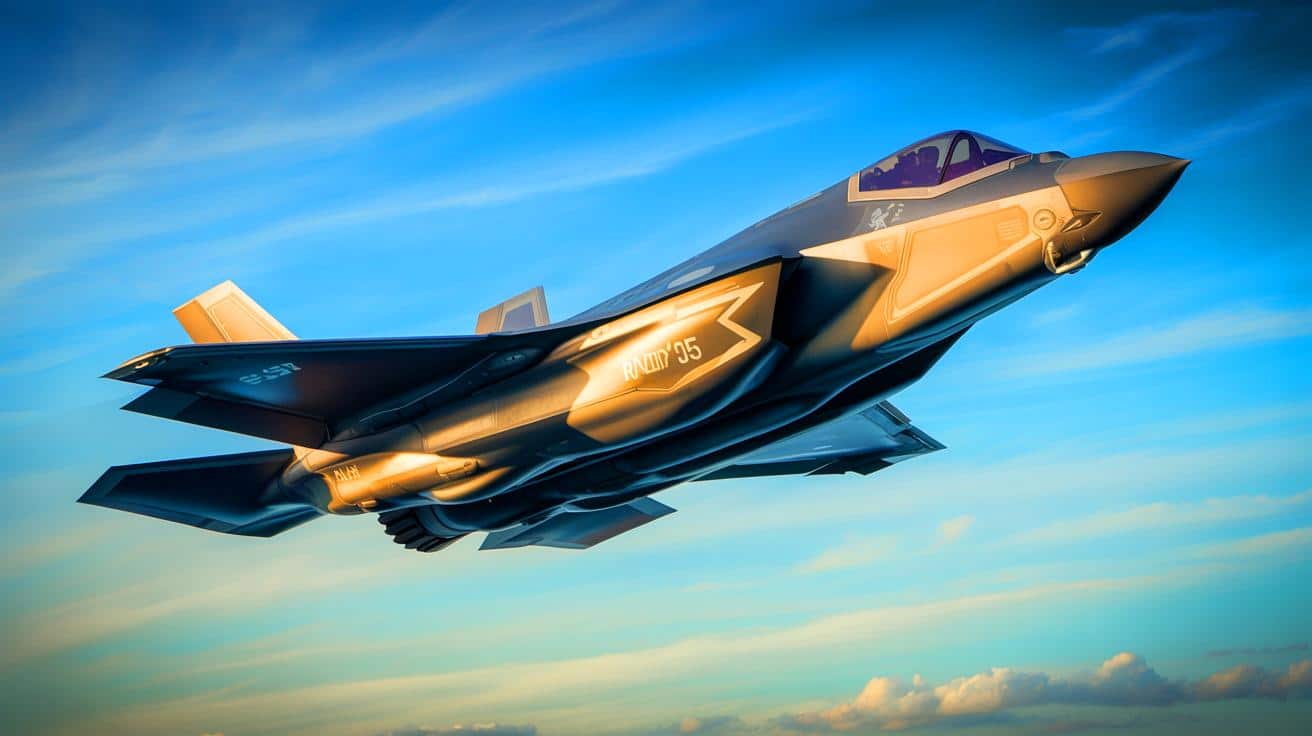
The aerospace industry is on the brink of a significant transformation as Pratt & Whitney embarks on a groundbreaking project involving the F135 engines for the F-35 Lightning II. This Connecticut-based company is set to introduce a new era of military aviation with an engine that promises unmatched capabilities in modern warfare. At the heart of this innovation is the F135’s ability to deliver over 40,000 pounds of thrust, equipping the F-35 with unparalleled performance. The engine’s remarkable low-observability feature provides a strategic advantage, ensuring mission success in the most challenging environments.
The Power of Low-Observability
In modern warfare, being unseen can be as crucial as being powerful. The F135 engine is at the forefront of this concept with its low-observability capabilities. As highlighted by Christopher K. Johnson, vice president for the F135 program at Pratt & Whitney, the engine’s design significantly reduces its radar signature. This feature allows operators to execute missions with minimal detection, which is crucial in today’s complex threat landscapes.
Beyond its stealth capabilities, the F135 integrates a cutting-edge thermal management system and an advanced engine control system. These technological components enhance the engine’s efficiency and performance, reinforcing its role as the “heartbeat” of the F-35. Such advancements reflect a broader trend in military engineering where innovation is not just about power, but also about strategic advantage and survivability.
Redefining Mission Capabilities
The F135 engine is reimagining military mission capabilities by offering superior performance in the most demanding threat environments. This aligns with the National Defense Strategy’s emphasis on air superiority. The engine’s 5th Generation attributes, which include increased power and enhanced thermal management, distinguish it from older generations and are essential for complex mission execution.
Pratt & Whitney’s commitment to these technological advancements ensures that the U.S. and its allies maintain a strategic edge in aerial combat. The F135’s integration into the F-35 platform exemplifies how cutting-edge propulsion systems are pivotal in redefining military tactics and capabilities. This strategic positioning is crucial as global military dynamics continue to evolve.
Strategic Advantage Over Adversaries
The F135 engine provides a significant strategic advantage by enabling operations in advanced anti-access/area denial environments. This capability supports the objectives outlined in the National Defense Strategy and highlights the engine’s role beyond sheer power. It allows the F-35 to operate in environments where traditional aircraft might fail, thereby maintaining operational effectiveness in diverse scenarios.
Moreover, the F135 program’s economic impact is substantial. It sustains over 67,000 jobs across the United States and involves 240 U.S. suppliers. In 2024, the program contributed over $9.1 billion to the economy, underscoring the dual benefits of technological innovation: enhancing military capabilities and boosting economic growth. These contributions reflect the broader significance of defense programs beyond their immediate military applications.
Focus on Sustainability and Reliability
Sustainability and reliability are at the core of the F135 engine’s design. With features like tri-variant commonality and an advanced digital health management system, the engine reduces operational costs while maintaining high mission capability rates. Since its first flight in 2006, the F135 has demonstrated exceptional reliability, a critical factor for military planners and operators.
The $2.8 billion contract for F135 engine production is poised to boost the production of F-35 jets, reinforcing the engine’s integral role in future military operations. This investment highlights the need for reliable and advanced propulsion systems in maintaining air superiority and operational readiness. As the F135 engine continues to evolve, its impact on military aviation and strategic planning will become even more pronounced.
As Pratt & Whitney advances in engine technology, the future of military aviation remains a topic of keen interest. How will these technological advancements shape global military strategies, and what new challenges will arise in the quest for superiority in the skies?
Continue reading