



China Reveals Revolutionary Autonomous Drone, Poised to Transform Anti-Submarine Warfare and Enhance Maritime Security
 By
Kwame Asante
By
Kwame Asante
| IN A NUTSHELL |
|
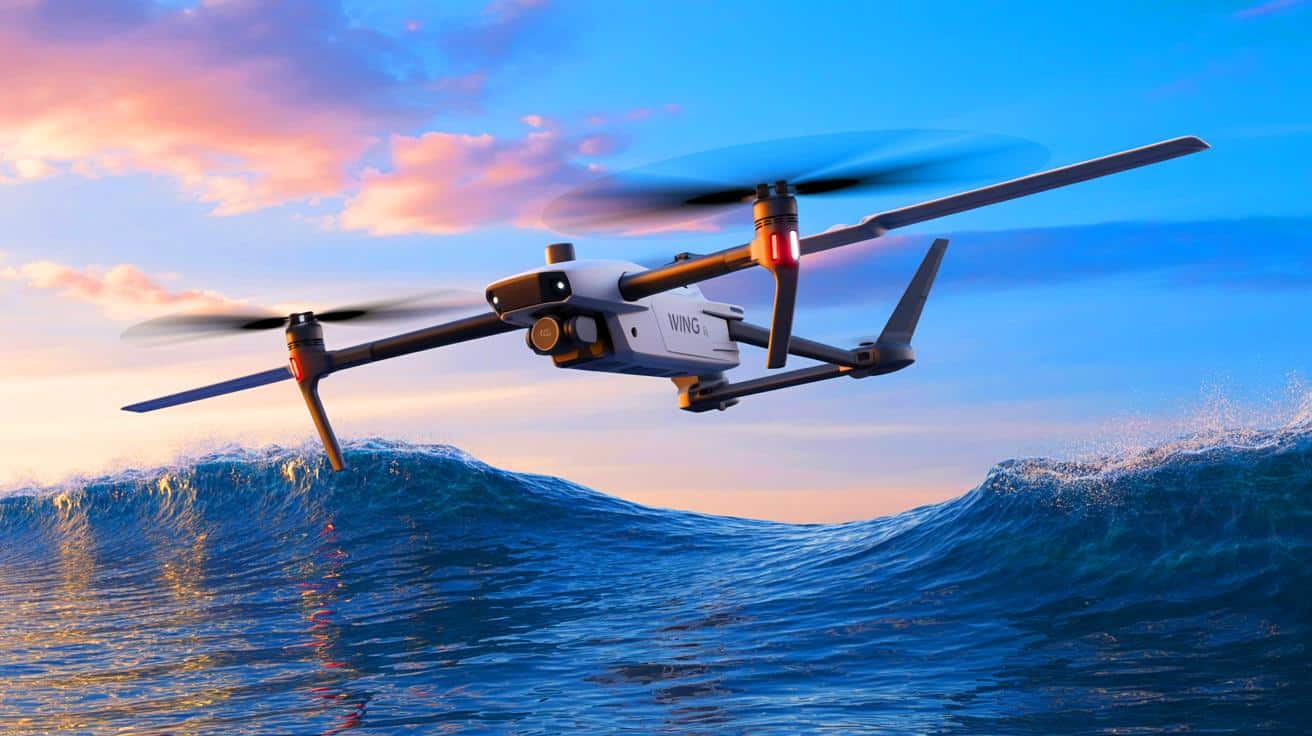
China’s unveiling of the Wing Loong X drone at the Dubai Airshow 2025 marks a pivotal moment in military technology, particularly for naval operations. This new autonomous drone, designed specifically for anti-submarine warfare, promises to transform the way nations engage in underwater combat. The Wing Loong X’s ability to autonomously detect and neutralize submarines could redefine maritime security, especially in disputed regions like the South China Sea. With its advanced capabilities, this drone represents a significant leap forward in unmanned military technology, potentially altering the dynamics of global naval power.
A New Era in Anti-Submarine Warfare
The deployment of the Wing Loong X comes at a time when anti-submarine warfare (ASW) is one of the most challenging aspects of military aviation. Detecting and engaging stealthy submarines requires advanced technology and precision, tasks traditionally handled by manned aircraft like the U.S. Navy’s P-8 Poseidon. These manned operations, however, are costly, require extensive training, and are limited by the physical endurance of the crew. The introduction of an autonomous solution could significantly reduce these limitations.
The Wing Loong X drone offers a groundbreaking alternative. It can operate independently for up to 40 hours, unlike manned aircraft, which are restricted by the need for crew rest and maintenance. With a wingspan akin to a small business jet, it is equipped to patrol extensive maritime areas. Its ability to fly at altitudes reaching 32,808 feet further enhances its surveillance capabilities, allowing it to monitor critical maritime chokepoints for longer periods. This endurance and operational range could give China a strategic advantage in maintaining continuous surveillance over contested waters.
Implications for Global Naval Power
The introduction of the Wing Loong X could have significant implications for global naval power dynamics. Autonomous drones like this may provide countries with the ability to maintain a constant presence in strategic maritime regions without the logistical constraints of manned aircraft. This capability is particularly crucial in areas like the South China Sea, where territorial disputes and military tensions are prevalent. The drone’s ability to operate autonomously reduces the need for human intervention, potentially lowering the risk of human error and increasing mission efficiency.
Moreover, the Wing Loong X’s development underscores China’s commitment to advancing its military technology. By investing in autonomous systems, China is positioning itself as a leader in modern warfare capabilities. This technological progression could prompt other nations to accelerate their own military innovations, potentially leading to a new era of arms development focused on autonomy and artificial intelligence.
Technological Leap in Military Aviation
The Wing Loong X represents a significant technological leap in military aviation. Its autonomous systems are designed to execute complex tasks without human control, highlighting a shift towards more advanced and self-reliant military hardware. This shift not only enhances operational efficiency but also reduces the risks associated with human-operated missions in hostile environments. The drone’s long endurance and high-altitude capabilities make it an ideal tool for prolonged surveillance and reconnaissance missions.
Furthermore, the drone’s introduction reflects a broader trend in military strategy: the increasing reliance on unmanned systems. As technology evolves, militaries worldwide are recognizing the advantages of drones in terms of cost efficiency, operational safety, and strategic flexibility. The Wing Loong X is a prime example of how these advancements are being integrated into national defense strategies, offering new possibilities for managing and conducting military operations.
Challenges and Considerations
While the Wing Loong X offers numerous advantages, its deployment also raises several challenges and considerations. The use of autonomous drones in military operations prompts questions about the ethical implications of reducing human involvement in combat scenarios. As these systems become more prevalent, the potential for unintended consequences or escalations in conflict must be carefully managed. Ensuring that autonomous drones operate within the bounds of international law and established military protocols is essential to prevent misuse.
Additionally, the introduction of such advanced technology could lead to an arms race in autonomous systems, with nations striving to match or surpass each other’s capabilities. This competition could drive rapid technological advancements but also increase tensions and the potential for conflict. Balancing technological innovation with strategic stability will be a critical challenge for the international community in the coming years.
The Wing Loong X drone represents a significant advancement in military technology, with the potential to reshape maritime security and naval warfare. As autonomous systems become increasingly integrated into military strategies, nations must navigate the complexities and challenges these technologies present. How will the global community address the ethical and strategic implications of autonomous military operations?
Continue reading