


“Navies Won’t Need Crews Anymore”: The AIRCAT Bengal MC Unleashes Autonomous Firepower With Tomahawk Missiles and 50-Knot Speed (It’s a Game-Changer)
 By
Nomvula Dlamini
By
Nomvula Dlamini
| IN A NUTSHELL |
|
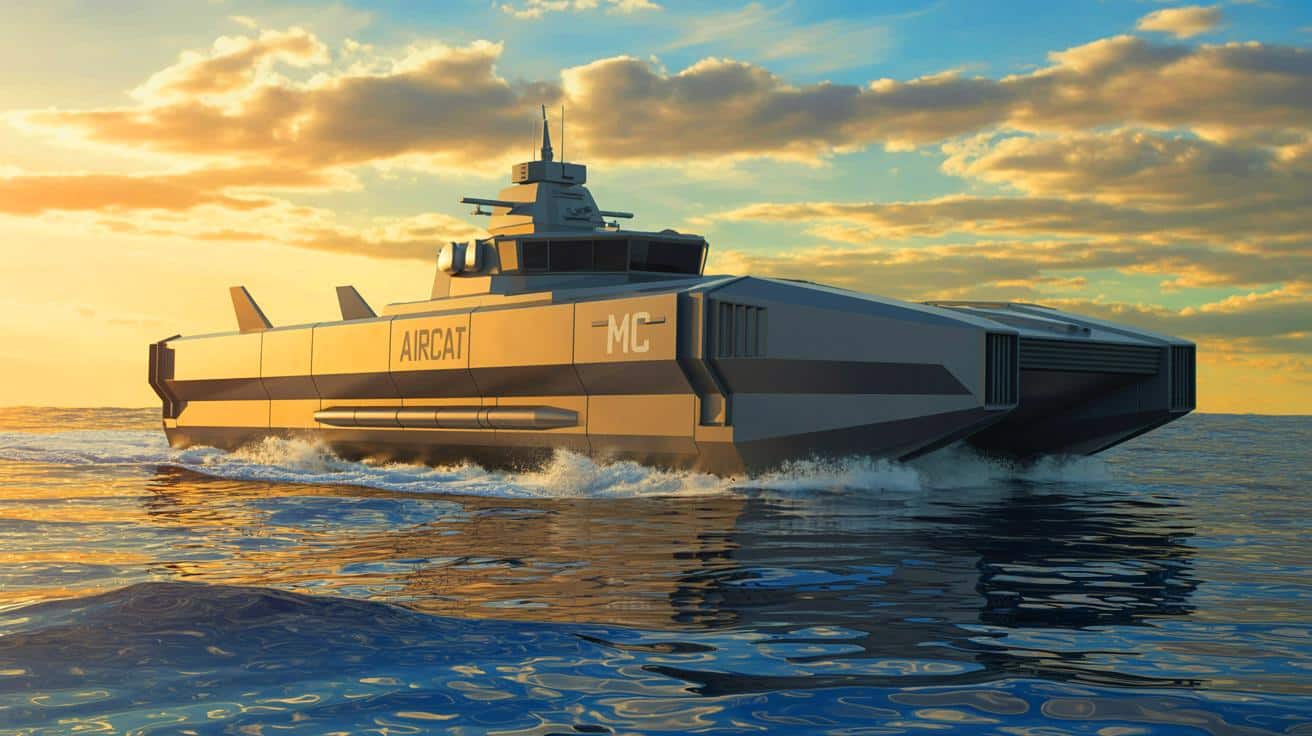
The launch of the AIRCAT Bengal MC symbolizes a pivotal shift in naval technology, introducing a vessel that marries autonomy with advanced combat capabilities. Born from a collaboration between Eureka Naval Craft and Greenroom Robotics, this Surface Effect Ship is engineered to adapt to both crewed and autonomous missions. This flexibility not only enhances operational efficiency but also reduces costs, making it an attractive option for global naval powers. As nations seek to maintain strategic dominance amid rising global tensions, the Bengal MC offers a glimpse into the future of naval warfare, where advanced technology and strategic innovation converge.
Revolutionizing Naval Warfare with Advanced Capabilities
The AIRCAT Bengal MC is a defining innovation in the realm of naval warfare. With a payload capacity of 44 tons, it can transport two 40-foot modules at speeds exceeding 50 knots, covering distances up to 1,000 nautical miles. Such capabilities enable the vessel to engage in operations far from home ports without needing frequent refueling. The incorporation of Tomahawk cruise missiles and Naval Strike Missiles enhances its offensive capabilities, reducing the need for larger warships. This makes the Bengal MC a strategic asset for major naval powers.
Targeted at navies like the US Navy and its allies, including AUKUS and NATO countries, the Bengal MC offers a formidable addition to any fleet. Countries in the Asia-Pacific region, such as Singapore and Japan, may also find its capabilities appealing. Its autonomous operation and compatibility with state-of-the-art missile systems position it as a leading force in modern naval strategy, capable of executing complex missions with precision and speed.
“Power You Can’t See”: Pratt & Whitney’s F135 Engine Turns the F-35 Into a Stealth Powerhouse
Enhanced Lethality with Missile Launch Capabilities
The Bengal MC’s ability to deploy Tomahawk and Naval Strike Missiles marks a significant advancement in naval strategy. By enabling missions traditionally requiring larger ships, the vessel offers cost savings and operational efficiency. Bo Jardine, CEO of Eureka Naval Craft, emphasizes the importance of such innovations in today’s naval landscape, where speed and firepower are crucial.
This vessel’s design is not merely about enhancing firepower; it’s about strategic flexibility. The capability to carry heavier payloads at high speeds boosts naval operations’ effectiveness. The advanced autonomy features allow the vessel to respond swiftly to threats, providing a tactical edge. The Bengal MC’s design and capabilities represent a shift in naval warfare, where smaller, faster, and more adaptable ships redefine power projection.
Unmatched Efficiency and Versatility
The Bengal MC stands out for its fuel efficiency and cost-effectiveness, attributes that are particularly appealing to budget-conscious navies. Its modular design allows it to serve diverse roles, from troop transport to electronic warfare. This adaptability ensures that the vessel can be customized to meet specific mission requirements, offering a tailored approach to maritime challenges.
Greenroom Robotics’ involvement adds cutting-edge autonomous navigation capabilities to the Bengal MC. This integration supports seamless operations throughout a mission, ensuring that human operators are backed by advanced technology. The Greenroom Advanced Maritime Autonomy Software system, tested rigorously, guarantees reliability, making the Bengal MC a dependable asset in any naval fleet.
Expanding the Fleet with Modular Design
The AIRCAT Bengal MC joins a fleet of specialized vessels, each crafted for distinct missions, from fast attack to high-speed troop transport. The modular design philosophy enables customization, ensuring that each vessel can be tailored to meet unique operational demands. This flexibility is essential in a world where naval forces must be agile and ready to face varied threats.
Eureka Naval Craft’s innovative spirit is reflected in its expanding fleet and strategic partnerships. The collaboration with Greenroom Robotics highlights a forward-thinking approach to maritime autonomy, setting new standards for naval operations worldwide. As the naval landscape evolves, the Bengal MC represents a significant leap forward in military technology, offering strategic advantages that are difficult to overlook.
As the AIRCAT Bengal MC enters service, it prompts critical questions about the future of naval warfare. How will autonomous technology reshape naval strategies globally, and what challenges and opportunities will emerge as a result? The answers to these questions will shape the trajectory of military innovation and strategic planning in the coming years.
Continue reading