


Rare Statue Reveals ‘Messi’ Mystery: Ancient Egyptian Artifact Stuns World With Unbelievable Family Details Hidden Inside
 By
Joseph Mwangi
By
Joseph Mwangi
| IN A NUTSHELL |
|
The recent discovery of a unique funerary statue at the Saqqara necropolis in Egypt has captivated the archaeological community. Unearthed by renowned archaeologist Zahi Hawass, this statue, dating back to the Fifth Dynasty, offers a rare glimpse into ancient Egyptian family dynamics and artistic expression. Unlike any other statues from the Old Kingdom, it depicts a nobleman, possibly named Messi, with his wife and daughter, each rendered with remarkable detail and symbolism. This discovery not only enriches our understanding of ancient Egyptian art but also underscores the cultural importance of family in this ancient civilization.
The Discovery of the Messi Statue
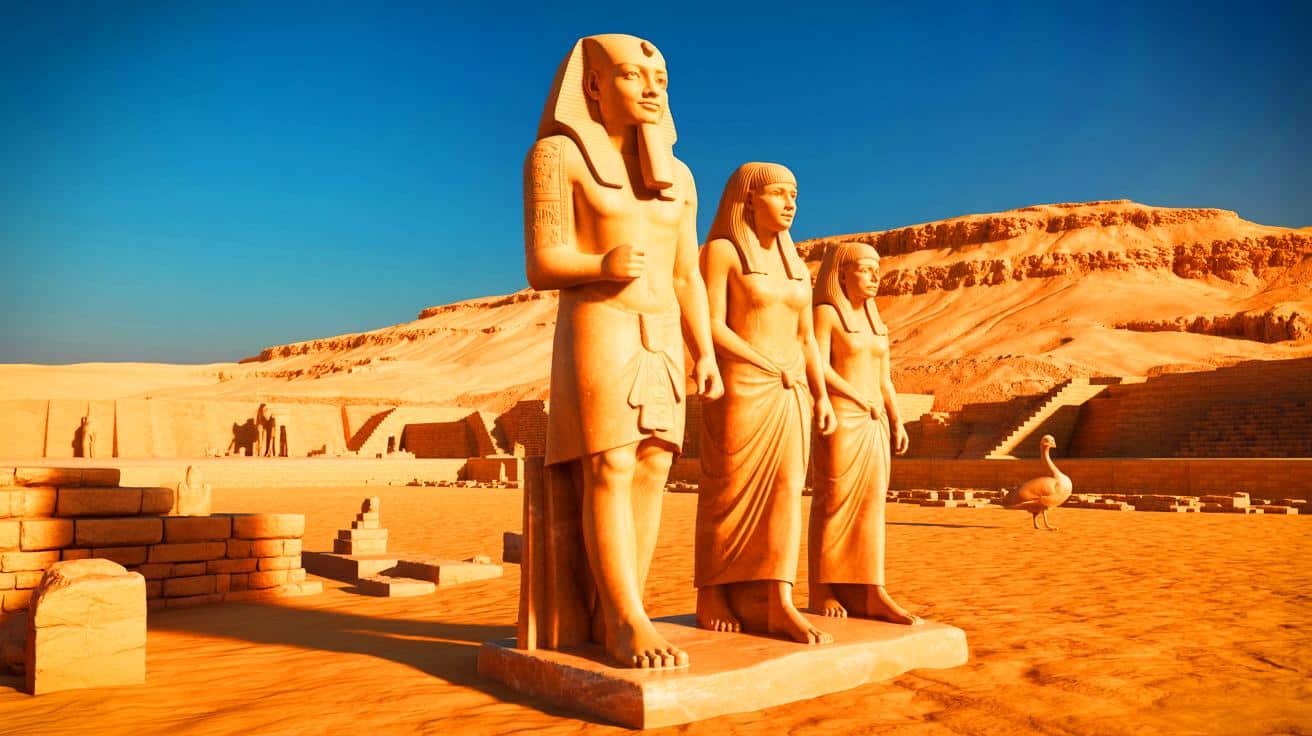
In the expansive burial grounds of Saqqara, a site renowned for its historical treasures, Zahi Hawass and his team made a groundbreaking find in 2021. A funerary statue, carved from limestone and measuring just over 40 inches, emerged from the sands, portraying a nobleman with an advancing left foot. This pose signifies youth and vitality, embodying the essence of life and strength. Beside him stand his wife and daughter, with the daughter clutching a goose, a detail that bridges the realms of daily life and the afterlife.
The statue’s unique style and structure distinguish it from other artifacts of the era. The nobleman’s prominent stance and his family’s presence suggest a portrayal of unity and familial bonds transcending death. The inclusion of the goose, a symbol commonly found in tomb art, reinforces themes of sustenance and continuity, inviting viewers to reflect on the intricate beliefs of the ancient Egyptians regarding life beyond death.
A Family Portrait From Ancient Egypt
The Messi statue is a rare artistic endeavor that goes beyond the individual to capture the essence of a family. The wife is depicted affectionately holding the nobleman’s right leg, while their daughter holds his left leg, balancing a goose in her other hand. This portrayal is not mere decoration; it reflects the deeply rooted cultural values of family connections and the hope for reunification in the afterlife.
As Zahi Hawass noted, “The statue may symbolize a connection with family, suggesting that they will reunite in the afterlife, as they did in life.” This statement underscores the statue’s role as a visual narrative of enduring familial ties, a theme prevalent in ancient Egyptian art. The goose, a symbol of daily life, further emphasizes the importance of these bonds, offering a poignant insight into the values that shaped this civilization.
Here’s The Discovery That Shatters Everything You Know About Humanity’s First Home Outside Africa
An Unparalleled Artistic Discovery
The artistic style of the Messi statue sets it apart as an unparalleled discovery in the realm of Egyptian art. Combining full three-dimensionality with high-relief carving, this piece challenges conventional artistic norms of the Old Kingdom. Typically, statues from this period featured either full three-dimensional forms or high-relief designs, but the fusion of both techniques in a single piece reflects a significant innovation.
Hawass remarked, “The discovery of this statue is unparalleled in the field of Egyptian art.” This statement highlights the artist’s experimental spirit, merging two sculptural traditions to create a piece that reshapes our understanding of the Fifth Dynasty’s artistic capabilities. The statue’s unique blend of styles not only demonstrates the ancient Egyptians’ artistic skill but also invites modern audiences to rethink the boundaries of ancient artistry.
The Legacy of the Statue and Its Significance
Beyond its artistic merit, the Messi statue holds significant historical and cultural importance. Found in Saqqara, a site steeped in ancient Egyptian history, the statue adds a new dimension to the narrative of funerary art. The presence of a false door near the statue, inscribed with the name “Messi,” suggests the nobleman’s prominence and the careful construction of his tomb to reflect his status.
False doors, common in Egyptian tombs, were believed to allow the spirit of the deceased to move between the worlds of the living and the dead. The inscription of “Messi” on the false door provides a personal connection to the statue, offering clues about the nobleman’s identity and his role in society. This discovery not only enriches the archaeological record but also deepens our understanding of the social and cultural dynamics of ancient Egypt.
Reflections on Old Kingdom Art and Family Representation
The Messi statue offers a window into the values and beliefs of ancient Egyptian society, particularly concerning family and the afterlife. Statues like this one were more than mere artistic expressions; they served as enduring representations of the deceased and their loved ones, maintaining a connection with the living world.
The depiction of the nobleman as larger than life, alongside the smaller figures of his wife and daughter, reflects the hierarchical nature of Egyptian art, where size often denoted importance. As Hawass explained, “Size often equaled importance in ancient Egyptian artwork.” This artistic choice underscores the nobleman’s central role within his family and society, highlighting the cultural emphasis on status and familial bonds.
The discovery of the Messi statue at Saqqara opens new avenues for understanding the complexities of ancient Egyptian art and family dynamics. As we delve deeper into the lives of those depicted in such artifacts, we are left to ponder: What other secrets about ancient Egyptian society remain hidden beneath the sands, waiting to be uncovered?