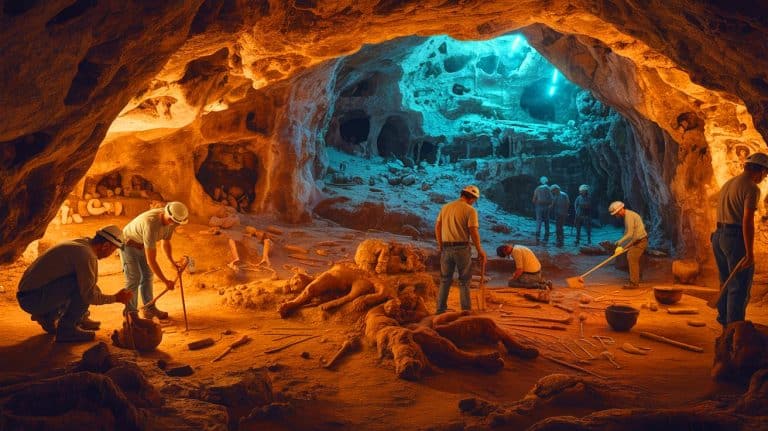



Here’s The Discovery That Shatters Everything You Know About Humanity’s First Home Outside Africa
 By
Kwame Asante
By
Kwame Asante

| IN A NUTSHELL |
|
The journey of Homo sapiens out of Africa is a pivotal chapter in human history. Approximately 60,000 to 70,000 years ago, early humans embarked on an epic migration that would shape the course of human development. Despite the significance of this event, many details remain elusive. Recent scientific advancements have illuminated parts of this ancient journey, offering new insights into the paths taken by our ancestors. By examining genetic evidence and ecological models, researchers have pieced together a clearer picture of the initial migration routes and the regions that served as crucial waypoints.
Tracing the First Migrations Out of Africa
Recent findings suggest that the migration of Homo sapiens from Africa into Eurasia was not a straightforward process. Fossil and archaeological evidence indicates multiple waves of migration, spanning the late Middle Pleistocene to the Upper Pleistocene. These early migrations left genetic imprints on Neanderthals, signifying interactions as humans spread across Eurasia. Initial migrations likely faced significant challenges, including population contractions and extinctions. However, a significant wave between 70,000 and 60,000 years ago eventually resulted in the successful colonization of Eurasia by the ancestors of all modern non-Africans.
By approximately 45,000 years ago, a stable and widespread colonization of Eurasia had been established. This was facilitated by population expansions and technological advancements in stone tool-making. Notably, there is a temporal gap of about 20,000 years between the initial exodus from Africa and the stable colonization of western and eastern Eurasia. Despite these findings, the exact geographical and genetic characteristics of these early populations remain largely unknown, leaving much to be explored in future research.
The Persian Plateau: A Crucial Hub for Early Humans
Recent studies suggest that the Persian Plateau played a vital role as a hub for early Homo sapiens during the initial phases of Eurasian colonization. Genetic evidence and paleoecological models point to the plateau as a significant center of human activity. Populations in this region carry ancestral components closely linked to those who initially settled outside Africa. The Persian Plateau, located east of the Zagros Mountains in modern Iran, Afghanistan, and Pakistan, was bordered by the Caspian Sea, the Persian Gulf, and the Mediterranean, making it an ideal base for human development.
The plateau could support larger populations than other areas in West Asia, enhancing its strategic importance. Additionally, its geographic position made it a prime launching point for successive waves of migration. It is believed that the Persian Plateau may have served as a home for our ancestors for around 20,000 years, providing refuge and development opportunities before their dispersal across and beyond Eurasia. Other transitional environments in West and Central Asia also played crucial roles, offering resources and diverse habitats that facilitated human settlement and adaptation to varying climates.
The Role of Transitional Environments in Human Migration
Transitional environments, such as the Persian Plateau, were not the sole contributors to early human migration. Strategic regions throughout West and Central Asia also served as key passageways and refuges. These areas offered a range of resources and habitats, making them suitable for temporary human settlements. They provided critical support for small groups of Homo sapiens, facilitating adaptation to the diverse climates encountered during their Eurasian journey.
These environments played an essential role in the gradual expansion and survival of early humans. By offering a variety of resources and conditions, they enabled Homo sapiens to thrive in new habitats, ensuring their continued progress across the continent. The study of these regions highlights their fundamental impact on human history, underscoring the importance of ecological diversity in the successful migration and adaptation of early human populations.
Advancements in Understanding Human Migration
Recent research published in reputable scientific journals has shed light on previously unknown aspects of early human migration. By integrating genetic data and ecological modeling, scientists have improved our understanding of the routes and environments that shaped human history. These studies emphasize the interconnectedness of genetics, ecology, and archaeology in reconstructing the complex narrative of human migration.
As we uncover more about our ancestors’ journeys, we gain valuable insights into the adaptability and resilience of Homo sapiens. The ongoing exploration of ancient migration patterns not only enriches our understanding of the past but also informs our perspectives on human development and cultural evolution. As research continues, what new revelations will emerge about the paths our ancestors took in shaping the modern world?
Continue reading