



This Shocking Discovery Reveals Hidden Secrets That Shatter Everything We Know About Human Migration From Africa
 By
Kwame Asante
By
Kwame Asante
| IN A NUTSHELL |
|
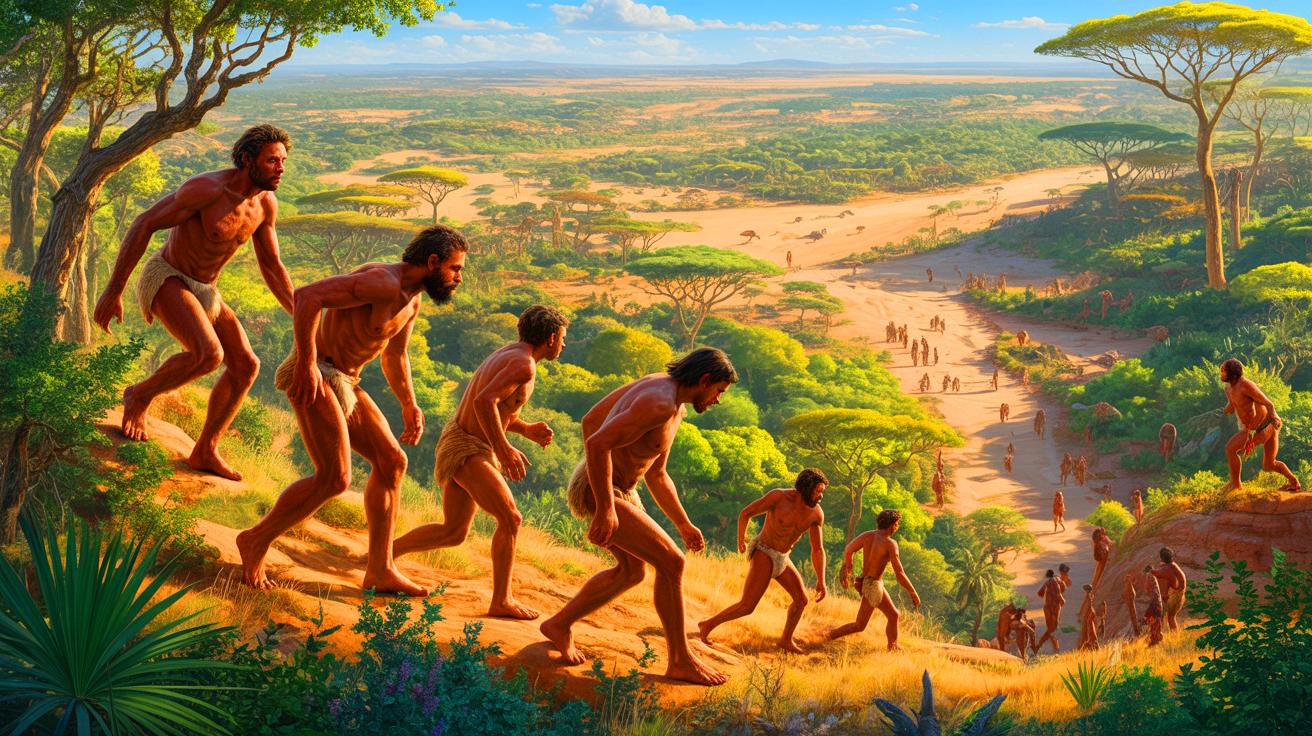
Recent research has surfaced intriguing insights into the historical migration of Homo sapiens from Africa around 50,000 years ago. The study proposes that a significant ecological adaptability emerged among early humans nearly 70,000 years ago. This adaptation enabled them to thrive in increasingly extreme environments, ultimately facilitating their migration across the globe. Published in the journal Nature, this study challenges previous notions regarding human migration patterns and the factors that contributed to the successful spread of modern humans from Africa to other parts of the world.
The Enigma of Early Migrations
The origins of Homo sapiens trace back to Africa over 300,000 years ago. Yet, the genetic lineage of non-African populations today appears to stem from a singular exodus about 50,000 years ago. This raises questions about why earlier waves of migration, some dating back 270,000 years, have left no genetic imprint on current populations. To delve into this mystery, an international team of researchers examined African archaeological remains from 120,000 to 14,000 years ago. By analyzing climate conditions, vegetation, and resource availability over time, they mapped out human habitats spanning tens of thousands of years.
The findings suggest that earlier migrations were unsuccessful in part due to environmental factors and limited adaptability. The study highlights how climate changes and environmental challenges may have restricted previous migratory attempts, setting the stage for the more successful migration that occurred 50,000 years ago.
Adapting to Varied Environments
One of the most striking revelations of the study is that modern humans began inhabiting diverse environments much earlier than previously thought. Starting around 70,000 years ago, Homo sapiens ventured into dense African forests, arid northern deserts, and regions with significant temperature fluctuations. These areas were once believed to be uninhabitable for early humans.
Emily Hallett, an archaeologist at Loyola University Chicago and co-author of the study, notes, “Humans have been successfully living in challenging habitats for at least 70,000 years.” This ecological flexibility allowed Homo sapiens to survive, migrate, and eventually settle across all continents – from the Australian outback to the Arctic tundra. The ability to adapt to a variety of environments was crucial for human expansion and survival, marking a significant evolutionary advantage.
The Generalist Advantage
According to Andrea Manica, an evolutionary ecologist at the University of Cambridge, Homo sapiens became the “generalist par excellence,” capable of thriving in increasingly extreme conditions. This adaptability was crucial for settling in unknown, often hostile territories such as the icy steppes of Eurasia or the tropical forests of Southeast Asia. However, this transformation was not solely due to a single technological innovation or genetic mutation.
Michela Leonardi, an evolutionary biologist and co-author of the study, suggests that a complex interplay of factors contributed to this adaptability. These included expanding inhabited territories, increased cultural exchanges between groups, and improved dissemination of ideas, such as tools or hunting strategies. Thus, humanity’s success was not just biological adaptation but also a collective ability to cooperate, innovate, and share knowledge.
Insights Into Human Evolution
This research not only sheds light on human migration out of Africa but also provides a broader understanding of the Homo genus’s history. Neanderthals, Denisovans, and Homo erectus, who left Africa long before Homo sapiens, likely had to expand their ecological range to survive. However, they did not develop the same level of flexibility as Homo sapiens, which might explain why modern humans are the only species to have conquered every corner of the globe.
The study suggests that the unique ecological adaptability of Homo sapiens gave them a competitive edge over other hominin species. This adaptability allowed them to exploit a wide range of environments and resources, ultimately contributing to their survival and dominance across the planet.
The Timing of Ecological Shifts
A lingering question is why this ecological shift occurred around 70,000 years ago. Although the study does not provide a definitive answer, Eleanor Scerri, an evolutionary archaeologist at the Max Planck Institute, hypothesizes that environmental pressures played a critical role. Shrinking habitats in Africa may have forced early humans to explore new, sometimes hostile environments, leading to the necessity-driven adaptability that characterized Homo sapiens.
This situation highlights how necessity and environmental challenges can drive evolutionary changes, leading to new survival strategies and innovations. The study underscores the importance of adaptability in human evolution and the role of environmental factors in shaping human history.
As we continue to uncover the complexities of human evolution, the question remains: How will our ability to adapt to changing environments influence our future survival and development as a species?
Continue reading