



Prehistoric Shark Discovery Reveals Ancient Predator Predating Megalodon by 15 Million Years, Changing Ocean History
 By
Nomvula Dlamini
By
Nomvula Dlamini
| IN A NUTSHELL |
|
A recent discovery of ancient shark vertebrae along the coastline near Darwin, Australia, has unveiled a remarkable chapter in the evolutionary history of sharks. This massive prehistoric predator existed 115 million years ago, predating the famous megalodon by 15 million years. As researchers delve into the past, they are uncovering new insights about the evolutionary journey of these apex predators, offering a fresh perspective on the marine ecosystems of the Cretaceous period. The findings challenge previous assumptions about shark evolution and hint at the resilience and adaptability of these ancient creatures.
The Ancient Mega-Predator of the Cretaceous Period
The discovery of vertebrae on the coast near Darwin has shifted the narrative of shark history. These vertebrae, belonging to a colossal predator, suggest that mega-predatory sharks roamed the oceans long before the renowned megalodon. Scientists have traced these fossils back to the Cretaceous period, a time dominated by large marine reptiles such as plesiosaurs and ichthyosaurs. The shark, identified as part of the Cardabiodontidae family, represents the earliest known member of the modern shark lineage.
“This pushes the time envelope back of when we’re going to find absolutely enormous cardabiodontids,” said Benjamin Kear, the senior curator in paleobiology at the Swedish Museum of Natural History and one of the authors of the study.
The emergence of cardabiodontids 15 million years earlier than previously thought could significantly alter our understanding of shark evolution and their dominance in marine ecosystems. Initially found in the 1980s and 1990s, these vertebrae were stored away until researchers reevaluated them using modern analytical techniques. Measuring about 4.7 inches across, the vertebrae have provided crucial information about the size and nature of this ancient predator.
“The importance of vertebrae is they give us hints about size,” Kear explained. “If you’re trying to scale it from teeth, it’s difficult. Are the teeth big and the bodies small? Are they big teeth with big bodies?”
The Evolutionary Success of the Prehistoric Shark
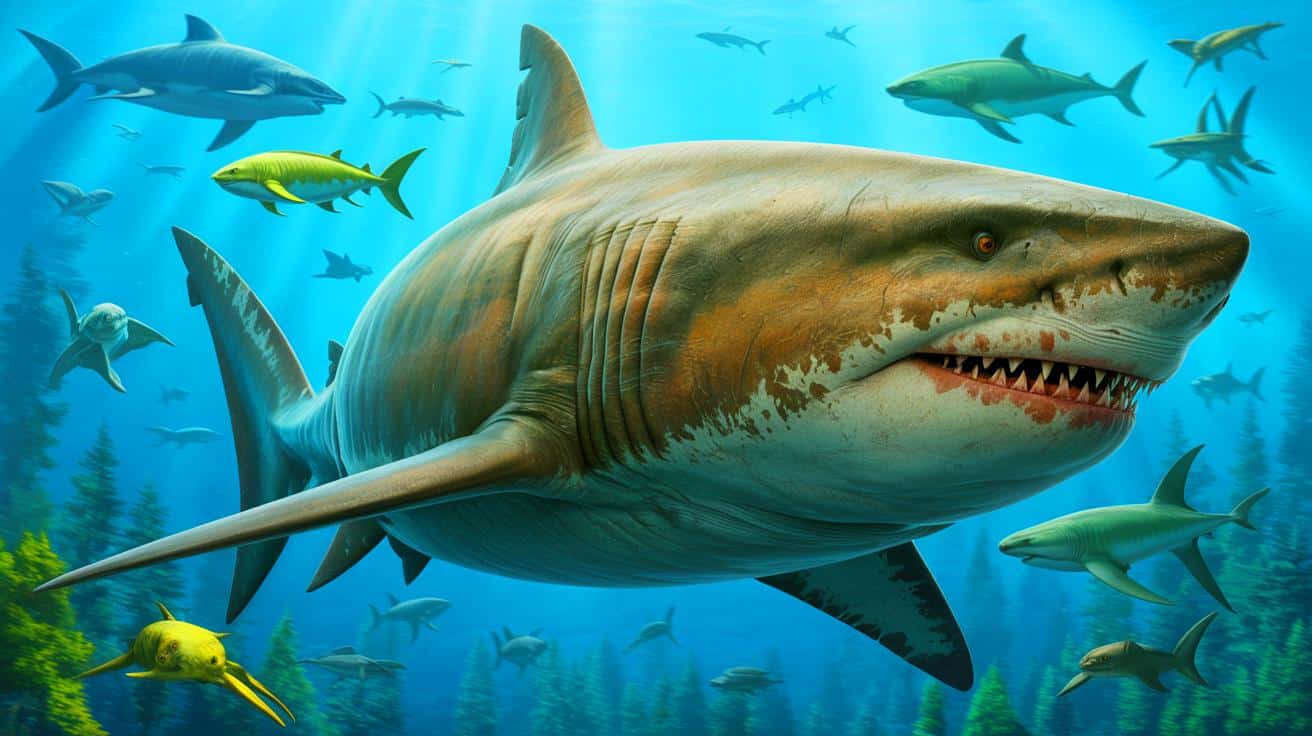
The discovery highlights the evolutionary success of ancient sharks. Unlike many prehistoric species, sharks have survived numerous mass extinctions and evolved into the apex predators we recognize today. The cardabiodontids, believed to be ancestors of the modern great white shark, were already enormous 115 million years ago. At that time, most of their predecessors were much smaller, roughly three feet in length.
“It would’ve looked for all the world like a modern, gigantic shark, because this is the beauty of it. This is a body model that has worked for 115 million years, like an evolutionary success story,” Kear remarked.
Examining the fossils with advanced technologies such as CT scans and mathematical modeling, scientists reconstructed the size and shape of these ancient sharks. Estimated to be up to 26 feet long, these predators far surpassed their smaller ancestors and ranked among the largest of their time. Their considerable size and predatory prowess would have established them as rulers of the seas long before the megalodon emerged.
Understanding Ancient Ecosystems and Modern Implications
The discovery of these ancient sharks offers invaluable insights into prehistoric ecosystems and their relevance to modern marine environments. By studying ancient species, scientists aim to learn how sharks and other organisms have adapted to significant changes in climate and biodiversity.
“By looking at what happened during past shifts in climate and biodiversity, we can get a better sense of what might come next,” Kear said.
Understanding the early evolution of modern sharks and their dominance in ancient food chains may provide clues about how contemporary species will respond to ongoing environmental challenges, including climate change and ocean acidification. The research underscores the importance of preserving marine ecosystems today to avoid triggering extinctions similar to those in the past.
Implications for Future Research and Conservation
This groundbreaking discovery has significant implications for future research and conservation efforts. By expanding our knowledge of shark evolution, scientists can better understand the factors that contributed to their survival and adaptation over millions of years. This insight is crucial as modern sharks face numerous threats, including overfishing, habitat loss, and climate change.
Conservationists can use this information to develop strategies aimed at protecting shark populations and ensuring their continued existence. Understanding the evolutionary history of these apex predators can also inform broader efforts to preserve marine biodiversity and maintain healthy ocean ecosystems.
As researchers continue to unravel the mysteries of the ancient past, they are left with questions about what other secrets the fossil record holds. What further discoveries await that could reshape our understanding of the natural world and its history?
Continue reading