


“Everything Is Starting to Collapse”: Scientists Warn Coral Reefs Have Hit a Climate Tipping Point (And We May Be Next)
 By
Joseph Mwangi
By
Joseph Mwangi
| IN A NUTSHELL |
|
A recent discovery has captured the attention of the global gold industry: a massive gold ore deposit unearthed in China’s Hunan province. This “supergiant” deposit, located under the Wangu gold field, has the potential to redefine the landscape of precious metal deposits worldwide. With estimates suggesting a staggering 1,100 tons of high-quality gold, this find could be the largest of its kind. As experts and miners delve deeper into the implications of this discovery, the global economic and environmental impacts are being closely scrutinized.
Unveiling the Supergiant Deposit
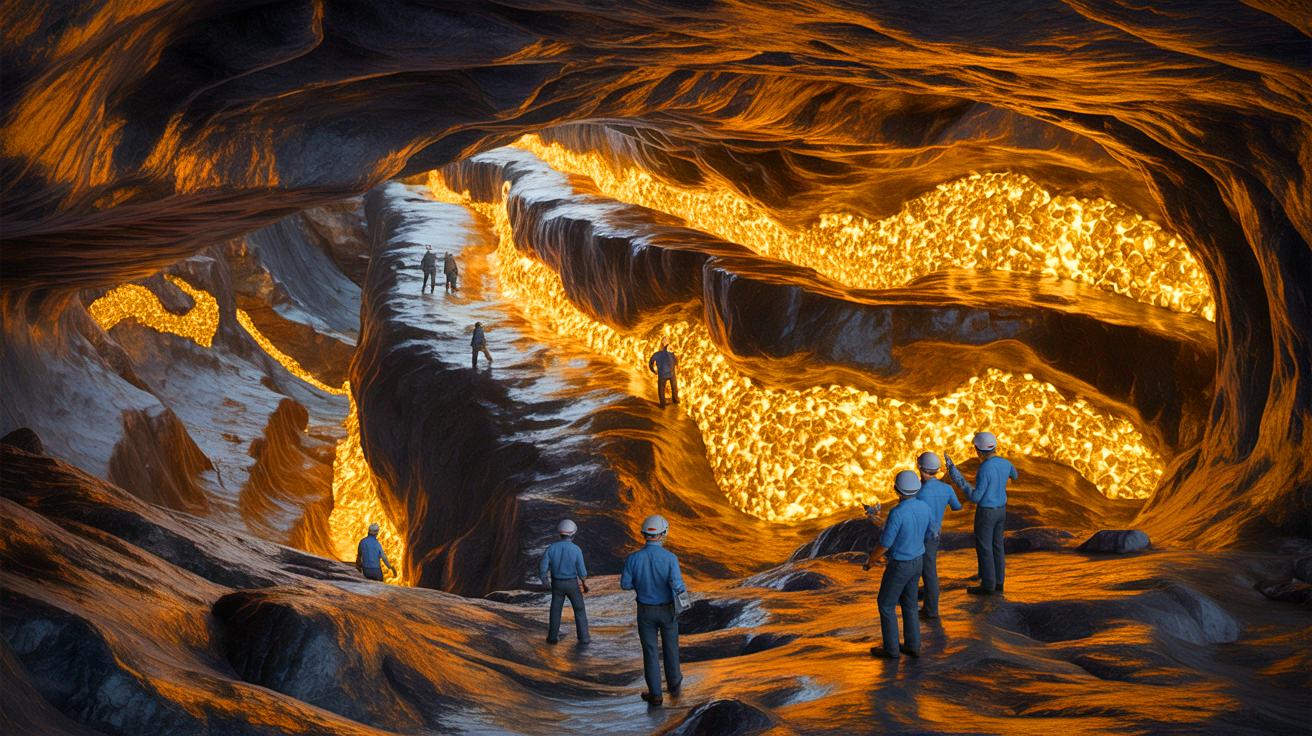
The discovery of this “supergiant” gold deposit beneath the Wangu gold field in Hunan province has sent shockwaves through the mining industry. Experts estimate the deposit contains approximately 1,100 tons of gold. Chinese state media reports have highlighted the presence of over 40 gold veins, collectively holding around 330 tons of gold ore. These veins extend as deep as 6,600 feet below the surface. However, advanced 3D modeling suggests the deposit could stretch even further, reaching depths of 9,800 feet.
The potential value of this discovery is immense. If the 3D models prove accurate, the entire deposit could be worth an estimated $83 billion. Such figures have significant implications for both China’s economy and the broader global gold market. As the largest gold producer in the world, China’s newfound reserves may alter its role from a major importer to a more self-sufficient entity in terms of gold production.
Comparisons with Global Giants
If confirmed, this discovery could establish the Hunan province deposit as the largest gold mine globally, surpassing South Africa’s renowned South Deep gold mine, which holds 1,025 tons of gold. Other major gold mines, including those in Indonesia, Russia, New Guinea, and Chile, fall slightly behind in terms of volume. Notably, the United States’ Carlin Trend and Cortez mines in Nevada rank sixth and tenth worldwide, respectively.
The discovery’s significance is underscored by the historical context of gold mining. To date, approximately 233,000 tons of gold have been mined globally, with two-thirds of this extraction occurring since 1950. The Hunan deposit, therefore, represents a monumental addition to the world’s gold reserves, potentially reshaping the dynamics of gold supply and demand.
Economic and Market Implications
China’s position as the world’s top gold producer is well-established, accounting for about 10% of global production. Despite this, the country consumes roughly three times the amount it produces annually, necessitating large-scale imports. This new discovery could reduce China’s dependency on imported gold significantly. As news of the deposit spread, the price of gold saw a notable increase, reaching $2,700 per ounce.
The implications extend beyond China’s borders. The global gold market is sensitive to such discoveries, with potential shifts in supply affecting prices and market dynamics. Investors and stakeholders are closely monitoring developments, recognizing the potential for this find to influence global economic trends.
Future Prospects and Challenges
The excitement surrounding the Hunan gold deposit is palpable, yet challenges remain. Drilling in the site’s peripheral areas has already revealed additional gold ore, suggesting further potential for expansion. However, the logistical and environmental challenges of mining at such depths cannot be underestimated. The industry must balance the economic benefits with responsible environmental stewardship.
As exploration continues, the focus will likely shift to sustainable extraction practices and the technological advancements required to access these deep reserves. The outcome of these efforts could set new standards for mining operations worldwide, emphasizing the importance of innovation in resource extraction.
The discovery of the “supergiant” gold deposit in China’s Hunan province is a monumental event in the world of mining and precious metals. As experts and industry leaders navigate the opportunities and challenges it presents, the broader implications for the global gold market are profound. Will this discovery mark the beginning of a new era in gold mining, and how will it impact global economic strategies in the years to come?