


The role of sports in uniting african nations
 By
Nomvula Dlamini
By
Nomvula Dlamini
|
IN A NUTSHELL |
|
Across Africa, sport is more than spectacle; it functions as a pragmatic instrument of diplomacy and unity. By transcending cultural and political boundaries, tournaments and grassroots programmes create a shared language that can neutralise hostility and foster dialogue. Historic instances – from Cold War-era ping-pong diplomacy to high-profile moments in West Africa when prominent football figures appealed for ceasefires – illustrate how athletic platforms can catalyse reconciliation. Continental initiatives such as the African Games and regional competitions institutionalise that potential, while joint training programmes and cross-border youth exchanges build interpersonal trust and challenge stereotypes. Yet sport’s diplomatic value is fragile: political tensions, boycotts and the relentless commercialisation of elite competitions can dilute the public good. Leveraging digital media and prioritising inclusivity are therefore essential to amplify impact. Arguably, if governments, federations and civil society align around sporting programmes that promote respect, teamwork and sustained engagement with young people, sport can become a cost-effective avenue for advancing regional cooperation and stability.
Sports as a diplomatic language
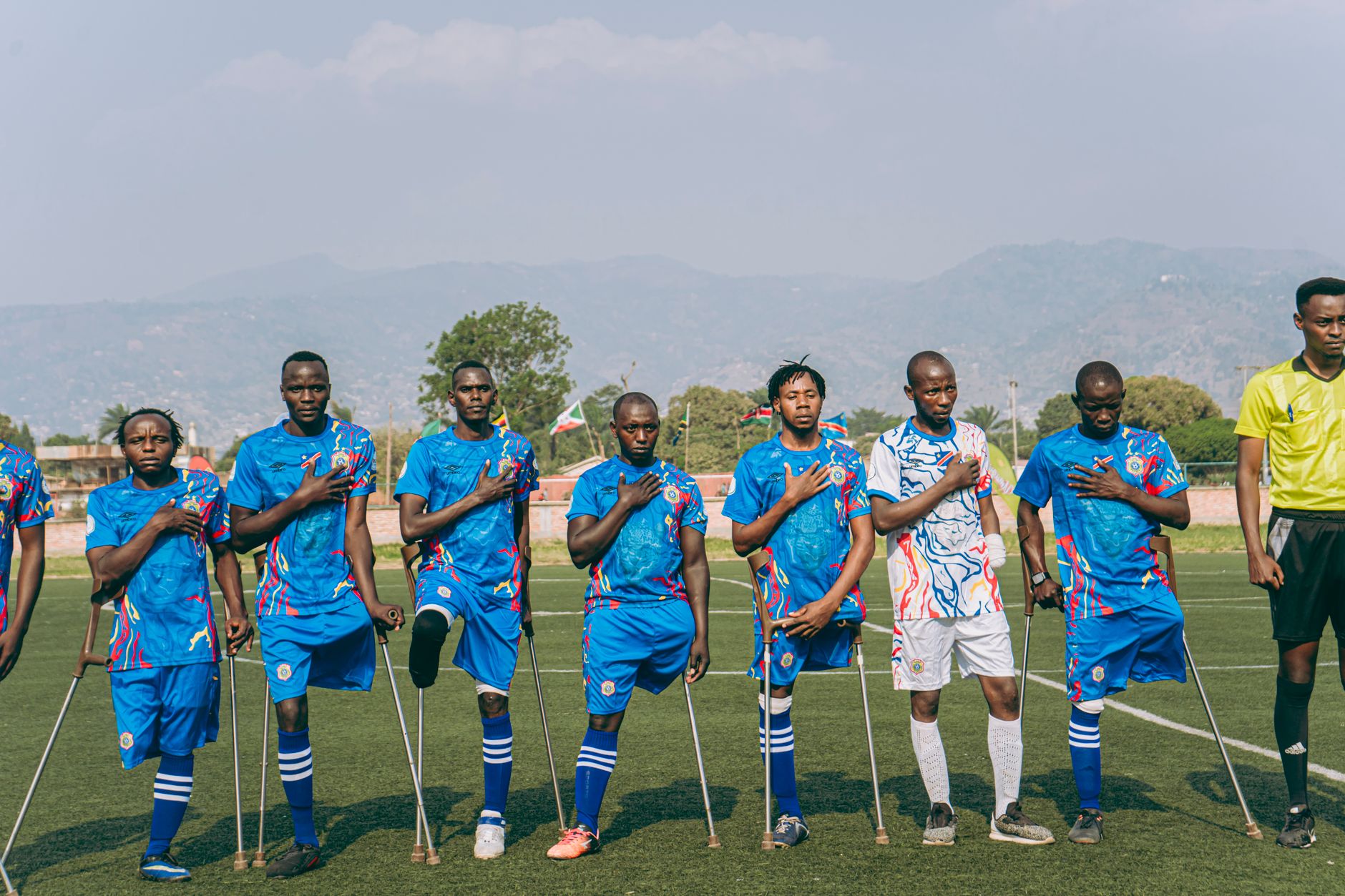
Sport functions as a universal tongue that can bridge divides where formal diplomacy falters. Large-scale tournaments and recurring regional competitions create repeated, predictable moments for interaction that are harder to politicise than single, ad hoc initiatives. These sporting platforms do not erase political disagreement, but they reframe interaction around shared rules, visible performance, and mutual respect.
Historic episodes – most famously the 1970s “Ping Pong Diplomacy” – demonstrate how an athletic exchange can open channels of state-level communication. On the African continent, this principle is no less potent: football, athletics, rowing and other disciplines give citizens and leaders alike occasions to rearticulate identity in collective, nonviolent terms. The African Games, continental tournaments and cross-border fixtures constitute recurring contact points that normalise cooperative behaviour and generate positive narratives about common purpose.
Importantly, sports diplomacy works at multiple levels simultaneously. On the public level it creates national pride and mass spectacles; at the interpersonal level it produces friendships among athletes, coaches and fans; and at the institutional level it builds networks that can be mobilised for broader regional projects. Where formal negotiations are stalled, a match, a shared training camp or an interleague exchange can serve as the low-risk environment where trust begins to form. Practitioners and analysts have documented how consistent sporting engagement reduces mutual suspicion and prepares rival groups to consider collaborative options.
For readers seeking a deeper overview of how sport has been framed as a tool for cooperation, the reporting and analysis by outlets such as African Leadership Magazine compile both theory and case studies that justify greater investment in athletic diplomacy. The argument is clear: treating sport as a strategic asset rather than merely entertainment increases opportunities for meaningful regional integration and peacemaking.
Mechanisms that turn games into diplomacy
Translation of athletic encounters into diplomatic gains depends on deliberate mechanisms that structure interaction. Joint tournaments, mixed training programmes, youth exchanges, and cross-border coaching fellowships are not incidental – they are tactical instruments that produce measurable social capital. These mechanisms create repeated contact and shared stakes, and they systematically lower the cost of collaboration.
Organisers who treat sport as a public good design programmes that foreground participation, skill transfer and cultural exchange rather than purely transactional competition. At the continental level, formal partnerships – such as those between continental bodies and peace-focused NGOs – can channel funding, set standards for inclusion, and create stable calendars that keep parties engaged even during political downturns.
| Mechanism | Example | Impact |
|---|---|---|
| Joint tournaments | African Games, regional cups | Creates shared narratives and predictable arenas for contact |
| Training exchanges | Cross-border athlete camps and coaching workshops | Builds interpersonal bonds and transfers technical knowledge |
| Youth leagues | School and community programmes | Instils teamwork and reduces youth recruitment into violence |
| Women’s programmes | Leadership and inclusion tournaments | Amplifies social cohesion and gender equity |
Practical examples of these mechanisms show tangible results: targeted youth leagues reduce idle time and provide vocational pathways; cross-border coaching fellowships demystify opponents and humanise perceived adversaries. Media and digital campaigns multiply these effects: social platforms let fans follow athletes’ personal stories, creating empathy and shared subjectivity across borders. Deploying sport strategically therefore means pairing competition with structured exchange and narrative work.
Policy actors should read reports such as the African Union Peace Fund partnership with Football for Peace as models for how institutional backing can sustain scalable initiatives.
Case studies: sport changing the course of conflicts
Concrete episodes on the African continent show that sport has occasionally played a decisive role in altering conflict dynamics. The 2006 – 2007 Ivory Coast episode around Didier Drogba’s appeal to fighters remains emblematic: a sporting moment catalysed public sentiment and created an opening for ceasefire movements. When a player kneels, speaks to fighters, or when a match is staged in a rebel-held area, the symbolic power of sport can generate immediate behavioural shifts.
Other football-driven moments across the continent provide corroborating evidence. When national teams perform well on continental stages, the attention and pride generated can shift domestic priorities toward unity and away from violent factionalism. Angola and Sierra Leone saw similar dynamics where athletic success coincided with broader peacemaking windows – sports were not the sole drivers, but they provided a domestic rallying point and enhanced the visibility of reconciliation processes.
Beyond football, less obvious disciplines contribute to national narratives and recognition. South African rowing teams’ participation in high-profile regattas, such as the historic Boston event, illustrates how non-football achievements can spark national pride and international respect, strengthening civic cohesion and offering alternative pride sources. See reporting on that event for context: AfricaTimes coverage.
These case studies show a repeated pattern: sport amplifies symbolic moments and provides intimate encounters that soften hard political positions. If policymakers and civil society actors design interventions that capitalise on these moments – linking matches to reconciliation programming, inviting neutral observers, and ensuring access for affected communities – the diplomatic value of athletic success can be converted into durable social capital. Reports and perspectives like those compiled by PrimeProgressNG and regional analyses on platforms such as AckyShine provide useful blueprints for replication.
Obstacles and distortions: politics, money and media
Arguing for sports as a force for unity is persuasive, but must be tempered by analysis of how power, commercial interests, and media dynamics can corrupt or neutralise that potential. Political elites sometimes co-opt sporting events for propaganda, turning inclusive platforms into instruments of exclusion or patronage. When governments prioritise international prestige or revenue extraction over local participation, the connective tissue that sports can generate frays.
Commercialisation is a double-edged sword. Investment brings infrastructure and visibility, but profit motives can prioritise marketable stars and elite competitions at the expense of grassroots programmes that actually build trust between divided communities. Wealth concentration – illustrated by global headlines about extractive sectors destabilising regions – filters into sport through sponsorships, infrastructure deals and media rights, skewing who benefits from sporting diplomacy. Relevant reporting on wider economic drivers helps contextualise these distortions: see discussions on resource-driven instability and elite projects in AfricaTimes analyses linked here and here (mine chaos, ultra-wealth and spectacle).
Media and digital platforms magnify both promise and peril. Social media can humanise opponents, but it can also circulate hostile narratives, fan tribalism, or enable boycotts that derail peace-building tournaments. Therefore, design must include media guidelines, rapid-response counterspeech, and equitable broadcast strategies to preserve the diplomatic value of events.
Finally, political tensions can lead to boycotts and cancellations that wipe out the goodwill generated by months of planning. The only remedy is institutional insulation – clear rules preventing ad-hoc politicisation, transparent governance, and diversified funding that reduces dependence on single sponsors who may have partisan agendas.
Scaling impact: policy steps and youth-focused programs
To convert episodic sporting goodwill into structural cooperation, policymakers must prioritise scalable, inclusive strategies that place youth and marginalised groups at the centre. Youth engagement is not a side benefit; it is the primary multiplier. Well-designed school leagues, intercommunity tournaments, and vocational training linked to sport build long-term civic habits of negotiation, teamwork and mutual respect. Investing in youth sport is investing in the next cohort of leaders who will have internalised cooperative norms.
Institutional frameworks are essential. The African Union’s partnerships with peace and sport initiatives are an instructive model: when continental bodies underwrite programmes, they provide continuity and political legitimacy. The strategic partnership between the African Union Peace Fund and football-focused peace programmes shows how formal commitments can mobilise resources and guarantee follow-through – details of that partnership demonstrate a pathway to embed sport within wider peacebuilding efforts (AU press release).
Specific policy priorities should include targeted funding for community facilities, coach education that emphasises conflict-sensitive practice, protection for mixed and women’s leagues to enhance inclusion, and legal frameworks preventing politicisation of events. Women’s leadership in sport amplifies social cohesion and must be actively supported – coverage on African women leaders in sport highlights both the gap and the opportunity (AfricaTimes on women leaders).
Operationally, NGOs and governments can coordinate through public – private partnerships, with transparency safeguards to prevent elite capture. Local media campaigns should promote cross-border athlete stories, humanise participants and counter polarising narratives. Finally, embedding monitoring and evaluation frameworks will let practitioners know which programmes actually reduce conflict indicators, rather than assume that visibility equals impact. Thoughtful scaling, centred on youth and inclusivity, converts ceremonial goodwill into durable regional cooperation and social peace. For programmatic inspiration and practical frameworks, review synthesis pieces such as the perspective series on sport and unity (PrimeProgressNG) and implementation notes on platforms like AckyShine.
Sports operate as more than entertainment; they are an indispensable instrument of diplomacy and social cohesion across Africa. By creating shared experiences that cut across ethnic, linguistic and political divides, sporting events cultivate a common identity and channels for constructive interaction. Evidence from continental tournaments and high-profile moments shows that when people rally behind a team or a tournament, the resulting national unity and collective pride can translate into tangible political and social openings.
The mechanisms through which sport fosters cooperation are clear and actionable. Joint competitions, cross-border training programmes and athlete exchanges provide neutral spaces where dialogue replaces distrust and stereotypes are challenged through personal relationships. Sporting values – teamwork, respect, and perseverance – are rehearsed publicly, making them available as civic norms that support reconciliation and collaborative problem-solving at the community and state levels.
Targeting young people multiplies this impact. When youth programmes embed competitive play with civic education, they produce future leaders who prioritise cooperation over conflict. In fragile contexts, sport restores a sense of normalcy and hope: it creates routines, visible role models and pathways for positive engagement that reduce the appeal of violence and exclusion. These outcomes are not hypothetical but observable across nations where sport has accompanied peacebuilding initiatives.
Challenges remain – political boycotts, commercial pressures and security risks can undermine sporting diplomacy – but these are not fatal flaws. Adaptation is possible: by prioritising inclusive formats, local ownership and digital engagement, sporting initiatives can retain their civic purpose while navigating geopolitical constraints. The argument is not that sport alone ends conflict, but that it is a uniquely effective lever that, when integrated with broader policy and community efforts, advances peace, regional stability and enduring cooperation across the continent.
FAQ: The role of sports in uniting African nations
Q: What is sports diplomacy and why does it matter for African nations?
A: Sports diplomacy uses athletic events and exchanges to build trust, create shared experiences, and open channels of communication across political and cultural divides; in Africa this matters because sport offers a visible, emotionally resonant platform to foster national unity and regional cooperation where traditional diplomacy often struggles.
Q: How does sport actually bring people and countries together?
A: Sport creates a common language through competition and spectacle – shared rituals, chants, and goals – that lower barriers to interaction; organized events and cross-border training encourage athlete-to-athlete contact, promote intercultural understanding, and generate narratives of solidarity that influence public opinion and political will.
Q: Are there concrete examples where sport eased geopolitical tensions?
A: Yes. Historic exchanges – such as the 1970s table tennis rapprochement between major powers – show how sport can catalyse dialogue; in Africa, national team successes and public appeals by celebrated athletes have helped de-escalate tensions and focus attention on common identity rather than division.
Q: Can successes by national teams truly affect peace processes?
A: While sport alone does not end wars, high-profile victories and unified fan responses can create momentum for reconciliation by generating national pride, shifting public discourse toward unity, and providing leaders with political space to negotiate; these shifts have complemented formal peace efforts in several African contexts.
Q: What mechanisms make sports diplomacy effective in conflict-prone areas?
A: Key mechanisms include joint tournaments that force interaction, multi-nation training programmes that foster personal bonds, youth camps that instil values of teamwork and respect, and shared public rituals that normalise cooperation and reduce stereotypes between rival communities.
Q: Why is youth engagement emphasized in sports diplomacy strategies?
A: Engaging young people builds long-term change: early exposure to collaborative sport develops future leaders with habits of cooperation, diverts at-risk youth from violence, and creates networks of peers across borders that resist polarising narratives as they mature.
Q: What institutional roles support sports as a peacebuilding tool in Africa?
A: Regional bodies, national governments, and federations can prioritise inclusive events, allocate resources for cross-border programmes, and adopt policies that leverage tournaments for diplomacy; institutions like the African Union have begun formalising sport-based initiatives to promote unity and integration.
Q: What are the main obstacles that undermine sports diplomacy’s impact?
A: Significant obstacles include overt political tensions that lead to boycotts or event cancellations, the commercialisation of sport which can prioritise profit over peace objectives, and limited resources that prevent sustained youth and community programming.
Q: How can technology and social media amplify the diplomatic value of sport?
A: Digital platforms extend the reach of sporting narratives, enable cross-border fan engagement, and publicise collaborative initiatives; when used strategically they can reinforce messages of inclusivity, mobilise grassroots support, and document positive interactions that pressure stakeholders to sustain cooperation.
Q: Which metrics can be used to evaluate sports diplomacy initiatives?
A: Measureable indicators include participation rates in cross-border programmes, changes in intergroup attitudes from surveys, frequency of joint events, youth retention in sports initiatives, and qualitative assessments of whether sport-related activities have contributed to reduced tensions or opened diplomatic channels.