


“This Gold Giant Is Bleeding”: The World’s Richest Mine Faces Chaos That Could Shatter Global Markets (and Your Future Prices)
 By
Joseph Mwangi
By
Joseph Mwangi
| IN A NUTSHELL |
|
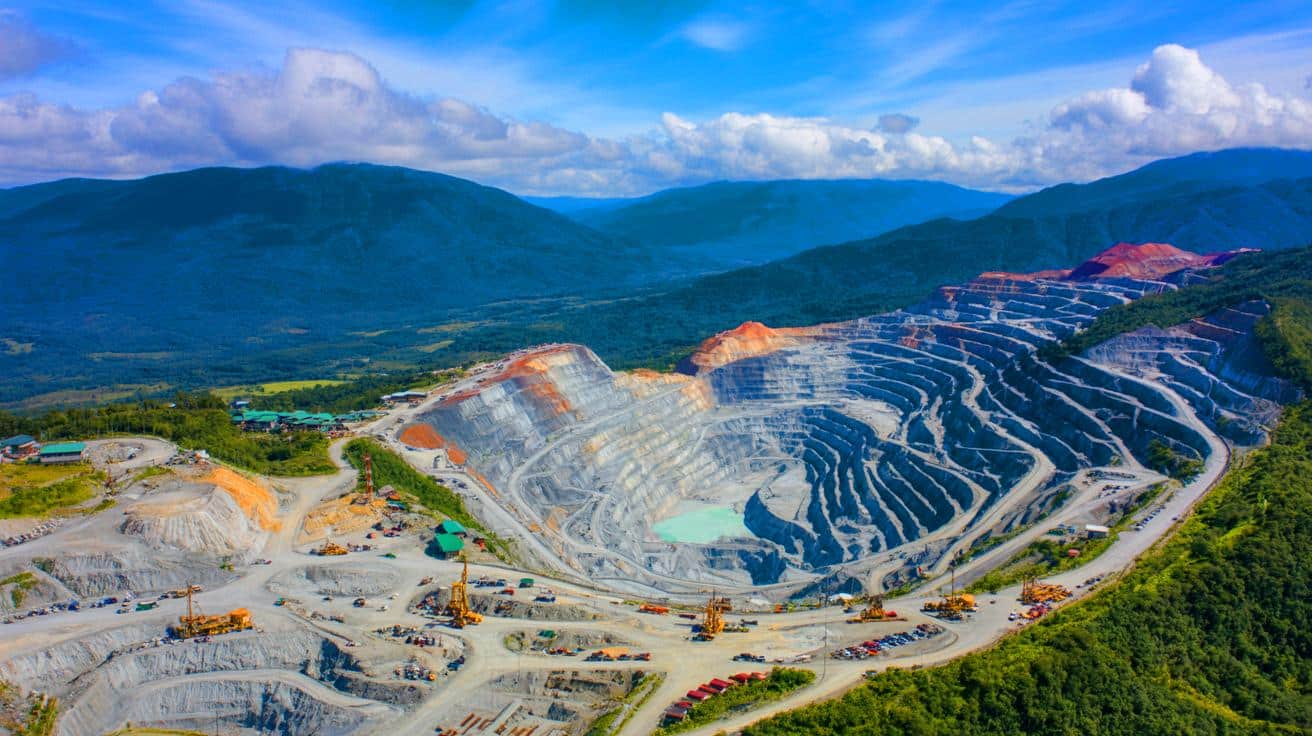
Deep within the mountainous terrain of Papua, Indonesia, lies the Grasberg Mine, a colossal endeavor that stands as the world’s largest and richest gold mine. Beyond its staggering reserves of gold and copper, valued at an estimated $40 billion, Grasberg represents a monumental achievement in mining engineering and global economics. However, the mine’s significant economic impact is intertwined with pressing environmental and political challenges, making it a subject of both admiration and controversy. As this giant continues to shape the mining landscape, it also navigates the complexities of its environmental footprint and geopolitical tensions.
The Formation of Grasberg: From Discovery to World Dominance
The story of the Grasberg Mine begins with its discovery in the early 20th century, but it wasn’t until the 1960s that its potential was fully realized. The American mining company Freeport-McMoRan secured the rights to develop the site, initially focusing on its copper deposits. What followed was a transformation from a modest open-pit operation into a multi-billion-dollar mining powerhouse. The discovery of extensive gold reserves catapulted Grasberg into the global spotlight, marking it as one of the most significant mining operations in history.
The evolution of Grasberg from an open-pit mine to an underground operation is a testament to both technological advancement and strategic foresight. The initial open-pit allowed for the rapid extraction of surface minerals, but as resources became harder to reach, the transition to underground mining became essential. Advanced techniques such as the Grasberg Block Cave and the Deep Mill Level Zone now enable the mine to access deeper and richer mineral deposits. This shift not only sustains production levels but also extends the mine’s operational lifespan, ensuring its continued prominence in the industry.
A Self-Sustaining Industrial Hub in the Remote Papua Highlands
The Grasberg Mine is situated in a remote and challenging environment, necessitating the creation of an extensive infrastructure to support its operations. In an area characterized by isolation and high altitudes, significant investments have been made to develop a self-sustaining industrial hub. This includes the construction of a dedicated airport and seaport, which facilitate the transportation of goods and personnel to and from the site. A 103-mile pipeline transports mined ore to the Amamapare port, highlighting the logistical prowess required to maintain such a vast operation.
Beyond transportation, the mine supports a workforce of over 20,000 individuals, who reside in purpose-built housing complexes complete with schools, hospitals, and other essential services. This self-contained city in the highlands of Papua is a testament to the scale and ambition of the Grasberg project. It underscores the lengths to which Freeport-McMoRan has gone to ensure the sustainability and efficiency of its operations, providing a stable environment for its workers and their families.
The Economic Power of Grasberg: Production and Revenue
Grasberg's contribution to the global mining industry is underscored by its impressive production figures. In 2023, the mine produced over 1.7 million ounces of gold, 680,000 tonnes of copper, and 190 tonnes of silver, cementing its status as a cornerstone of the world's metals market. These prodigious outputs translate into significant economic power, with the mine's resources valued at over $40 billion. The impact of Grasberg extends beyond Indonesia, influencing global prices and market stability for gold and copper.
The mine's economic contributions are vital to Indonesia's national economy, providing substantial revenue streams and employment opportunities. However, the global implications of its production are equally important. As a major supplier of essential metals, Grasberg plays a critical role in industries ranging from electronics to construction. Its continued operation is crucial to meeting the worldwide demand for these resources, highlighting its enduring significance in the global mining landscape.
Environmental and Political Controversies Surrounding Grasberg
Despite its economic significance, the Grasberg Mine is not without its controversies. Environmental groups have raised concerns about the mine's impact on the local ecosystem, particularly regarding the release of sediment and heavy metals into nearby rivers. These environmental challenges pose a threat to water quality and local wildlife, leading to calls for more sustainable mining practices. The mine's operations in a fragile ecological zone have sparked debates over the balance between economic development and environmental preservation.
Politically, the mine's location in Papua, a region with a history of unrest, adds another layer of complexity. Grasberg has been a focal point in the struggle for greater autonomy by indigenous groups, leading to tensions between the local population and the Indonesian government. The mine's strategic importance and revenue have made it a target for separatist groups, resulting in confrontations and security challenges. As such, the future of Grasberg is not only shaped by economic and environmental factors but also by its political context.
The Grasberg Mine stands as a monument to human engineering and economic prowess, yet it is also a symbol of the complexities inherent in large-scale resource extraction. As the mine continues to operate, it faces the dual challenges of managing its environmental impact and navigating a volatile political landscape. The future of Grasberg will depend on finding a sustainable balance between these competing interests. How can the global mining industry reconcile the demands for economic growth with the pressing need for environmental stewardship and political stability?