


Here’s The Shocking Discovery That Reveals Why Humans First Walked The Earth In Africa, And It Changes Everything
 By
Nomvula Dlamini
By
Nomvula Dlamini

| IN A NUTSHELL |
|
Humanity’s origins have long captivated scientists and historians alike, sparking debates and research into where and why Homo sapiens first emerged. Recent scientific discoveries have pointed to Africa as the cradle of mankind. This revelation is supported by genetic studies, which have unraveled the deep evolutionary roots shared by all modern humans. But what specific conditions in Africa facilitated the rise of Homo sapiens, and how did these early humans eventually spread across the globe? This exploration delves into the factors that established Africa as the birthplace of modern humans.
Genetic Evidence Points to Africa
Advancements in genetic research have profoundly reshaped our understanding of human history. A pivotal breakthrough emerged from the study of mitochondrial DNA, which is passed down exclusively through the maternal line. This genetic evidence has allowed scientists to trace back to a common ancestor, confirming that all modern human mitochondrial lineages converge in Africa, dating back approximately 200,000 to 150,000 years ago.
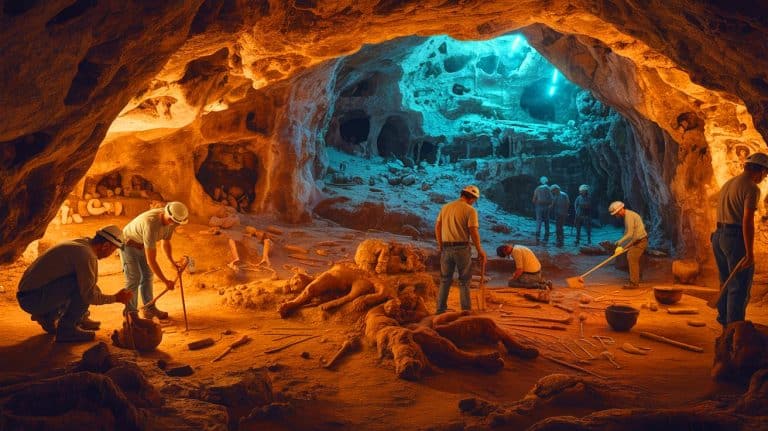
Archaeological excavations have further solidified this genetic evidence. Sites such as Omo in Ethiopia, Blombos in South Africa, and Jebel Irhoud in Morocco have yielded human fossils and sophisticated stone tools, some dating back over 300,000 years. These discoveries provide concrete evidence of a longstanding human presence in Africa, predating any known migrations out of the continent.
Comparisons between African fossils and those found elsewhere reinforce Africa’s role as the origin point of Homo sapiens. While human populations eventually migrated and dispersed globally, archaeological findings suggest these migrations occurred well after humanity’s emergence in Africa. Thus, both genetic and archaeological evidence converge to confirm Africa’s foundational role in human history.
Climate Stability and Human Evolution
A consistent factor contributing to Africa’s pivotal role in human evolution is its relative climate stability over millions of years. Unlike other regions that have experienced cataclysmic climate changes, Africa maintained a relatively stable environment, conducive to human evolution and population growth.
During glacial periods, Europe and Asia faced harsh, icy environments that limited resources and habitable areas for early hominids. In contrast, Africa’s diverse yet stable climates provided conditions that supported human survival and prosperity. The continent experienced less extreme droughts and rainy periods, creating an environment suitable for continuous evolution and adaptation.
This climate stability allowed Homo sapiens’ predecessors to settle in various ecosystems across Africa, paving the way for the development of complex cultures, knowledge, and skills over time. The ability to thrive in a stable climate may have been a key factor in the success and eventual spread of early human populations.
Environmental Diversity as a Catalyst
Africa’s vast array of landscapes, from expansive deserts to lush tropical forests, offered early humans a unique range of habitats for evolution and adaptation. This geographical diversity encouraged the development of varied skills and survival strategies.
The savannas, for instance, promoted the evolution of group hunting, toolmaking, and social cooperation. Meanwhile, forest environments fostered skills such as fruit gathering and shelter construction. This diversity not only facilitated the development of complex behaviors but also contributed to increased genetic diversity as populations adapted to local environments.
Ecological variety in Africa created niches for diverse behaviors and technologies, enabling early humans to become highly adaptable and resilient. This adaptability was crucial for the survival and expansion of Homo sapiens, highlighting Africa as more than just a birthplace, but as a stage for unprecedented cultural and biological evolution.
The Legacy of Africa in Human History
Africa’s role in human history extends beyond its status as the cradle of humanity. The continent’s unique combination of genetic, environmental, and climatic factors shaped the trajectory of human evolution and migration.
The interplay between stable climates, diverse ecosystems, and rich genetic exchanges in Africa laid the groundwork for the development of Homo sapiens. As early humans adapted to various environments, they developed complex societies and technologies, setting the stage for future migrations and cultural advancements.
Today, the African legacy continues to influence our understanding of human history and evolution. As scientists unravel more about our origins, Africa remains a vital focal point in the ongoing exploration of what it means to be human. How might future discoveries about Africa’s role in our past further inform our understanding of humanity’s shared heritage?
Continue reading