


Ancient DNA Reveals Hidden Lives of Calabria’s Mysterious Bronze Age Community, Uncovering Deep Cultural Connections
 By
Nomvula Dlamini
By
Nomvula Dlamini
| IN A NUTSHELL |
|
In a groundbreaking study, researchers have unveiled the genetic and cultural intricacies of a Bronze Age community in Calabria, Italy. This research, spearheaded by prominent institutions such as the Max Planck Harvard Research Center and the University of Bologna, offers a fascinating glimpse into the lives of the Protoapennine people who inhabited the remote Grotta della Monaca cave around 3,500 years ago. By examining human remains, the study sheds light on the community’s genetic ties, social structures, and unique cultural practices. These findings challenge previous assumptions and provide new insights into the interconnectedness and diversity of prehistoric societies.
Grotta della Monaca: A Window into Prehistory
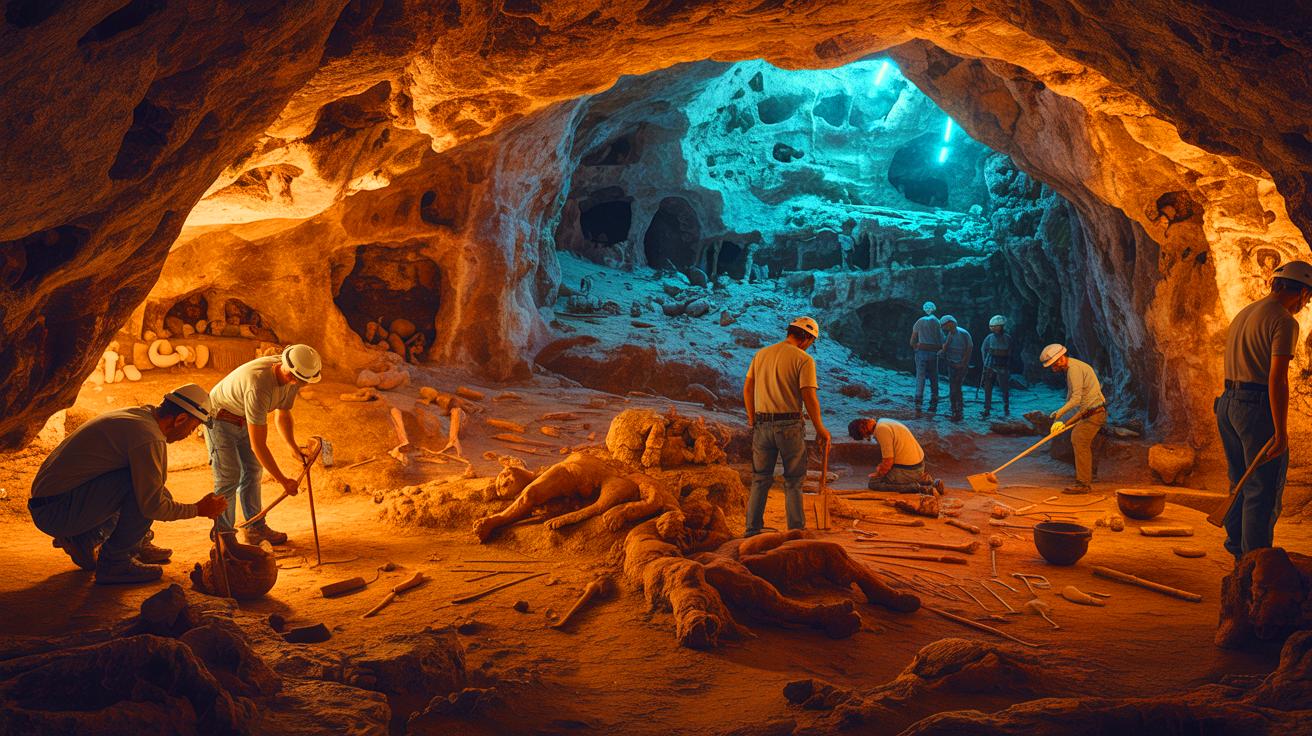
Grotta della Monaca, perched over 2,000 feet above sea level within the Pollino massif, stands out as a crucial archaeological site in Calabria. Known for its rich deposits, the cave has yielded early evidence of copper and iron ore usage and played a significant role in funerary practices. The international team of researchers delved into the human remains discovered at the site, dating from approximately 1780 to 1380 BCE. Their analysis aimed to unravel the genetic makeup and social dynamics of this enigmatic mountain-dwelling community.
The findings from Grotta della Monaca reveal much about the mobility, kinship, and dietary customs of its inhabitants. The cave served not only as a burial site but also as a place that reflected the community’s complex social fabric. By examining these remains, researchers have gleaned valuable information about the lifestyles and interactions of the Protoapennine people, offering a fresh perspective on prehistoric life in Southern Italy.
Genetic Ties and Cultural Distinctiveness
The study highlights intriguing genetic connections between the Grotta della Monaca population and early Bronze Age groups in Sicily. However, a notable absence of eastern Mediterranean genetic influences distinguishes this community from their Sicilian counterparts. This finding suggests that while the Calabrians engaged in cross-regional interactions, they maintained a distinct demographic and cultural identity.
“Our analysis shows that the Grotta della Monaca population shared strong genetic affinities with Early Bronze Age groups from Sicily, yet lacked the eastern Mediterranean influences found among their Sicilian contemporaries,” explains Francesco Fontani, first author of the study.
This discovery underscores the complexity of cultural and genetic exchanges across the region. It paints a picture of a community that, despite its connections, preserved a unique identity that set it apart from its neighbors. Such insights challenge previous notions of cultural homogeneity and highlight the diverse tapestry of Bronze Age societies.
Burial Practices and Kinship Insights
An intriguing aspect of the study is the examination of burial practices within Grotta della Monaca. Through genetic analysis, researchers uncovered fascinating kinship patterns, revealing how familial ties influenced burial arrangements. Notably, the identification of a parent-offspring burial marks the first genetic evidence of such a relationship in prehistoric Europe.
“This finding emphasizes the distinction between unambiguous biological evidence and its social meaning,” notes Alissa Mittnik, a senior author of the study.
While the social significance of these burial practices remains open to interpretation, the discovery adds a new dimension to our understanding of Protoapennine society. It suggests that family bonds played a crucial role in both life and death, shaping the community’s social landscape in profound ways.
Dairy Consumption and Cultural Adaptation
The study also delves into the dietary habits of the Grotta della Monaca community, particularly their consumption of milk and dairy products. Despite genetic evidence of lactose intolerance, these individuals were consuming dairy – a paradox that initially puzzled researchers.
“This paradox illustrates how cultural adaptation can precede genetic evolution. These people had developed dietary strategies that allowed them to thrive in a challenging mountain environment, despite lacking genetic tolerance to lactose,” explains Donata Luiselli, co-senior author of the study.
This finding highlights the remarkable ability of ancient societies to adapt culturally in ways that transcend biological limitations. It sheds light on how the Protoapennine people navigated environmental challenges and underscores the innovative strategies employed by prehistoric communities to ensure their survival and success.
The Broader Implications of Grotta della Monaca
As researchers continue to unearth insights from Grotta della Monaca, the significance of caves in prehistoric societies is being reevaluated. Traditionally viewed as isolated or symbolic spaces, this cave appears to have played a crucial role in both the daily and spiritual lives of the community. It served as a focal point for communal identity and family bonds, providing a deeper understanding of the social dynamics at play.
“Situated over 600 meters above sea level in the Pollino massif, Grotta della Monaca continues to reveal key evidence about the first complex societies of Southern Italy – and, more broadly, about the biological and cultural roots of human diversity,” emphasizes Felice Larocca, the speleoarchaeologist leading the excavation.
These findings challenge previous perceptions and invite further exploration into the roles that such sites played in shaping human history. How might future discoveries from Grotta della Monaca and similar sites alter our understanding of prehistoric societies and their interconnectedness?
Continue reading