



“Beijing Didn’t See This Coming”: Taiwan Unveils Hypersonic Missile That Reaches 230,000 Feet and Redefines the Balance of Power in Asia
 By
Joseph Mwangi
By
Joseph Mwangi
| IN A NUTSHELL |
|
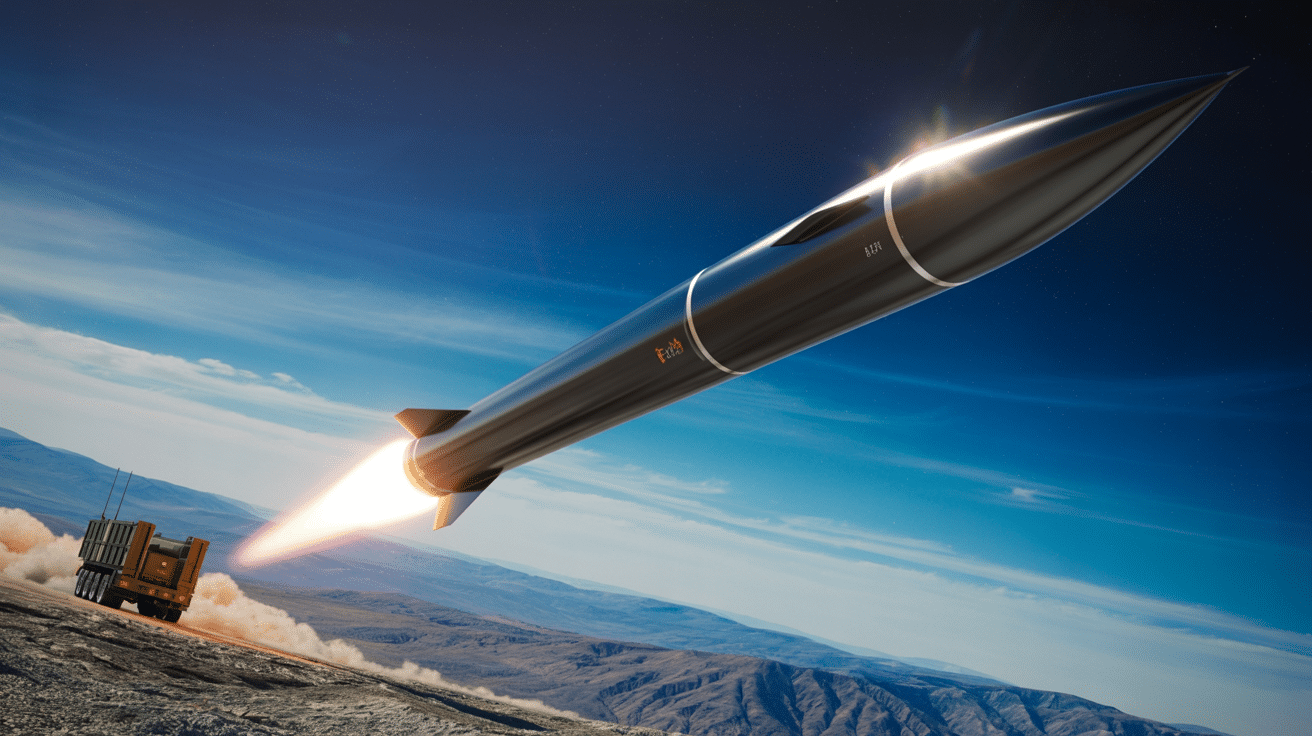
Taiwan has recently made headlines with the unveiling of its new hypersonic missile system, the Chiang-Kong interceptor. Developed by the National Chung-Shan Institute of Science and Technology (NCSIST), this technology represents a significant leap forward in Taiwan’s defense capabilities. Capable of reaching altitudes of up to 230,000 feet, the missile system is designed to intercept and neutralize threats from ballistic missiles, providing a critical layer of protection in Taiwan’s defense network. The introduction of this advanced system highlights Taiwan’s commitment to self-reliance and technological innovation in the face of regional security challenges.
Taiwan’s New Hypersonic Missile
The Chiang-Kong interceptor, developed by NCSIST, is a testament to Taiwan’s growing capabilities in defense technology. At the core of this system is a missile that achieves hypersonic speeds, traveling at more than Mach 5. This speed allows the interceptor to target threats at altitudes of up to 230,000 feet, efficiently addressing potential threats in near space.
One of the critical components of this missile system is its mobile launcher, which can carry four missiles. This launcher is equipped with its own power supply and enables automatic testing, allowing for rapid deployment. Commands for engagement are transmitted from a central control center, ensuring quick response times when necessary.
The Advanced Electronically Scanned Array (AESA) radar, developed domestically, is another standout feature of the Chiang-Kong. This radar utilizes solid-state transmit/receive modules for electronic steering, allowing it to track multiple targets simultaneously. Additionally, the system can uplink and downlink guidance data to the interceptor mid-flight, enhancing precision targeting capabilities.
Furthermore, the missile’s guidance system transitions from inertial and radar uplink during the midcourse phase to active seeker guidance in the terminal phase, ensuring accurate interception. The warhead is designed to neutralize incoming missiles effectively with high-explosive fragments upon impact.
Answer to Chinese Threats
Taiwan’s strategic planners have long emphasized the need for advanced defensive systems to counter potential threats from China. The possibility of an invasion involving mass ballistic missile strikes has led Taiwan’s military to prioritize the development of comprehensive anti-missile systems.
The Chiang-Kong system complements existing defenses by providing a mid-tier capability against tactical ballistic missiles. Although the range of the system remains undisclosed, its speed and altitude capabilities are expected to serve as a substantial deterrent.
As part of broader military modernization efforts, NCSIST’s investment in domestic defense projects represents a strategic shift towards reducing dependency on foreign technology. The development of advanced radar and guidance systems for the Chiang-Kong is a critical milestone in this endeavor.
While Taiwan’s unveiling of the interceptor at the aerospace exhibition was a demonstration of its defense capabilities, Taipei refrained from making direct references to China. However, NCSIST officials confirmed that the system’s primary objective is to counter ballistic missile threats aimed at Taiwan.
Technological Advancements in Defense
The introduction of the Chiang-Kong interceptor highlights Taiwan’s focus on leveraging advanced technology to strengthen its defense infrastructure. The combination of hypersonic speeds with sophisticated radar and guidance systems positions Taiwan as a formidable player in missile defense.
This technological leap not only enhances military capabilities but also signifies Taiwan’s strategic intent to maintain its sovereignty and security amidst evolving regional dynamics. By developing cutting-edge systems domestically, Taiwan demonstrates its capability and determination to protect its interests.
The integration of electronic steering and solid-state modules in the AESA radar is a notable achievement, reflecting the sophistication of Taiwan’s technological advancements. These innovations are expected to provide a robust framework for future defense systems, reinforcing Taiwan’s strategic deterrence posture.
As global tensions shape defense priorities, Taiwan’s commitment to self-reliance and technological advancement is clear. The Chiang-Kong interceptor symbolizes Taiwan’s resolve to proactively and precisely address potential threats.
Implications for Regional Security
The introduction of Taiwan’s hypersonic missile system has significant implications for regional security dynamics. By enhancing its defensive capabilities, Taiwan sends a clear message of deterrence to potential aggressors, particularly in the context of its complex relationship with China.
This development may influence the strategic calculations of other nations in the region, prompting a reevaluation of defense postures and alliances. The deployment of such advanced systems could potentially lead to an arms race, necessitating diplomatic efforts to manage regional tensions.
Furthermore, Taiwan’s advancements in defense technology might encourage other countries to invest in similar capabilities, potentially altering the balance of power in the Asia-Pacific region. The emphasis on indigenous development also reflects a broader trend toward self-sufficiency in defense, seen in various countries seeking to reduce dependence on foreign technology.
As Taiwan continues to bolster its defense infrastructure, the international community will closely monitor these developments. The long-term implications for regional stability and security remain to be seen, raising questions about the future trajectory of military and diplomatic relations in the region.
Taiwan’s unveiling of the Chiang-Kong hypersonic missile system marks a significant milestone in its defense strategy, underscoring the island’s commitment to safeguarding its sovereignty amidst regional tensions. As Taiwan continues to innovate and strengthen its defense capabilities, how will these developments shape the broader geopolitical landscape in the Asia-Pacific region?