



“They Just Found 500 Billion Barrels of Oil Under Antarctica”: Russia’s Discovery Could Shatter a 60-Year Peace Treaty (and Ignite a Global Power Struggle)
 By
Joseph Mwangi
By
Joseph Mwangi
| IN A NUTSHELL |
|
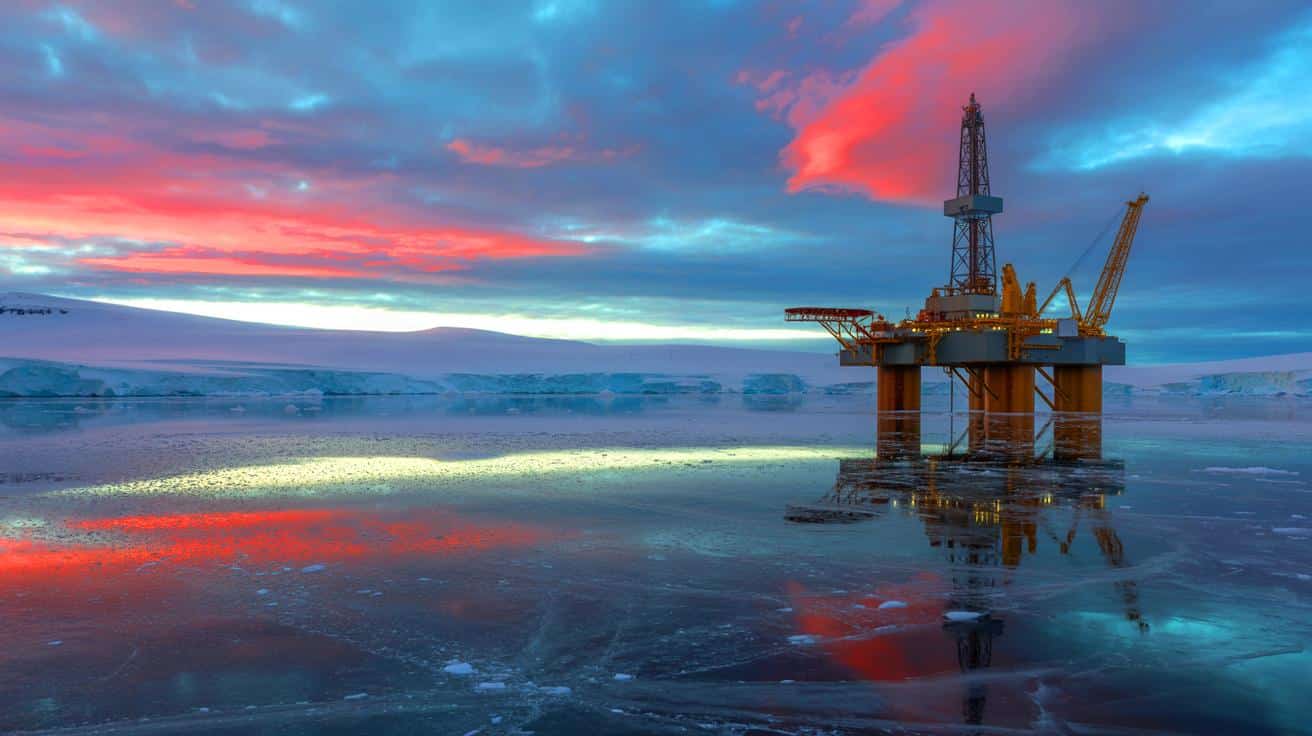
Russia’s announcement of a massive oil reserve discovery beneath the Antarctic seabed has rattled the global geopolitical landscape. Boasting an estimated 511 billion barrels of oil, the find in the Weddell Sea, if validated, could significantly alter global energy dynamics. However, this revelation poses a direct challenge to the long-standing treaties that have kept Antarctica a zone of peace and scientific research. The discovery raises pressing questions about the efficacy of international agreements and the potential for resource-driven conflicts in the region.
A Deposit Larger Than Saudi Arabia’s Known Reserves
The sheer scale of the oil reserve discovered by Russia is astonishing. With 511 billion barrels, this potential reserve dwarfs the proven reserves of Saudi Arabia, the world’s largest oil exporter. To put it in perspective, the find is more than ten times the North Sea’s oil production over the last fifty years. This discovery ranks among the largest oil reserves ever reported globally.
Russian research vessels made this finding during recent expeditions in the Weddell Sea. Although officially designated as scientific missions, there are growing concerns in the United Kingdom and elsewhere that Russia might be using these activities as a cover for resource exploration. Such suspicions pose a direct challenge to the 1959 Antarctic Treaty, which explicitly prohibits mineral and oil extraction in the region.
Antarctic Treaty Under Strain as Tensions Grow
The Antarctic Treaty, established in 1959, is a landmark international agreement involving 54 countries. It dedicates the continent to peaceful pursuits and scientific exploration, explicitly banning military activities and commercial resource extraction. However, Russia’s recent actions have cast doubt on the treaty’s effectiveness amid rising geopolitical tensions.
Professor Klaus Dodds, a geopolitics expert at Royal Holloway, University of London, voiced concerns during a UK Parliamentary session. He suggested that Russia’s data collection activities could be seen as prospecting rather than genuine scientific research. Dodds also linked Russia’s actions to broader international tensions, particularly following its 2022 invasion of Ukraine. He warned that Moscow’s estranged relations with Western nations could lead to increased strategic competition in Antarctica.
Russia Denies Mining Intent, but Seismic Data Raises Eyebrows
Russian officials insist that their missions adhere to the Antarctic Treaty. UK Foreign Office minister David Rutley stated that Russia has assured that its surveys are purely for scientific purposes. Despite these assurances, skepticism persists regarding the true intent behind the seismic studies conducted by Russian teams.
Seismic data acquisition, a technique often used in petroleum exploration, maps underground structures in detail. While not explicitly banned by the treaty, such activities raise questions when associated with known petroleum-rich formations. Experts argue that despite Russia’s claims, the nature of the data collection suggests a commercial motive.
A New Front in Global Resource Competition
This development comes at a time when major global powers are quietly expanding their presence in Antarctica. Since 1957, Russia has established five research stations on the continent. China, another key player, has recently inaugurated its fifth Antarctic base.
Both nations have also opposed Western-backed initiatives to expand marine protected areas in Antarctica, notably in 2022. This opposition has sparked concerns that environmental protections are being compromised for strategic interests. As Arctic and offshore reserves dwindle and energy market pressures mount, untapped regions like Antarctica are drawing increased attention for oil, natural gas, rare earth elements, and future strategic leverage.
A Legal and Diplomatic Challenge With No Clear Solution
The legal landscape surrounding this discovery is further complicated by overlapping territorial claims. The United Kingdom asserts sovereignty over the British Antarctic Territory, including the Weddell Sea. However, Argentina and Chile also lay claim to the region. Many countries, including the United States and Russia, do not recognize any Antarctic claims, complicating treaty enforcement.
While Russia cannot legally extract oil under current international law, the Antarctic Treaty lacks a formal enforcement mechanism. Countries are expected to hold each other accountable, but this has become more challenging in a fragmented geopolitical environment. As Professor Dodds suggests, the true test lies in whether the international community can uphold the treaty framework against gradual erosion.
The discovery of potential oil reserves beneath Antarctica’s seabed presents significant challenges and opportunities. It questions the durability of international treaties and raises concerns about future resource-driven conflicts. As nations navigate this complex landscape, a critical question remains: Can the world balance the pursuit of valuable resources with the preservation of international peace and scientific collaboration?