

Madagascar Chaos Reveals Secret Power Struggle That Could Shatter Government Stability And Terrify Global Investors Instantly
 By
Nomvula Dlamini
By
Nomvula Dlamini
| IN A NUTSHELL |
|
Amidst a backdrop of political unrest and social discord, Madagascar finds itself in the throes of widespread protests. The capital, Antananarivo, has become the epicenter of a movement driven by public dissatisfaction with current governance. Recent demonstrations have seen citizens clashing with security forces as they voice their grievances over persistent water and power shortages. Despite attempts by President Andry Rajoelina to stabilize the situation, including the dismissal of his government, tensions remain high. As the country grapples with these challenges, questions about leadership and the future of Madagascar loom large, capturing the attention of observers both domestically and internationally.
Escalating Tensions in Antananarivo
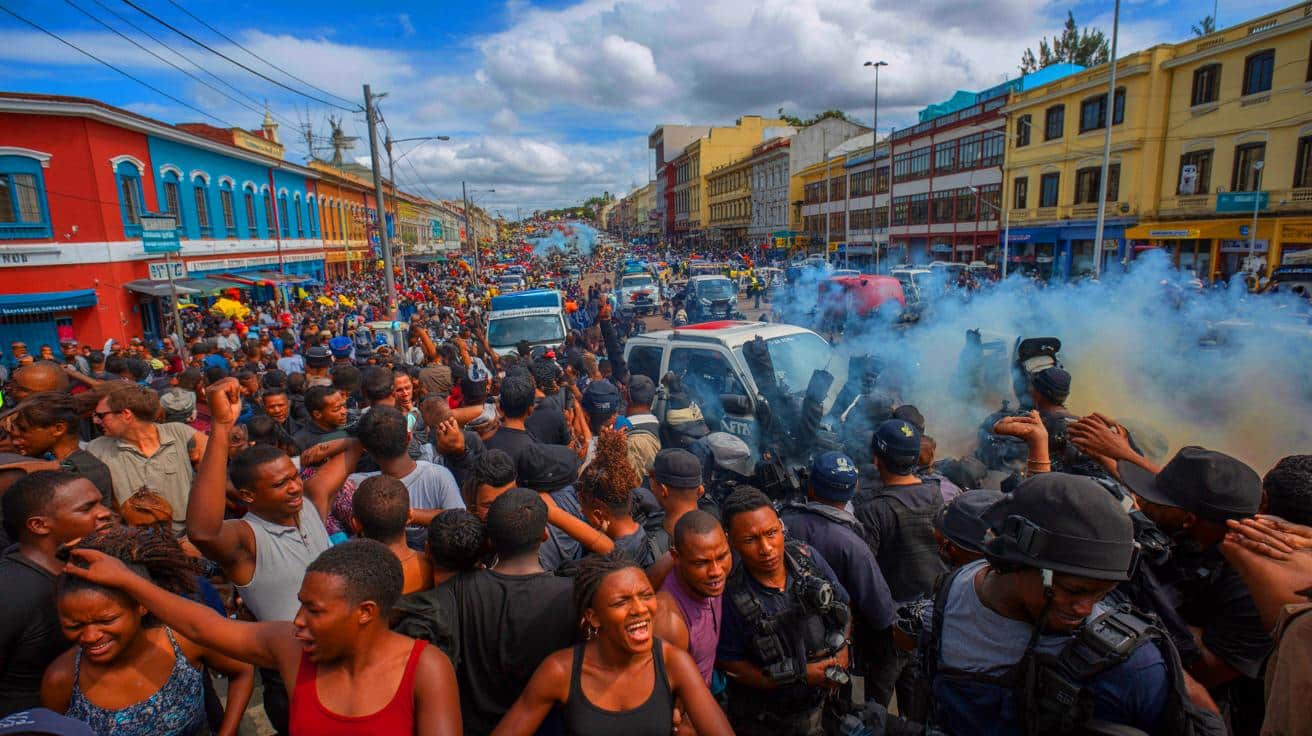
The streets of Antananarivo have become a focal point for protests, with demonstrators determined to make their voices heard. Security forces have intensified their presence, particularly around key areas such as Democracy Square, which has become symbolic of the movement. On Wednesday, authorities took decisive action to prevent protesters from accessing this critical location. Tear gas was deployed, and the resulting chaos forced many to seek refuge in nearby alleys. Despite these measures, the resolve of the demonstrators remains unshaken. “We are not afraid. We are ready to fight to the end,” declared one protester, underscoring the determination of those involved.
Protesters had previously succeeded in occupying Democracy Square, highlighting their ability to mobilize significant numbers. However, the subsequent police response has been swift and forceful, reflecting the government’s intent to maintain control. While the square was deserted on Wednesday, its significance as a site of resistance endures. The demonstrators’ demands extend beyond immediate grievances to a broader call for leadership change, specifically the resignation of President Rajoelina.
Underlying Causes of the Unrest
The ongoing protests in Madagascar are symptomatic of deeper issues that have long plagued the nation. Chief among these are chronic shortages of water and electricity, which have severely impacted the daily lives of citizens. These challenges have exacerbated public frustration, serving as a catalyst for the current demonstrations. The Gen Z demographic has been particularly vocal, leveraging social media and other platforms to organize and amplify their demands for change.
President Rajoelina’s decision to dismiss his government was an attempt to quell the unrest, yet it appears to have been insufficient. Citizens remain dissatisfied with the pace of reforms and the government’s ability to address fundamental needs. The call for the president’s resignation reflects a broader disillusionment with the status quo and a desire for new leadership that can effectively tackle these pressing issues. As the protests continue, the focus on systemic problems suggests that resolution will require more than temporary measures.
Madagascar Protesters Expose Shocking Truth That Terrifies Government And Sparks New Wave Of Unrest
Freedom of Speech Under Threat?
As tensions rise, concerns about freedom of speech and the right to protest have also come to the forefront. Demonstrators and journalists at the scene have reported instances of being blocked and dispersed, raising alarms about potential infringements on civil liberties. The use of tear gas and the heavy police presence have contributed to a climate of fear and uncertainty, prompting questions about the balance between maintaining order and respecting democratic rights.
These developments have drawn attention from international observers, who are closely monitoring the situation. The emphasis on freedom of speech as a cornerstone of democracy is particularly resonant in light of the current circumstances. As the government seeks to navigate this complex landscape, the manner in which it addresses these concerns will likely influence both domestic and international perceptions of its commitment to democratic principles.
Support and Resistance
In the midst of the protests, support for President Rajoelina has not entirely waned. Individuals close to the president have actively called for his supporters to rally in his defense. Social media platforms have become arenas for mobilizing this support, with messages urging unity and protection of the current leadership. This dynamic underscores the polarized nature of the political landscape in Madagascar, where loyalty and opposition coexist in a delicate balance.
As supporters and opponents of the president engage in a battle for influence, the outcome remains uncertain. The ability of each side to effectively convey their message and mobilize their base will be crucial in determining the direction of future developments. The situation presents a complex challenge for the government, which must navigate these competing forces while addressing the root causes of the unrest.
As Madagascar continues to grapple with these multifaceted challenges, the path forward remains uncertain. The protests highlight deep-seated issues that require thoughtful and comprehensive solutions. As the government and citizens alike seek a resolution, the question arises: How will Madagascar navigate this pivotal moment in its history, and what will it mean for the future of its democracy?