


Ancient Forest Reveals Hidden Secrets That Could Shatter Everything We Know About Early Life on Earth Today
 By
Nomvula Dlamini
By
Nomvula Dlamini

| IN A NUTSHELL |
|
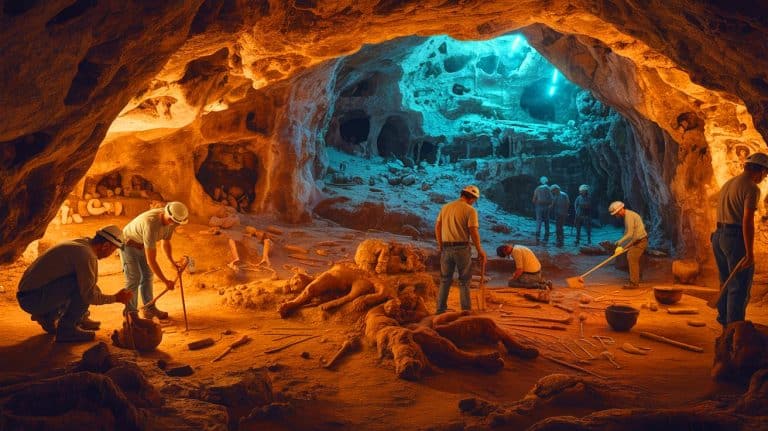
In a remarkable discovery, researchers have unearthed the Cairo Fossil Forest, a 385-million-year-old site in upstate New York that offers unprecedented insights into Earth’s prehistoric past. This ancient forest, hidden beneath layers of sediment, reveals a complex ecosystem that significantly impacted the planet’s atmosphere and land-based life forms. The fossilized remains of early trees, particularly those of the extinct genus Archaeopteris, provide a unique window into the Devonian period, a time crucial for understanding the evolution of terrestrial ecosystems. As scientists delve deeper into this find, the implications for our understanding of Earth’s history are profound and far-reaching.
Uncovering The Ancient Forest
The Cairo Fossil Forest, located in an abandoned quarry near Cairo, New York, stands as one of the most significant paleobotanical discoveries of recent times. Beneath layers of sediment, researchers have identified intricate patterns of trunks and roots, offering a vivid picture of an ancient ecosystem. Some roots measure nearly six inches in thickness, with networks extending up to 36 feet from the original trunks. These trees are believed to belong to the Archaeopteris genus, a pivotal group in the evolution of modern trees.
The discovery of the Archaeopteris trees is particularly noteworthy. These trees, which grew over 66 feet tall, played a crucial role during the Devonian period, known as the “age of fishes.” This era witnessed significant diversification in aquatic life, and the emergence of such trees indicates a parallel evolution in terrestrial ecosystems. The findings from Cairo not only push back the timeline of tree evolution by at least 20 million years but also highlight the diverse nature of early plant life.
Evolutionary Significance And Environmental Impact
The emergence of early forests like the Cairo Fossil Forest marks a pivotal moment in Earth’s history. These forests were instrumental in reshaping the planet’s atmosphere, primarily through carbon sequestration. The Archaeopteris trees absorbed substantial amounts of CO2, altering atmospheric conditions and fostering a more hospitable environment for future life forms. The impact of these trees extended beyond atmospheric changes; their roots accelerated chemical weathering, breaking down rocks to form carbonate ions, which eventually contributed to limestone deposition in oceans.
This process of weathering and carbon sequestration had long-lasting effects on Earth’s climate and geological formations. By transforming CO2 into stable carbonate compounds, these trees helped stabilize atmospheric carbon levels, setting the stage for future climatic conditions. The findings underscore the integral role of early forests in Earth’s carbon cycle and highlight the complex interplay between biological and geological processes.
Redefining The Timeline Of Tree Evolution
Prior to the discovery of the Cairo Fossil Forest, the oldest known Archaeopteris trees were dated to 365 million years ago. The Cairo site, however, pushes this timeline back by at least 20 million years, suggesting that complex forest ecosystems evolved much earlier than previously believed. This discovery not only redefines the timeline of tree evolution but also emphasizes the evolutionary significance of the Devonian period.
While the Cairo Fossil Forest is the oldest known example in North America, similar discoveries in southwest England reveal plant fossils dating to 390 million years ago. These fossils, resembling palm-like ferns, further illustrate the diversity and complexity of early plant life. The comparative analysis of these sites enhances our understanding of the evolutionary processes that shaped early terrestrial ecosystems and provides insights into the environmental factors that drove their development.
This Shocking Discovery Reveals Earth’s Secret Plan To Split Africa And Change Our World Forever
Connections To Nearby Fossil Sites
The Cairo Fossil Forest is part of a broader network of Devonian fossil sites, each contributing to our understanding of early terrestrial ecosystems. Approximately 25 miles away lies the Gilboa Fossil Forest, which was long considered the world’s oldest forest until the Cairo discovery shifted scientific perspectives. Dating to 382 million years ago, the Gilboa site offers valuable insights into the evolution of early plant life.
Comparative studies between the Cairo and Gilboa sites, as well as other Devonian fossil locations, provide a comprehensive view of forest expansion and species diversity. These studies reveal how early forests adapted to changing environmental conditions and highlight the dynamic nature of early ecosystems. By examining these ancient sites, scientists gain a deeper understanding of the factors that influenced the development of terrestrial life.
Enduring Lessons From The Devonian
The Cairo Fossil Forest offers crucial insights into the dynamics of ancient ecosystems and their role in shaping modern environments. By studying these fossilized trees, researchers can better understand the mechanisms behind carbon cycling, soil formation, and the establishment of terrestrial habitats. These ancient forests remain a testament to the complexity and resilience of early life on land, providing valuable lessons for understanding our present and future environmental challenges.
As scientists continue to explore the Devonian landscape, new questions arise about the evolution of life on Earth. How did these early ecosystems adapt to changing climates, and what lessons can they teach us about resilience and adaptation in the face of environmental change? The answers may hold the key to understanding the long-term impacts of human activity on our planet.
Continue reading