


“You Can’t Build a Mountain on Yogurt”: Scientists Stunned as New Study Reveals the Himalayas Are Held Up by Earth’s Mantle
 By
Joseph Mwangi
By
Joseph Mwangi
| IN A NUTSHELL |
|
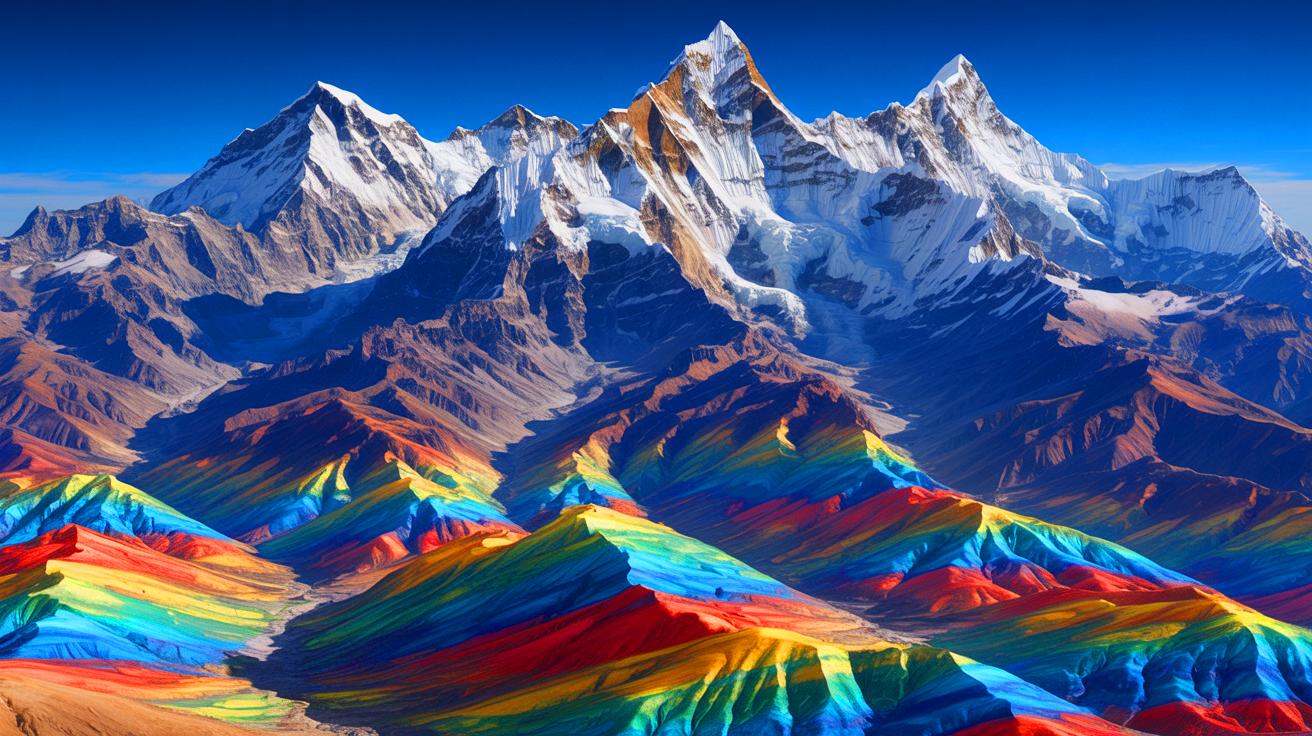
The Himalayas have long been a subject of intrigue for scientists and adventurers, captivating minds with their awe-inspiring heights and mysterious origins. Traditionally believed to be supported solely by the Earth’s crust, recent research has upended this notion, suggesting a more complex foundation involving the mantle. This revelation not only alters our understanding of the Himalayas but also has profound implications for tectonic studies worldwide. As researchers delve into these new findings, they are uncovering a richer, more nuanced picture of how these colossal mountains stand tall, inviting further exploration into the Earth’s geological processes.
The Traditional View: Crustal Support
For much of the 20th century, the prevailing belief among geologists was that the Himalayas were supported by a thickened crust. This idea, introduced by Swiss geologist Émile Argand in 1924, suggested that the collision of the Indian and Asian tectonic plates resulted in a thickened crust, reaching depths of 45 to 50 miles. This crustal thickening was thought to provide the necessary support for the immense weight of the mountain range.
However, this theory has faced significant scrutiny. As the crust descends, temperatures rise, causing rocks to turn molten and become ductile at depths around 25 miles. Geophysicist Pietro Sternai, leading the recent study, emphasized this limitation by stating, “You can’t build a mountain on top of yogurt,” referring to the viscous nature of the molten crust. This analogy underscores the challenges of relying solely on the crust for support, prompting scientists to explore alternative theories.
Unveiling the Mantle’s Role
In a groundbreaking shift, Pietro Sternai and his team propose that the mantle, lying beneath the Earth’s crust, plays a crucial role in supporting the Himalayas. Their research suggests that when the Indian plate slid beneath the Eurasian plate, some mantle material rose and was trapped between the two crusts, rather than flowing away as previously believed.
This mantle material, which does not liquefy as readily as the crust, provides additional strength and buoyancy, contributing to the sustenance of the Himalayas and the Tibetan Plateau. The new model, supported by seismic data and geological observations, offers a more comprehensive understanding of the region’s geology. Simone Pilia, a colleague of Sternai, noted, “Things actually start to make sense now,” as previously unexplained observations find clarity under this new framework.
Implications for Global Tectonic Studies
This revelation has far-reaching implications for tectonic studies beyond the Himalayas. Historically, geological data from the region were interpreted through the lens of the double-thickened crust theory. However, the inclusion of the mantle layer prompts a reevaluation of these interpretations.
Could other mountain ranges have similar structural compositions involving mantle support? This question invites researchers to reconsider the formation and sustainability of mountain ranges worldwide. By exploring the presence of mantle material beneath other tectonic boundaries, scientists may uncover new insights into the forces driving mountain uplift, potentially leading to a broader understanding of geological processes.
The Future of Himalayan Research
As researchers continue to unravel the complexities of the Himalayas’ geological structure, attention is shifting towards the broader implications of these findings. The discovery of mantle material between crustal layers invites a reevaluation of existing tectonic and geological models, challenging researchers to explore new methodologies in mountain formation studies.
These insights could lead to more accurate predictions of seismic activity, enhancing our ability to mitigate natural disasters. Furthermore, understanding the mantle’s role in mountain formation might have implications for resource exploration and environmental conservation efforts in mountainous regions.
The recent discoveries about the Himalayas prompt a reconsideration of long-held geological theories and underscore the importance of ongoing scientific inquiry. As we probe deeper into the Earth’s structure, we are reminded of the vastness of what remains to be understood. What other geological secrets might lie beneath the Earth’s surface, waiting to reshape our understanding of the world?
Continue reading