


“They Hit the Earth’s Jackpot”: China Unearths a Supergiant Gold Deposit That Could Rewrite the Rules of the Global Economy
 By
Kwame Asante
By
Kwame Asante
| IN A NUTSHELL |
|
In an extraordinary revelation that could reshape the global gold market, a new discovery under the Wangu gold field in China’s Hunan province has been declared as potentially the largest gold ore deposit in the world. This “supergiant” deposit is estimated to contain around 1,100 tons of gold ore, with some veins reaching depths of up to 9,800 feet below the surface. The implications of this finding are vast, not just for China but for the global economy as well. As the world’s top gold producer, China’s new discovery could significantly impact gold prices and international trade dynamics.
The Discovery of a “Supergiant” Gold Deposit
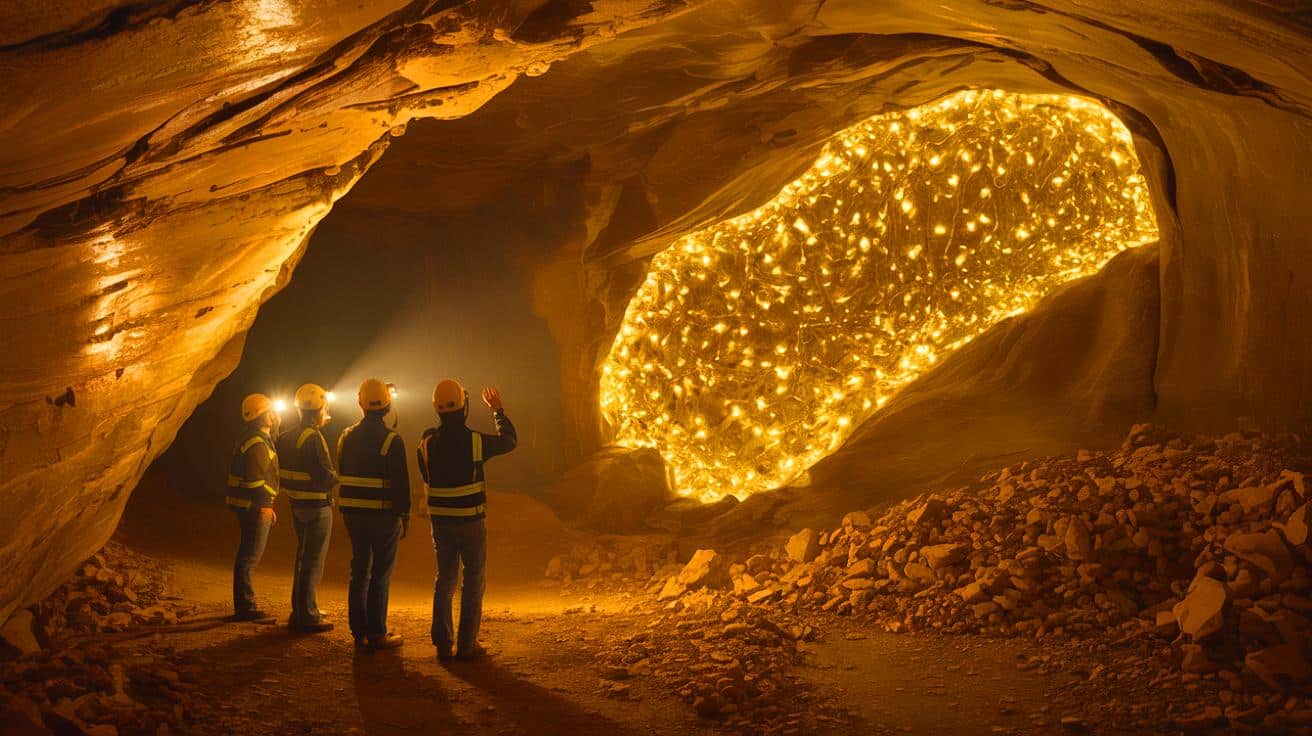
Chinese geologists have identified what could be the world’s largest gold ore deposit under the Wangu gold field in Hunan province. This “supergiant” discovery is estimated to comprise approximately 1,100 tons of gold ore. Such a massive cache of precious metal is rare, with experts suggesting that this could be the largest deposit of any precious metal ever found. State media reports indicate that over 40 gold veins, containing around 330 tons of gold ore, were initially detected. However, advanced 3D modeling has revealed a much larger potential, with the deposit possibly stretching to depths of 9,800 feet.
The economic value of this discovery is staggering. If the estimates hold, the entire deposit could be worth around $83 billion. This colossal discovery could place it ahead of South Africa’s South Deep gold mine, which currently holds the title of the largest gold mine in the world, with 1,025 tons of gold. The newfound deposit in China not only surpasses this but also has a higher quality of gold content, featuring 138 grams of gold per metric ton of ore.
Impact on Global Gold Markets
The discovery of this vast deposit in China has already begun to ripple through global gold markets. As the world's leading gold producer, China relies heavily on gold, consuming approximately three times what it mines annually. This requires the country to be the largest importer of gold, purchasing significant amounts from other nations to meet domestic demands. The discovery has prompted a rise in the price of gold, reaching $2,700 per ounce, as reported by CCN.com.
This surge in gold prices reflects the market's response to the potential influx of gold from China. The ramifications on international trade and market stability could be profound. Countries that depend on exporting gold might find their markets affected as China potentially reduces its import needs. This shift could alter trade balances and economic strategies worldwide, making the gold market more volatile and unpredictable in the short term.
Historical Context and Future Prospects
Gold mining has a long history, with approximately 233,000 tons of gold mined globally to date, two-thirds of which have been extracted since 1950. This discovery in China adds a significant chapter to the ongoing narrative of gold mining. Historically, major gold finds have had substantial economic impacts, influencing everything from local economies to global financial systems.
The discovery in Hunan province not only strengthens China’s position as a dominant player in the gold industry but also raises questions about the future of gold mining worldwide. As technology advances, the ability to locate and extract gold from greater depths increases, potentially leading to new discoveries that could further shift the landscape of the global gold market.
Exploration and the Possibility of More Discoveries
The discovery at the Wangu gold field may not be the last word on the subject. According to Liu Yongjun, the vice head of the geological bureau, additional gold ore has been found in peripheral areas surrounding the primary site. This suggests that further exploration could uncover even more gold, expanding the potential of the current finding.
“Many drilled rock cores showed visible gold,” said Chen Rulin, an ore-prospecting expert, emphasizing the high-quality nature of the deposit.
This statement underscores the possibility that China’s current gold reserves could continue to grow. Continued exploration and technological advancements in geological surveying could lead to even more significant discoveries, potentially reshaping the global gold market in the years to come. The prospect of additional finds not only draws attention to China’s rich geological landscape but also to the potential for new gold rushes in other parts of the world.
The discovery of this supergiant gold deposit in China marks a significant milestone in the story of gold mining. As global markets react and the potential for further discoveries remains high, the world watches closely. How will this newfound wealth influence China's economic strategies, and what effects will it have on global trade and market dynamics in the coming years?