


This Hidden Crater Beneath Chesapeake Bay Is Three Times the Grand Canyon And Reveals Earth’s Most Terrifying Ancient Impact
 By
Nomvula Dlamini
By
Nomvula Dlamini
| IN A NUTSHELL |
|
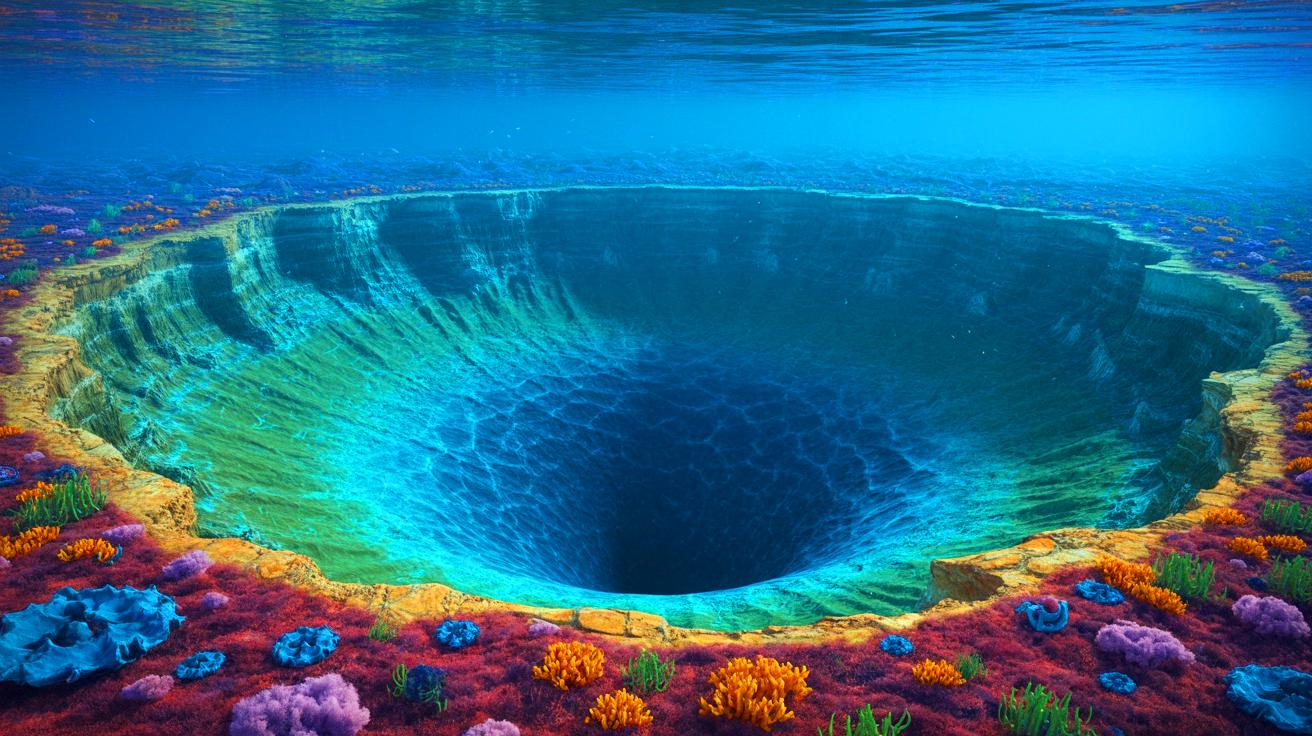
The discovery of a colossal underwater crater beneath Chesapeake Bay has captivated scientists and historians alike. Formed by an asteroid impact approximately 35 million years ago, this crater is three times the size of the Grand Canyon, providing a unique glimpse into Earth’s violent past. This finding, which emerged from recent marine geophysical surveys and studies in Meteorite & Planetary Science, significantly alters our understanding of catastrophic events on our planet. It not only sheds light on ancient climate shifts and geological transformations but also opens new avenues for exploring Earth’s evolutionary history.
The Unseen Crater Beneath Chesapeake Bay
For millions of years, the massive impact crater beneath Chesapeake Bay lay hidden beneath layers of sediment. It was not until the early 1990s that marine geophysical surveys and subsequent drilling unveiled its existence. This crater, the result of an asteroid striking the ocean near the East Coast of North America, was formed during the Eocene-Oligocene transition. Spanning 25 miles in diameter, it stands as one of the largest known impact craters in the United States, dwarfing many others around the globe.
Beyond its sheer size, the crater represents a vital opportunity for scientific study. It serves as a window into Earth’s violent past, offering insights into the geological and environmental effects of such an ancient impact event. The asteroid’s collision would have sent shockwaves through the Earth’s crust, triggering massive earthquakes, fires, and a tsunami that reshaped the East Coast. These events would have caused immediate and catastrophic changes to the landscape and ecosystems, highlighting the role of asteroid impacts in shaping Earth’s history.
This Shocking Discovery Reveals Earth’s Secret Plan To Split Africa And Change Our World Forever
How the Impact Shaped the Landscape
The asteroid impact left a lasting mark on the landscape of what is now Virginia and Maryland. Upon collision, the asteroid propelled debris into the atmosphere, igniting fires that ravaged vast areas. The resulting shockwaves triggered massive earthquakes, causing widespread destruction across North America. Perhaps most dramatically, a colossal tsunami altered the coastline, leaving an indelible legacy in the geological record.
The environmental aftermath extended far beyond the immediate impact zone. Debris from the collision spread over an area of more than 4 million square miles, nearly ten times the size of Texas. This material included shock-metamorphosed minerals such as tektites and zircon crystals, which provide crucial insights into the intense pressures generated by the impact. Preserved in ocean floor sediments, these materials act as a time capsule, enabling scientists to reconstruct the timeline and intensity of the asteroid strike.
The Global Effects and Climate Shifts
The effects of the asteroid strike were not confined to the Chesapeake Bay region. The impact launched debris into the atmosphere, leading to a temporary "impact winter" that likely lowered global temperatures for a time. This cooling effect would have had profound implications for ecosystems and climate, potentially contributing to the mass extinction events of the Eocene-Oligocene transition.
In addition to its cooling effects, the impact released significant amounts of carbon dioxide and other greenhouse gases into the atmosphere, leading to long-term warming after the initial cooling period. Understanding these climatic shifts is crucial for comprehending how similar asteroid impacts could influence Earth's future climate patterns. The study of these events provides valuable insights into the delicate balance of climatic forces and the potential consequences of sudden geological changes.
The Broader Implications of the Discovery
The discovery of the Chesapeake Bay crater has broader implications for our understanding of Earth's geological history. It underscores the potential for undiscovered impact sites to reshape our understanding of past catastrophic events. As scientists continue to explore the crater, they hope to uncover more about the nature of the asteroid itself and the precise effects of the impact on the surrounding environment.
Moreover, this discovery highlights the importance of continued exploration and study of Earth's hidden geological features. By examining the crater and its remnants, scientists can gain a deeper understanding of the processes that have shaped our planet over millions of years. This knowledge is not only crucial for understanding the past but also for preparing for potential future impacts and their consequences.
The discovery of the massive underwater crater beneath Chesapeake Bay serves as a reminder of the dynamic and ever-changing nature of our planet. It provides a unique opportunity to study the effects of ancient asteroid impacts and their lasting influence on Earth's climate and geology. As scientists delve deeper into the mysteries of this colossal impact, what new insights will they uncover about our planet's history and its future?
Continue reading