


“They Found It in the Amazon”: Scientists and Will Smith Uncover a New Giant Anaconda Species That Could Be the Largest Snake on Earth
 By
Kwame Asante
By
Kwame Asante
| IN A NUTSHELL |
|
In a remarkable discovery that could alter our comprehension of the Amazon’s diverse wildlife, scientists collaborating with Will Smith for a National Geographic series have identified a new species of giant anaconda. This exciting find occurred in the Ecuadorian Amazon and introduces the northern green anaconda to the scientific community. The revelation, captured during the filming of “Pole to Pole with Will Smith,” has sparked interest and excitement among herpetologists and nature enthusiasts alike. The discovery not only sheds light on the incredible biodiversity of the Amazon but also emphasizes the importance of indigenous knowledge in understanding these elusive creatures.
A Discovery Like No Other
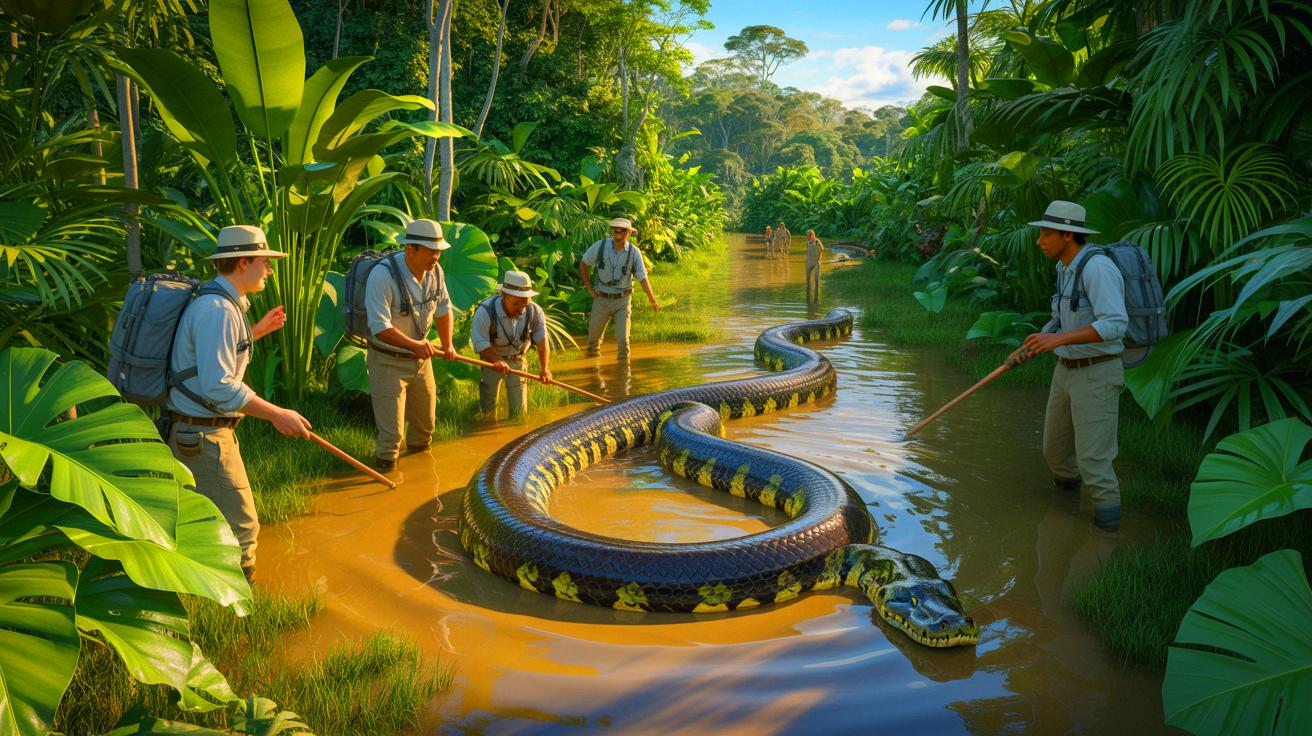
The dense jungles of the Ecuadorian Amazon became the setting for an extraordinary discovery by a team led by Professor Bryan Fry from the University of Queensland. While filming in the remote Bameno region of the Baihuaeri Waorani Territory, the team encountered a new species of anaconda, now known as the northern green anaconda (Eunectes akayima). With potential lengths exceeding 20 feet, this species challenges existing records and broadens our understanding of anaconda diversity.
The discovery was made during the filming of “Pole to Pole with Will Smith,” adding a captivating layer to an already thrilling expedition. This find enriches the study of anacondas and highlights the Amazon’s rich biodiversity, an ecosystem that continually surprises scientists and explorers. The Amazon, home to countless undiscovered species, remains a treasure trove for researchers eager to uncover its secrets.
The Hunt for the Biggest Snake in the World
The expedition, lasting ten days, was a collaborative effort between scientists and indigenous hunters to seek out the truth behind local legends of colossal snakes. Navigating river systems in traditional canoes, the team successfully captured several giant anacondas, including a specimen measuring an impressive 20.7 feet in length.
This journey was more than just an exploration of the Amazon’s thick jungle; it was a quest to document and understand the world’s largest snakes. The collaboration between scientists and indigenous communities was vital in navigating the challenging terrain and accessing areas inhabited by these massive reptiles. This partnership highlights the significance of local knowledge in scientific discovery and conservation efforts, emphasizing the critical role indigenous people play in preserving their natural heritage.
The Local Legend: Snakes Growing Over 24 Feet?
Adding intrigue to this discovery are the longstanding legends of the Waorani people, who claim that some giant anacondas grow even larger than the team encountered, potentially surpassing 24 feet. If these accounts prove accurate, the northern green anaconda would be the largest snake species known to humankind.
The Waorani people hold these snakes in high regard, considering them sacred. Their stories of gigantic snakes exceeding 24 feet contribute a fascinating cultural aspect to this scientific discovery. The integration of scientific inquiry with indigenous folklore creates a rich tapestry of knowledge, respecting both traditional beliefs and modern science. Such collaboration could pave the way for further discoveries in the Amazon, where ancient wisdom and contemporary research intersect.
The Amazon’s Hidden Giant
The expedition faced numerous challenges, requiring navigation through complex river systems to reach the secluded habitats of these giant snakes. Anacondas were typically found in shallow waters, lying in wait for prey. The largest anaconda captured during the expedition measured an impressive 20.7 feet.
This discovery prompts profound questions about the Amazon’s biodiversity and the potential secrets it still holds. Could there be even larger anacondas awaiting discovery? As the northern green anaconda rewrites the record books, the Amazon remains a mysterious frontier. It holds untold stories and discoveries that challenge our understanding of nature. The region’s unexplored territories continue to beckon researchers, urging them to uncover the hidden wonders of this vast wilderness.
The revelation of the northern green anaconda showcases the enduring mysteries of the Amazon and the potential for groundbreaking scientific discoveries. As researchers delve deeper into this expansive ecosystem, they may unveil even more astonishing findings. What other secrets does the Amazon harbor, and how will they influence our understanding of the natural world?