

“They Thought It Was the Mantle”: Scientists Reveal South Africa’s Land Is Rising Because Its Water Is Disappearing (and it’s speeding up)
 By
Nomvula Dlamini
By
Nomvula Dlamini
| IN A NUTSHELL |
|
South Africa’s landscape is not only shaped by its rich biodiversity and cultural heritage but also by the dynamic forces beneath its surface. Recent research has revealed a surprising phenomenon: the country is rising. While scientists have long been aware of this uplift, a new study suggests that the cause may not be what was previously thought. Driven by climate change-induced droughts, the land is rising as a result of the loss of water. This discovery highlights the complex interplay between climate change and geological processes, offering new insights into how the Earth’s surface is responding to environmental shifts.
Understanding the Phenomenon: Rising Land in South Africa
South Africa’s rising land is a subject of both intrigue and concern among scientists. For years, the prevailing explanation attributed this uplift to mantle flow within the Earth’s crust beneath the region. The mantle, a layer of semi-solid rock beneath the Earth’s crust, can cause localized bulges in the surface when material upswells. This has been the accepted theory, linked to the Quathlamba hotspot, where a suspected mantle plume is thought to push the crust upward. However, recent findings suggest a different cause: the loss of water due to prolonged droughts.
Geodesist Makan Karegar and his team at the University of Bonn have presented a compelling case against the traditional mantle plume hypothesis. Using data from a network of Global Navigation Satellite System (GNSS) stations across the country, they observed an average rise of 6 millimeters between 2012 and 2020. This data, primarily used for atmospheric research, has revealed a significant correlation between land uplift and regions affected by severe droughts.
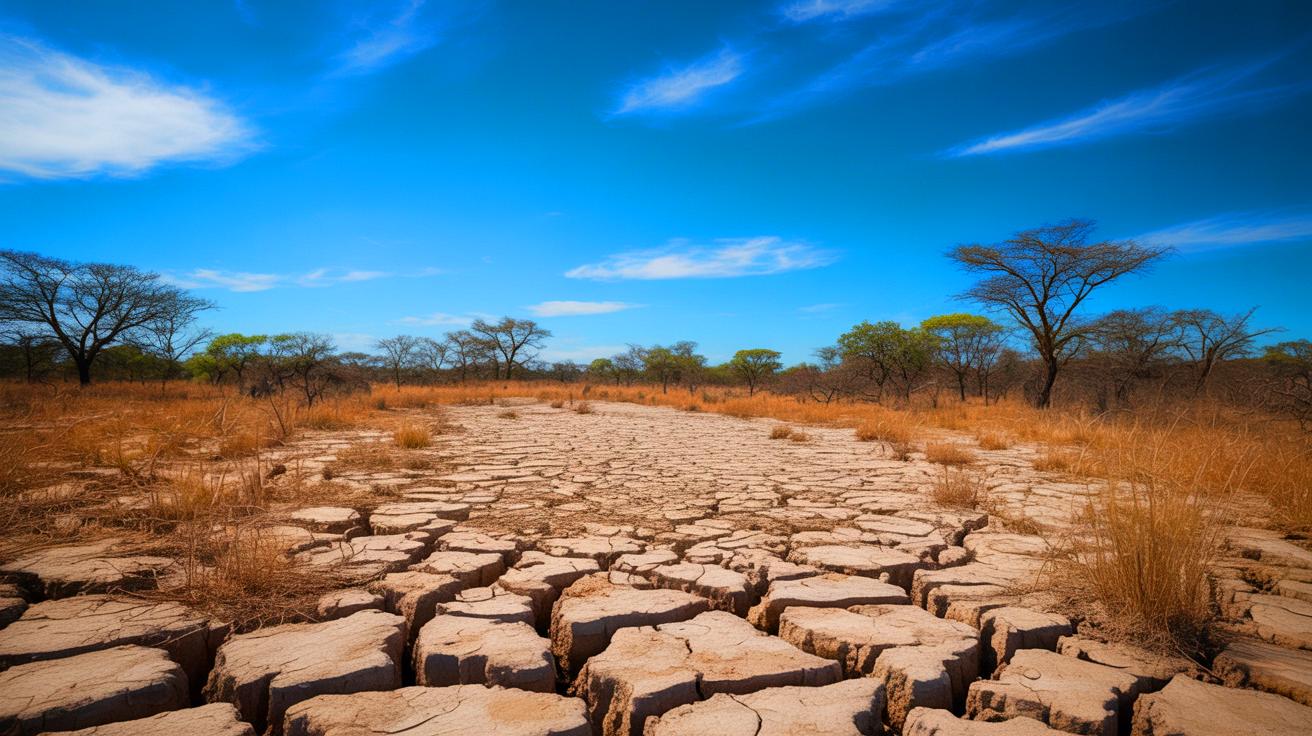
The impact of droughts on South Africa has been profound, particularly during the 2015 – 2019 period. Cape Town nearly faced “day zero,” a day when the city would run out of water. During this time, the GNSS data indicated that the land rose most dramatically. This correlation between drought periods and land uplift challenges the previous mantle flow theory and suggests that the loss of water mass plays a crucial role.
The Role of Satellite Data in Unveiling the Mystery
To further investigate the relationship between droughts and land uplift, researchers turned to data from the GRACE satellite mission. This joint effort by NASA and the German Aerospace Center measures changes in Earth's gravity field and water distribution. The GRACE data, despite its low spatial resolution, supported the hypothesis that areas with reduced water mass experienced greater land uplift. This provided additional evidence that water loss, rather than mantle plumes, could be the primary driver of the observed phenomenon.
The GRACE satellite data allowed scientists to calculate changes in the total mass of water storage, including surface water, soil moisture, and groundwater. By integrating this information with GNSS data, researchers could pinpoint areas where drought-induced water loss correlated with significant land rise. The study's findings emphasize the importance of using multiple data sources to understand complex environmental interactions.
Moreover, the team employed hydrological models to gain higher-resolution insights into how droughts influence the water cycle. These models confirmed that the loss of water mass during droughts could explain the observed land uplift. The research underscores the value of satellite data in uncovering hidden connections between climate change and geological processes.
Implications for Water Management and Climate Adaptation
The discovery that droughts are contributing to land uplift in South Africa has far-reaching implications for water management and climate adaptation strategies. As climate change continues to exacerbate drought conditions, understanding the effects on the Earth's surface becomes crucial for sustainable resource management. The research team suggests that the GNSS data, which is cost-effective and easy to collect, could serve as a valuable tool for monitoring water scarcity.
In South Africa and other regions vulnerable to drought, tracking changes in land elevation could provide insights into water availability, particularly for critical groundwater resources. Groundwater is a vital resource, widely exploited for agriculture and human consumption. By using GNSS data to monitor land uplift, authorities could gain a better understanding of groundwater depletion and implement more effective conservation measures.
This research highlights the interconnectedness of climate change, geological processes, and resource management. As droughts become more frequent and severe, the ability to predict and respond to changes in land elevation will be crucial. The findings open new avenues for using technology to address environmental challenges and promote sustainable development.
Future Research Directions and Global Implications
The study published in the Journal of Geophysical Research: Solid Earth marks a significant step forward in our understanding of land uplift related to climate change. However, it also raises important questions for future research. As scientists continue to investigate this phenomenon, they will need to explore the global implications of their findings. Could similar processes be occurring in other drought-prone regions around the world?
Further research is necessary to determine the extent to which drought-induced land uplift is a global issue. By expanding the use of GNSS and satellite data, researchers can assess whether other areas experiencing severe droughts are also undergoing similar geological changes. Understanding these patterns could improve our ability to predict and mitigate the impacts of climate change on a global scale.
Moreover, the study's insights could inform international efforts to address climate resilience and resource management. As we learn more about the complex interactions between climate change and geological processes, we may uncover new strategies for adapting to a changing world.
As we continue to explore the dynamic relationship between climate change and land uplift, one question remains: How can we leverage this knowledge to enhance our resilience to environmental challenges and ensure sustainable resource management for future generations?