

“They Found Earth’s Hidden Heartbeat”: Scientists Detect Pulsing Mantle Beneath Africa That’s Slowly Tearing the Continent Apart
 By
Joseph Mwangi
By
Joseph Mwangi
| IN A NUTSHELL |
|
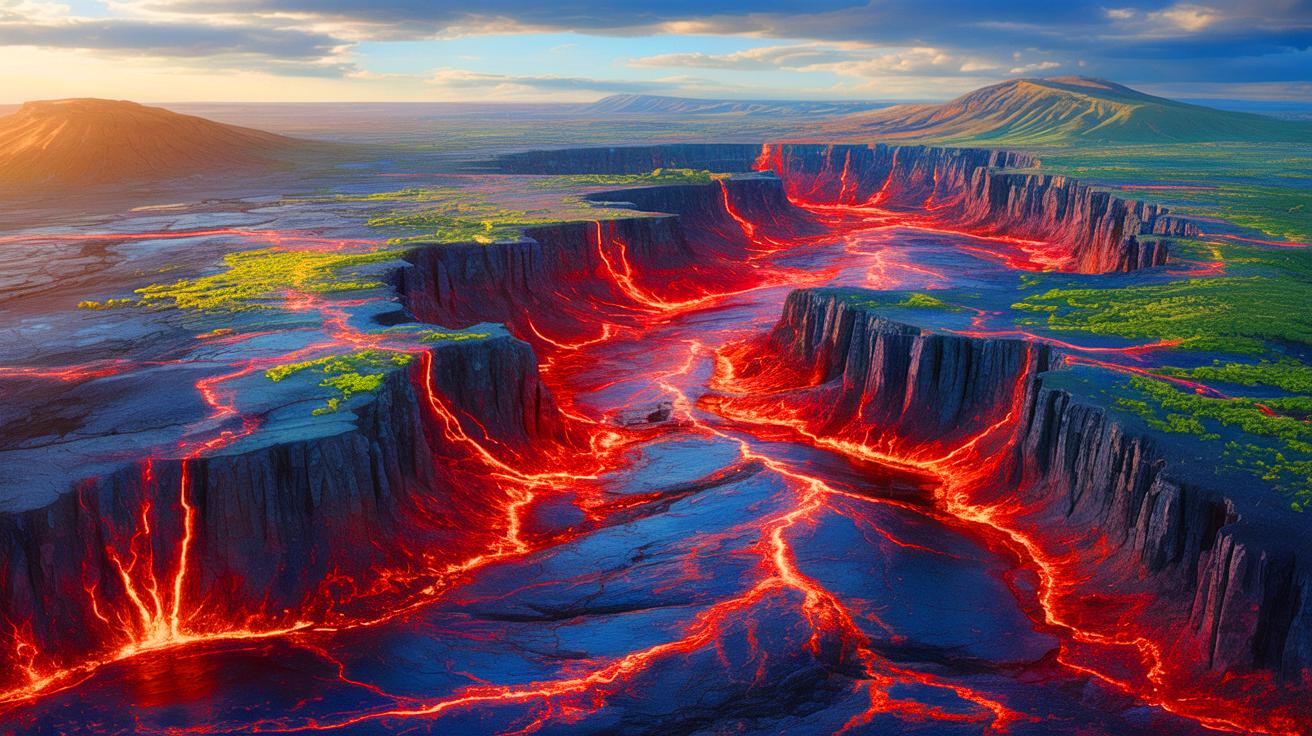
The discovery of a deep, rhythmic pulse beneath Africa’s Afar region is reshaping our understanding of tectonic activity. This pulse, akin to a heartbeat, is occurring at the Afar triple junction in Ethiopia where three tectonic plates converge. Scientists, led by geologist Emma Watts, have uncovered that molten magma is surging beneath the Earth’s crust, slowly tearing the continent apart. This activity marks the early stages of a new ocean basin’s formation. By analyzing volcanic chemical signatures, Watts and her team have revealed that the mantle beneath Afar is not static; it pulses with distinct chemical markers, providing new insights into the interaction between Earth’s interior and its surface.
The Afar Triple Junction: A Hotbed of Geological Activity
The Afar region is a geological hotspot where the Arabian, Nubian, and Somalian plates meet. Each of these plates is moving in different directions, creating a widening gap beneath the Afar Triangle. This region is known for its intense volcanic activity, as the shifting plates allow molten magma to reach the surface. Eventually, the crust here will thin enough for the area to drop below sea level, leading to the formation of a new ocean basin. This significant geological evolution is driven by mantle upwelling, a process not fully understood but now illuminated by recent research.
Scientists have long suspected that mantle upwelling contributes to continental breakup, but direct observation is impossible due to the Earth’s depth. Instead, researchers examine the material ejected from volcanoes, which offers clues about subterranean processes. Watts and her colleagues collected 130 volcanic rock samples from the Afar region and the Main Ethiopian Rift to conduct chemical analyses. These analyses, combined with existing data, helped create advanced models to visualize the mantle’s behavior beneath the Earth’s surface.
Pulsing Mantle and Chemical Striping
The study's findings revealed distinct chemical bands or stripes across the rift system, delivered by a single asymmetrical plume of material. This plume, shaped by the surrounding environment, pushes upwards from the mantle, creating a pulsing effect. Geologist Tom Gernon describes these pulses as behaving differently depending on the plate's thickness and the rate at which it spreads apart. In faster-spreading rifts like the Red Sea, the pulses travel more regularly, akin to a pulse through a narrow artery.
Such insights suggest that mantle plumes and upwellings are influenced by the dynamics of the tectonic plates above them. This discovery could inform future research into the processes that continually reshape our planet's surface. The pulsing nature of the mantle beneath the Afar region provides a new perspective on how Earth's interior interacts with its surface, potentially affecting volcanic and earthquake activity.
This Shocking Discovery Reveals Earth’s Secret Plan To Split Africa And Change Our World Forever
Implications for Understanding Earth's Evolution
Research conducted by Watts and her team has profound implications for our understanding of Earth's evolution. Geophysicist Derek Keir emphasizes that the study shows deep mantle upwellings can flow beneath tectonic plates, focusing volcanic activity where the crust is thinnest. This understanding is crucial for interpreting surface volcanism, earthquake activity, and continental breakup processes.
The findings suggest that the evolution of deep mantle upwellings is tightly connected to the movement of tectonic plates. This relationship provides a new framework for understanding how Earth's surface is remodeled over geological timescales. The team's research, published in Nature Geoscience, opens the door to further studies on mantle flow rates and their impact on plate tectonics.
Future Research and Global Implications
The discovery of the pulsing mantle beneath the Afar region raises new questions about the broader implications for global tectonic activity. Follow-on research could explore how mantle flow occurs beneath plates and its impact on surface geological features. Understanding these processes is essential for predicting future geological events and assessing their potential impacts on human populations.
The Afar region's unique geological activity provides a natural laboratory for studying continental breakup and ocean basin formation. By unraveling the mysteries of the Earth's interior, scientists can better predict and mitigate the effects of volcanic eruptions and earthquakes. As researchers continue to delve deeper into these phenomena, the question remains: How will these findings transform our understanding of Earth's dynamic processes and their impact on our world?
Continue reading