
“They’re Swallowing Cities Whole”: Nearly 3,000 Expanding Urban Gullies Threaten to Displace Over 3 Million People Worldwide
 By
Nomvula Dlamini
By
Nomvula Dlamini
| IN A NUTSHELL |
|
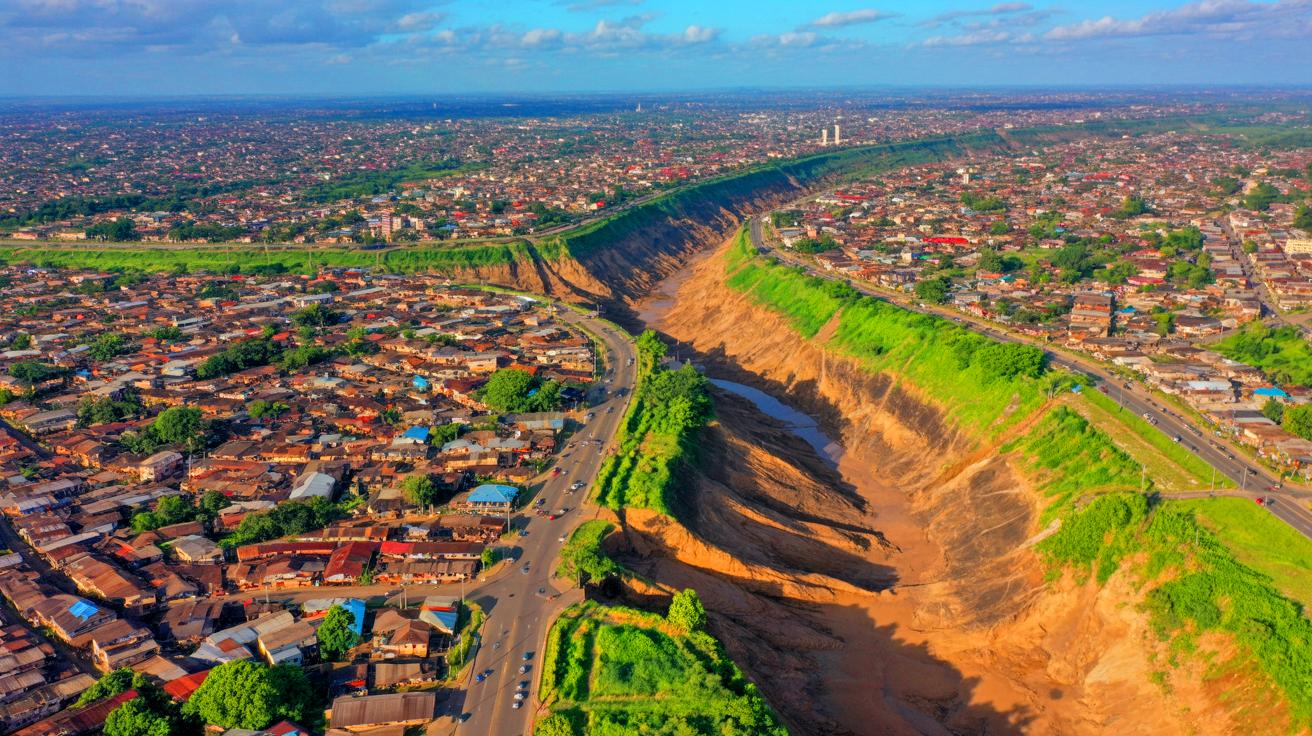
As urban landscapes rapidly expand, a silent and destructive force threatens the safety and stability of millions of residents worldwide. Known as urban gullies, these vast chasms have emerged as a significant risk in rapidly developing regions, especially in the Democratic Republic of the Congo (DRC). Researchers have identified nearly 3,000 of these growing fissures, which now pose a threat to displace over 3.2 million people. The gullies form due to a combination of poor urban planning, inadequate drainage, and increasing rainfall, exacerbated by climate change. Urgent attention and action are required to mitigate the dangers posed by these geological phenomena.
The Growing Threat of Urban Gullies
Urban gullies have become an alarming issue, particularly in rapidly developing regions. Researchers from Belgium’s Catholic University of Leuven and their collaborators have used satellite imaging to identify 2,922 giant cracks in urban areas. These fissures, exacerbated by poor drainage and rapid urban sprawl, now threaten over 3.2 million people. Unlike sinkholes, which appear suddenly, urban gullies are more insidious, expanding gradually and causing significant displacement.
The study highlights that urban gullies are not isolated incidents but a widespread and increasing problem. In just the DRC, more than 3.2 million people live in areas at risk. This threat is comparable to the dangers posed by landslides and floods, yet it remains largely overlooked. The research underscores the need for better urban planning and infrastructure to address this growing hazard.
Historical Context and Current Developments
Historical aerial photographs reveal that the problem of urban gullies has intensified over the decades. In the 1950s, only 46 of these fissures were documented. Today, they have spread across 26 Congolese cities, stretching over 435 miles. The researchers found that some channels reach depths of tens of meters.
The expansion of these gullies has been particularly rapid in recent years. From 2004 to 2023, nearly 120,000 people were displaced as their homes were swallowed by these expanding chasms. Since 2020, the rate of displacement has tripled, with an average of 12,000 residents being forced out annually. The capital city of Kinshasa, in particular, faces a severe threat, with 868 gullies cutting through densely populated neighborhoods.
Contributing Factors and the Role of Climate Change
Urban gullies result primarily from human activity. Poorly planned roads, inadequate drainage, and the removal of vegetation contribute significantly to their formation. As urban areas expand, the issue becomes more pronounced. Climate change, with its increased frequency of heavy rainfall, further exacerbates the problem, causing the ground to give way.
The researchers have called for urgent action, emphasizing the need for sustainable development and zoning. Without intervention, hundreds of thousands of people across Africa may be displaced within the next decade. In the DRC alone, more than a quarter of the 770,000 people living in potential expansion zones are at risk.
Solutions and the Path Forward
Preventing the formation of urban gullies is both more effective and economical than addressing them once they have formed. Stabilizing existing chasms can cost upwards of $1 million per gully. Researchers advocate for better urban planning and infrastructure as preventative measures. Gina Ziervogel, a geographer, stresses the importance of understanding the role of the environment and resources in urban areas.
Collaborating with local residents in danger zones can provide valuable insights and potential solutions. Additionally, wealthier nations have successfully invested in storm drains and soil stabilization to prevent similar disasters. The study’s authors hope to see urban gullies included in international disaster risk reduction plans, highlighting the global relevance of the issue.
As urban gullies continue to pose a threat to millions, the need for comprehensive intervention becomes increasingly urgent. The challenges of addressing this issue highlight the broader implications of rapid urban development and climate change. How can policymakers, urban planners, and communities work together to effectively mitigate the risks associated with urban gullies and ensure the safety of vulnerable populations?