


Archaeologists Uncover Over 100 Structures, Shedding Light on a Lost Ancient City Hidden in Peru’s Cloud Forest
 By
Kwame Asante
By
Kwame Asante
| IN A NUTSHELL |
|
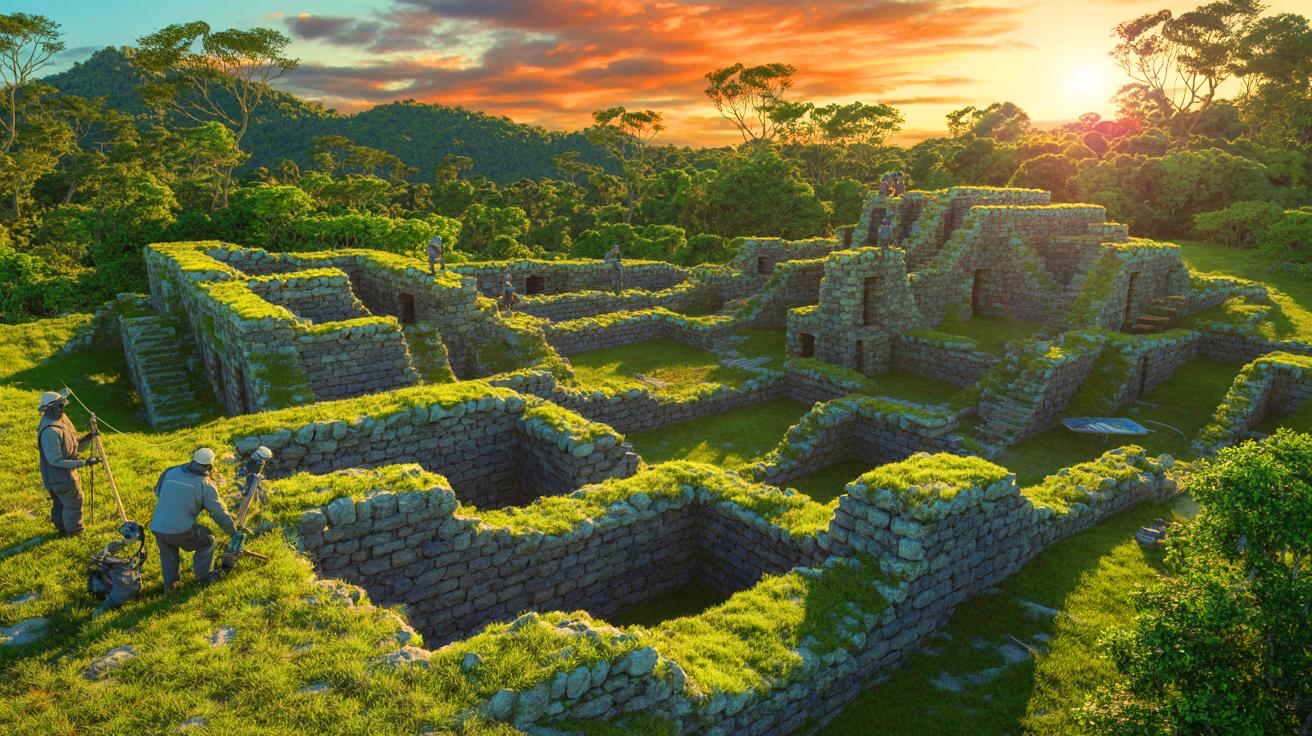
The recent discovery of over 100 previously unknown structures in Peru’s Rio Abiseo National Park has shed new light on the ancient Chachapoya civilization, often referred to as the “people of the cloud forest.” This significant archaeological find not only deepens our understanding of the Chachapoya’s architectural and societal complexity but also highlights the innovative techniques employed to uncover these hidden structures. The discoveries made at Gran Pajatén in the park’s remote cloud forest have provided unprecedented insights into the Chachapoya’s way of life, challenging previous assumptions about their civilization’s reach and influence.
Advanced Technologies Revolutionizing Archaeology
In recent years, technological advancements have transformed the field of archaeology, enabling researchers to explore sites once deemed inaccessible. The discovery at Gran Pajatén is a testament to this transformation. Archaeologists, with support from the World Monuments Fund, employed a variety of cutting-edge technologies from 2022 to 2024 to map the site. These included aerial and manual LiDAR scanning, photogrammetry, topographic registration, and technomorphological analysis.
LiDAR, or Light Detection and Ranging, played a pivotal role in this discovery. By using laser pulses to penetrate the dense forest canopy, LiDAR allowed archaeologists to create detailed maps of the terrain, revealing structures that had been obscured for centuries. This non-invasive method proved essential in preserving the delicate environment of the cloud forest while providing comprehensive documentation of the site.
The use of these technologies has not only facilitated the discovery of the structures but also offered a new perspective on the Chachapoya’s architectural and societal achievements. By unveiling these hidden structures, archaeologists have been able to piece together a more complete picture of the Chachapoya civilization and its extensive network of settlements.
Unveiling the Complex Legacy of the Chachapoya
The newly uncovered structures at Gran Pajatén have provided valuable insights into the Chachapoya civilization, renowned for its sophisticated urban centers and ceremonial sites. The site features an array of ceremonial buildings adorned with high-relief friezes and stone mosaics, showcasing the Chachapoya’s advanced artistic and architectural traditions. These findings suggest a civilization that was interconnected and complex, with pre-Hispanic roads linking Gran Pajatén to other sites in the region.
The Chachapoya civilization, which thrived from the 7th to the 16th centuries, was known for its unique cliffside burial sites, agricultural terraces, and ceremonial platforms. The discoveries at Gran Pajatén confirm the presence of these features, offering a glimpse into the Chachapoya’s daily life and societal organization. Importantly, the site is believed to have served as a major ceremonial and political center, indicating its significance within the broader Chachapoya world.
The findings challenge previous assumptions about the Chachapoya’s isolation, revealing a civilization that was part of a larger network of settlements. This interconnectedness suggests a level of societal complexity that had not been fully appreciated until now.
Preservation and Conservation Efforts
The remote location of Gran Pajatén has played a crucial role in preserving the site, with minimal human intervention over the centuries. However, the structures are fragile and often overgrown with vegetation, posing significant challenges for conservation. To address these challenges, archaeologists have undertaken several conservation interventions, including reinforcing stairs, stone reliefs, and reassembling parts of a perimeter wall.
Ricardo Morales Gamarra, leading the conservation efforts, emphasized that the work at Gran Pajatén could serve as a model for future projects in the region. The balance between excavation and preservation is critical to ensuring the site’s long-term survival while allowing for continued research. The use of advanced technologies, such as LiDAR, has been instrumental in minimizing the environmental impact of the excavation, offering a sustainable approach to studying and documenting the site.
This careful approach to conservation highlights the importance of protecting the cultural heritage of the Chachapoya, ensuring that future generations can learn from these ancient structures.
Bringing the Chachapoya Story to a Global Audience
Despite the challenges of accessing Gran Pajatén, efforts are underway to share its rich history with a global audience. The Museo de Arte de Lima in Peru is hosting a free exhibition dedicated to the Chachapoya culture and the recent discoveries. By employing digital storytelling tools, the exhibition aims to bring the stories of the Chachapoya civilization to life for audiences worldwide.
Benedicte de Montlaur, president and CEO of the World Monuments Fund, highlighted the potential of these technologies to share the Chachapoya’s stories widely through immersive digital storytelling. While physical access to the site may be limited, these digital tools offer an opportunity for the public to explore and learn about the Chachapoya, ensuring their legacy is preserved and appreciated across generations.
The use of digital storytelling not only educates but also fosters a greater appreciation for the Chachapoya’s contributions to history.
The discoveries at Gran Pajatén have opened a new chapter in our understanding of the Chachapoya civilization. As archaeologists continue to explore these ancient structures, the story of the Chachapoya is being rewritten, offering fascinating insights into their complex network of settlements and cultural achievements. How will future technological advancements further reshape our understanding of ancient civilizations like the Chachapoya?
Continue reading