



Ancient Tools Unearthed in Kenya Reveal New Chapter in Human History, Challenging Long-Held Evolutionary Beliefs
 By
Kwame Asante
By
Kwame Asante
| IN A NUTSHELL |
|
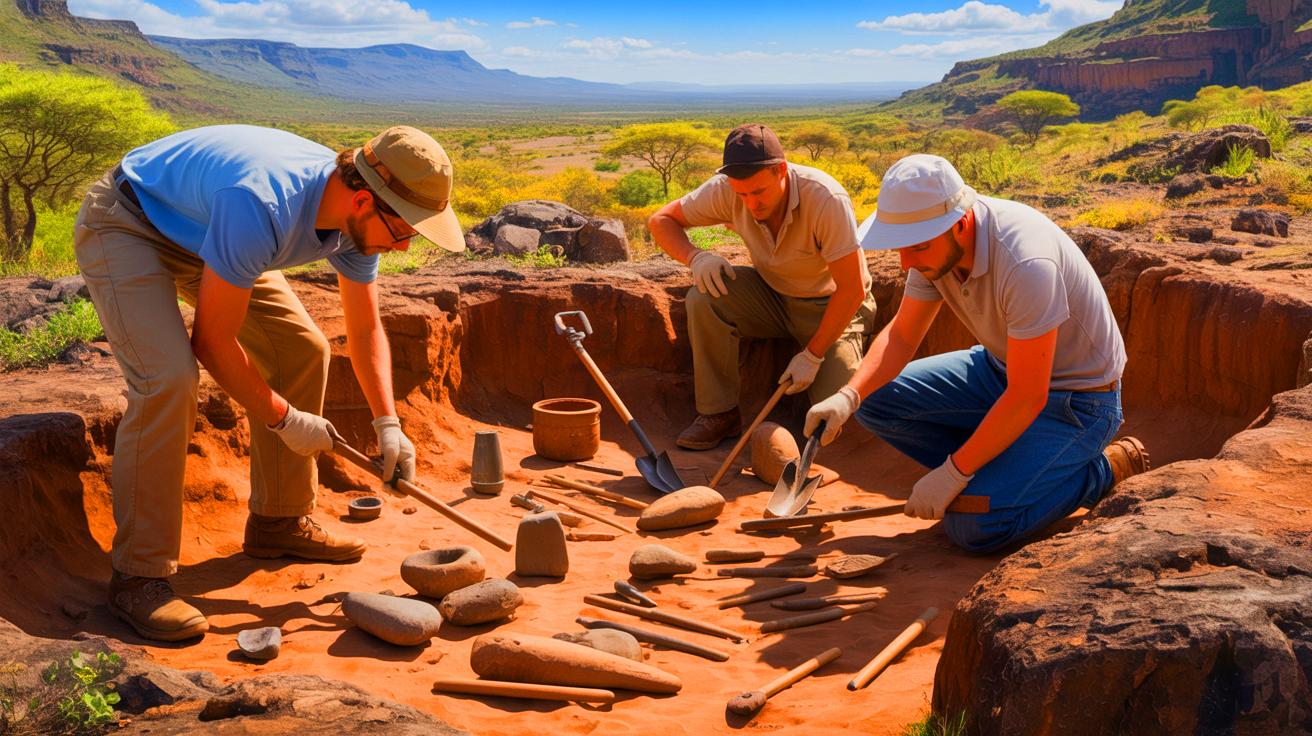
Archaeologists have made a groundbreaking discovery in Kenya, unearthing stone tools that date back 2.75 million years. These tools, found in the Turkana Basin, offer unprecedented insights into the technological practices of early hominins, challenging long-held beliefs about the origins of human innovation. The Namorotukunan site, where these artifacts were discovered, tells a story of resilience and continuity over nearly 300,000 years. This discovery not only redefines our understanding of ancient toolmaking but also provides a glimpse into how early humans used technology to navigate a world rife with environmental challenges.
The Birth of Innovation in an Unstable World
A recent study published in Nature Communications has reshaped our understanding of the dawn of human ingenuity by tracing the origins of early Oldowan technology back 2.75 million years. This research, centered on excavations in Kenya’s Turkana Basin, reveals that early humans crafted stone tools that endured through drastic environmental changes. These artifacts were not merely ad hoc creations but represented standardized designs that persisted across generations.
According to David R. Braun, a professor of anthropology and the study’s lead author, the findings highlight a long-standing technological tradition. He emphasizes that this was not a single breakthrough but a sustained cultural practice that underscored the resilience of early hominins. By using advanced techniques such as volcanic ash dating and magnetic signatures, researchers have painted a detailed picture of how these early humans refined their tools to adapt to their environment.
A Tradition That Survived Fire and Drought
The Namorotukunan site presents a vivid narrative of endurance in the face of environmental upheaval. Over 300,000 years, the region’s landscape underwent significant changes, from rivers shifting their courses to wetlands drying up and fires altering the terrain. Despite these challenges, the tradition of stone toolmaking remained consistent.
Dan V. Palcu Rolier, a senior scientist, remarked, “Namorotukunan offers a rare lens on a changing world long gone – rivers on the move, fires tearing through, aridity closing in – and the tools, unwavering.” This continuity of craft across epochs suggests that early humans relied on technology to stabilize their lives against the backdrop of constant change.
The sediment layers at the site offer a timeline of perseverance, revealing that each generation of toolmakers inherited and preserved precise techniques. This consistency indicates a deep cultural memory and shared purpose, reflecting the human capacity to use culture as a buffer against an unforgiving environment.
How Resilience Shaped Human Adaptation
Susana Carvalho, director of science at Gorongosa National Park, suggests that tool use was a generalized adaptation among early hominins, enabling them to not only survive but thrive amid environmental stress. The pollen and fossilized plant records corroborate this by illustrating the transition from lush wetlands to dry grasslands, yet the toolmaking techniques remained stable.
Rahab N. Kinyanjui, a researcher at the National Museums of Kenya, stated, “As vegetation shifted, the toolmaking remained steady. This is resilience.” This steadfastness in adaptation likely paved the way for significant evolutionary developments, such as dietary changes that included increased meat consumption.
The Oldowan toolkit’s consistency, alongside dietary diversification, marked a pivotal moment in early hominin ecology. It was the quiet persistence of knowledge transmission, rather than mere physical prowess or chance, that ensured survival across millennia.
The Implications of Technological Continuity
The discovery at Namorotukunan challenges previous assumptions about the sporadic nature of technological innovation in early human history. Instead, it suggests a continuous tradition of toolmaking that provided a foundation for future advancements. This revelation has significant implications for understanding the human capacity for adaptation and resilience.
By examining the layers of sediment and the artifacts within them, researchers have uncovered a narrative of cultural continuity that defies the chaotic forces of nature. These findings emphasize the role of technology as a stabilizing force, reinforcing the idea that early hominins were not passive victims of their environment but active agents in shaping their destinies.
The discovery of 2.75-million-year-old tools in Kenya offers a profound rethinking of human evolution, highlighting the enduring power of culture and technology. As we continue to explore our ancient past, what other secrets about our ancestors’ adaptability and ingenuity might still lie buried beneath the earth?
Continue reading