



“Everything We Thought About Britain Was Wrong”: This DNA Discovery Reveals a Hidden African Past (and It Changes History Forever)
 By
Joseph Mwangi
By
Joseph Mwangi
| IN A NUTSHELL |
|
The discovery of ancient DNA linking early Britons to West Africa is rewriting the history of early medieval Britain. This groundbreaking study reveals that two individuals buried in England during the seventh century had significant African ancestry. This finding challenges the traditional view of a homogeneous Anglo-Saxon society and suggests a more complex narrative of migration and cultural interaction. Through detailed analysis, researchers have uncovered evidence of African roots, expanding our understanding of Britain’s early populations and their connections to diverse regions far beyond Europe.
The Discovery of African Ancestry in Seventh-Century England
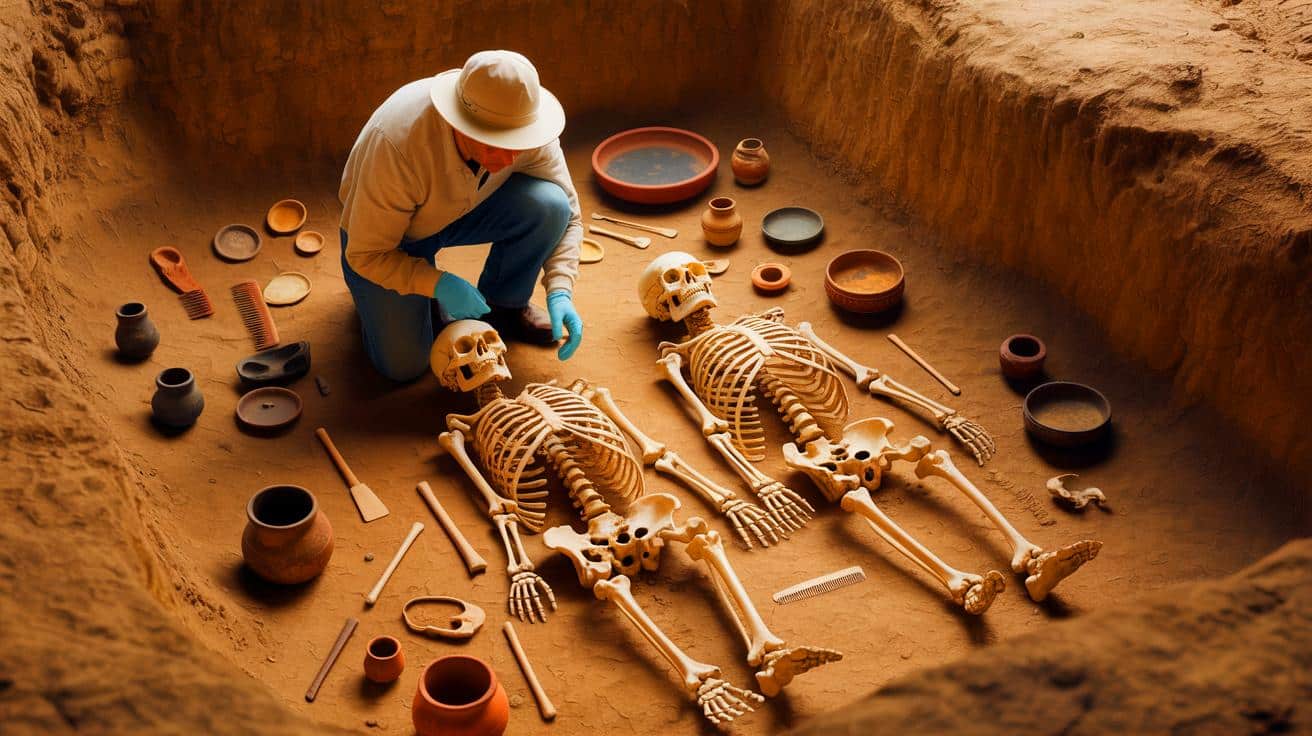
Archaeologists have unearthed the remains of two individuals in England, one in Kent and another in Dorset, whose DNA reveals surprising African ancestry. These individuals, buried during the early Anglo-Saxon period, exhibited significant genetic ties to sub-Saharan Africa. The analysis showed that between 20% and 40% of their DNA could be traced back to African origins. This discovery is significant because it provides evidence of African ancestry in Britain long before the colonial era. The presence of such diverse genetic backgrounds challenges long-held perceptions of Britain’s ancient populations as being predominantly European.
These findings emerged from the graves of an adolescent girl in Kent and a young man in Dorset, both dating back to the seventh century. The girl’s grave, in particular, contained artifacts indicating a blend of cultural influences. This genetic evidence, coupled with the material culture found at the burial sites, suggests complex patterns of migration and cultural exchange during this period. It highlights the interconnectedness of Britain and Africa, shedding light on the diverse nature of early British society.
Unveiling the Genetic Puzzle: The African Connection
The presence of African ancestry in these individuals raises intriguing questions about historical migration patterns. According to Duncan Sayer, a historical archaeologist, the DNA analysis shows not only genetic links but also material connections between early Britain and Africa. The adolescent girl from Kent was buried with items that reflect cultural exchanges, such as a pot from Frankish Gaul. These artifacts indicate a broader geographical reach and suggest that trade and cultural interactions extended beyond Europe.
This intersection of genetics and material culture presents a more complex narrative of human mobility and social networks than previously understood. The study suggests that early Britons were part of a dynamic network spanning multiple continents. This challenges the notion of insular communities and emphasizes the global nature of human interactions, even in the early medieval period. The findings open up new avenues for exploring the extent and nature of these historical connections.
African Ancestry Traced to Specific West African Groups
The genetic analysis conducted in this study reveals that the individuals’ African ancestry can be traced to specific West African ethnic groups. The DNA showed affinities with modern-day groups such as the Yoruba, Mende, Mandenka, and Esan. This discovery provides an unprecedented glimpse into the African connections of early medieval Britons. It suggests that migration patterns during the sixth and seventh centuries included significant movements from West Africa to Britain.
The researchers propose that these migrations were part of broader movements around North Africa during the sixth century. This period of political upheaval, including the Vandal conquest and subsequent Byzantine reconquest, may have facilitated the movement of people from sub-Saharan Africa into Europe. This context helps explain how individuals with African ancestry ended up in Britain, highlighting the complexity and reach of historical migrations.
The Role of Historical Context in Understanding the Migration
To understand how these individuals came to have African ancestry, it’s essential to consider the historical context of the period. The sixth century was marked by significant political and social changes, particularly in North Africa. The fall of the Roman Empire and the rise of the Byzantine Empire created new pathways for migration and cultural exchange. The reconquest of North Africa by the Byzantines around 533 to 535 AD opened up routes for people to move across the Mediterranean.
These historical events provide a backdrop for understanding the presence of African ancestry in Britain. The destruction of the Vandal Kingdom and the subsequent political shifts likely facilitated the migration of people from Africa to Europe. This context underscores the interconnectedness of different regions and challenges the perception of isolated communities in early medieval Europe. It highlights the complexity of human migration and the diverse influences that shaped British society during this period.
The Broader Significance of This Discovery
The discovery of African ancestry in seventh-century Britain has far-reaching implications for our understanding of early medieval Europe. While previous research has identified diverse populations in Roman Britain, this new study demonstrates that connections between Europe and Africa persisted beyond the fall of the Roman Empire. This genetic evidence broadens the historical narrative, offering a more nuanced view of early medieval Britain as a site of diverse and dynamic cultural exchanges.
The presence of African ancestry underscores the complexity of human movement and the interconnectedness of different regions. It challenges our perceptions of isolation in the early Middle Ages and highlights the global nature of human interactions. This discovery prompts us to reconsider the historical narratives of migration and cultural exchange, opening new avenues for research and exploration.
The revelation of African ancestry in early medieval Britain through DNA analysis marks a significant shift in our understanding of history. This study challenges traditional narratives and emphasizes the complexity of human interactions across regions and cultures. As we continue to explore our past, what other surprising connections might we uncover that could reshape our understanding of history and identity?
Continue reading