


“This Changes Everything We Knew About Life”: These Ancient African Fossils Reveal a Lost World Before Earth’s Greatest Extinction (and It’s Stunning)
 By
Kwame Asante
By
Kwame Asante

| IN A NUTSHELL |
|
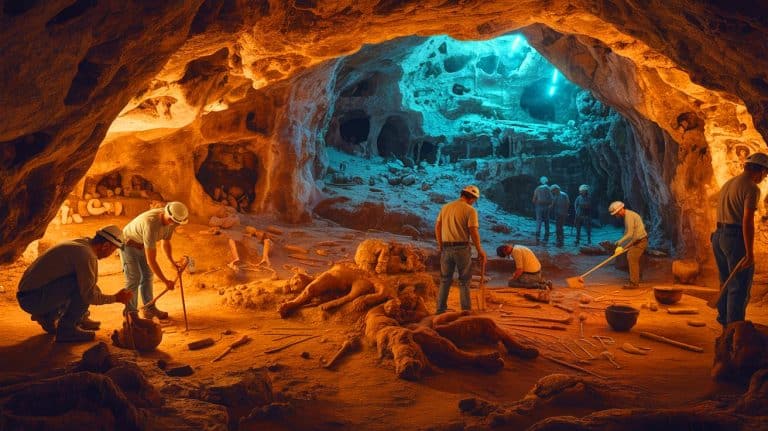
A recent fossil discovery in Africa is shedding light on one of the most mysterious periods in Earth’s history. Paleontologists have uncovered a significant collection of Permian-era fossils in southern Africa. These findings offer new insights into the life forms that existed just before the planet’s largest mass extinction event, known as the Great Dying. Occurring around 252 million years ago, this event wiped out nearly 70% of terrestrial species and an even greater proportion of marine life. By examining these fossils, scientists aim to understand better the evolutionary impacts of this catastrophic period and fill critical gaps in our knowledge of Earth’s natural history.
The Great Dying and Its Evolutionary Impact
The Permian period marks the end of the Paleozoic Era, a time of significant diversification of life across the continents. During this era, life forms gradually adapted from aquatic to terrestrial environments, creating complex ecosystems. However, the end of the Permian was characterized by the Great Dying, a catastrophic mass extinction event that profoundly altered the course of evolution. According to Christian Sidor, a professor of biology at the University of Washington, this extinction was a “cataclysm for life on Earth.” Despite its significance, many questions about the event, such as which species survived and the reasons behind their survival, remain unanswered.
The newly discovered fossils are helping scientists gain insights into the ecosystems that existed before the Great Dying. These fossils offer a glimpse into the adaptability and resilience of certain species, providing clues about the evolutionary trends that followed the extinction event. By comparing fossils from different regions of Pangea, researchers can explore the survival patterns of various species and how these patterns shaped the evolution of life on Earth.
Unearthing the Rich Fossil Record of Africa
Africa’s fossil-rich regions, particularly in Zambia and Tanzania, have yielded remarkable specimens from the Permian period. Excavations in the Ruhuhu, Luangwa, and Mid-Zambezi Basins have uncovered fossils that are pivotal in understanding the biodiversity of that era. These discoveries rival those from the more traditionally studied Karoo Basin in South Africa and provide a snapshot of life on Pangea’s southern supercontinent.
The fossils found in these regions include a diverse array of ancient herbivores, predators, and amphibians. Among them are dicynodonts, saber-toothed predators, and large amphibians resembling modern-day salamanders. These specimens reveal the rapid evolution and adaptation of ecosystems to changing climates and environments during the Permian period. They provide crucial information about the life forms that existed before the Great Dying and how these ecosystems might have responded to the impending extinction event.
The Role of Fossil Collections and Collaborations
The study of Permian fossils from Africa is the result of extensive collaboration between international researchers and local communities in Tanzania and Zambia. This partnership is crucial for the success of the project and ensures that the scientific and cultural value of these fossil sites is preserved. Fossils collected during field trips are meticulously studied, with plans to return them to their countries of origin after analysis.
Christian Sidor highlights the importance of these collaborations, noting the exceptional preservation of the fossils found in Zambia and Tanzania. This preservation allows researchers to make detailed species-level comparisons with fossils from other regions, refining our understanding of the Permian period and its evolutionary milestones. The ongoing cooperation between international teams and local institutions is essential for advancing paleontological research and protecting these invaluable fossils for future generations.
The Future of Paleontological Research in Africa
The discoveries in southern Africa have opened new avenues for understanding Earth’s evolutionary history. As researchers continue to analyze these fossils, they hope to uncover further details about the life forms that existed before and after the Great Dying. This research has the potential to reshape our understanding of how life on Earth has evolved in response to catastrophic events.
The success of this project underscores the importance of international cooperation and local involvement in scientific research. By working together, researchers can ensure that the fossil sites are preserved, and the knowledge gained is shared globally. As new findings emerge, they raise intriguing questions about the future of paleontological research in Africa. What other secrets might these ancient fossils hold, and how will they shape our understanding of Earth’s past and future?
Continue reading