



“It Started With a Thousand-Year Flicker”: This Ethiopian Discovery Reveals the Ancient Climate Collapse That Gave Birth to Civilization Itself
 By
Joseph Mwangi
By
Joseph Mwangi
| IN A NUTSHELL |
|
In an era where climate change is at the forefront of global discourse, the discovery of historical climate patterns in Africa offers a profound lesson for the future. Researchers examining sediments from Lake Chew Bahir in Ethiopia have uncovered a detailed climate record spanning hundreds of thousands of years. This ancient record reveals a period of dramatic environmental transformation in northern Africa, marking a significant tipping point that shaped the region’s history. As we grapple with the implications of modern climate change, understanding these past events could illuminate potential future scenarios and guide our responses to emerging challenges.
The Transformation of Northern Africa
Approximately 5,500 years ago, northern Africa underwent a dramatic shift. The Sahara Desert expanded, transforming previously lush grasslands, forests, and lakes into arid landscapes. This shift forced human populations to retreat to more hospitable areas such as mountains, oases, and the fertile Nile valley. The concentration of people in these regions spurred innovation in agriculture and societal organization, eventually leading to the rise of ancient Egypt, one of the world’s first great civilizations. This period, transitioning from the last “African humid period” to the current arid conditions, exemplifies a climate tipping point – a threshold that, once crossed, results in significant and lasting changes to the environment.
Climate tipping points are of particular interest to scientists today as they seek to understand the thresholds that could trigger dramatic shifts in the current climate system. The study of past events, such as the transformation in northern Africa, provides valuable insights into these phenomena. By examining the conditions that led to past tipping points, researchers hope to identify potential early warning signs for future climate changes, which could help mitigate their impact.
Exploring 620,000 Years of Environmental History
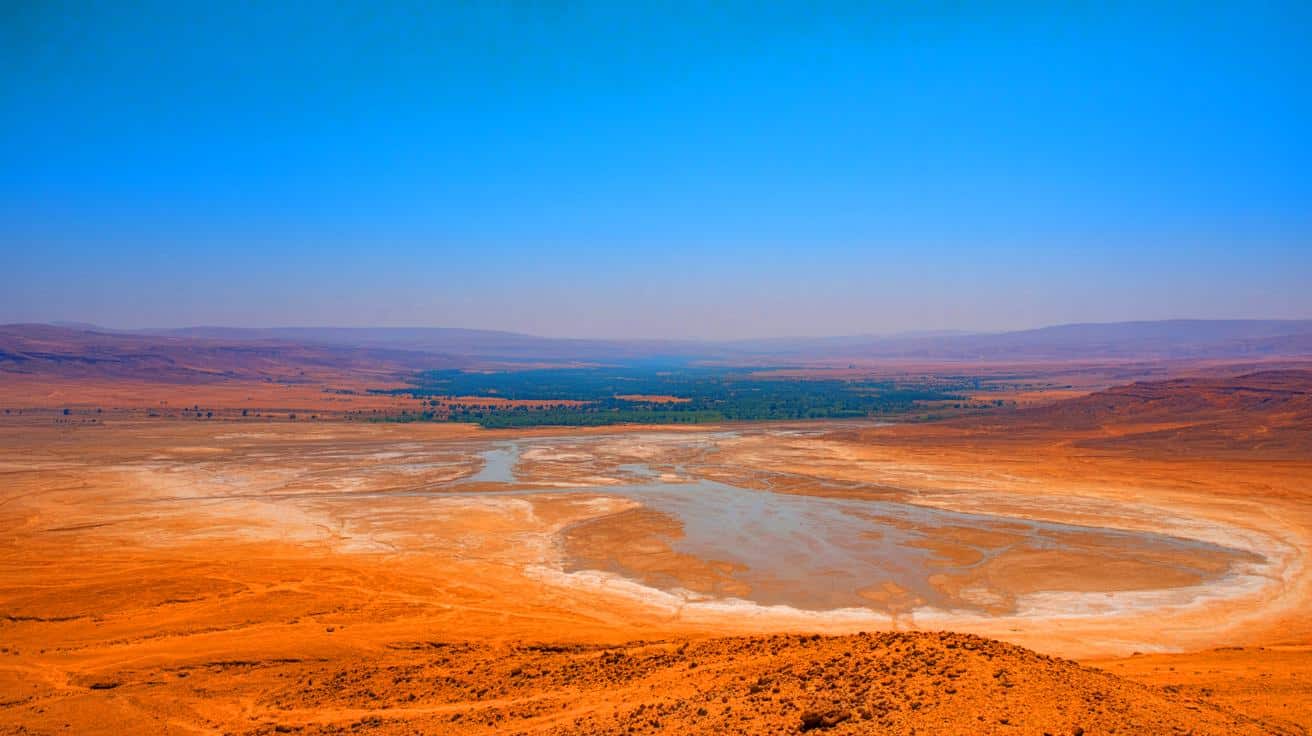
To delve deeper into the climatic history of Africa, an international team of scientists embarked on an expedition to the Chew Bahir basin in southern Ethiopia. During the last African humid period, this area was home to an extensive lake, and the sediment deposits beneath its bed contain a precise record of climate-driven fluctuations over the past 620,000 years. By drilling 280 meters below the dry lake bed, researchers were able to extract sediment cores that provide critical chemical and biological data.
The analysis of these cores revealed that at the end of the African humid period, the region experienced approximately 1,000 years of alternating dry and wet conditions. This period of "climate flickering" is characterized by at least 14 dry phases and seven wet phases, each lasting between 20 and 80 years. This pattern of fluctuation suggests that the region was on the brink of a permanent climate shift, which eventually led to the arid conditions that persist today.
Understanding Climate Flickering
Climate flickering, as observed in the Chew Bahir sediment cores, represents rapid and high-frequency changes between contrasting climate states. This phenomenon is not unique to the end of the African humid period; similar flickering occurred around 379,000 years ago in the same region. The recurrence of such patterns suggests that climate flickering may serve as a precursor to major tipping points, providing a potential early warning signal for significant environmental changes.
Understanding these natural fluctuations is crucial for interpreting past climate transitions and predicting future shifts. While some scholars argue that human activities, such as agriculture and livestock introduction, accelerated the end of the African humid period, the evidence of natural climate flickering challenges this perspective. Regardless, the impact of these shifts on human populations was profound, as communities had to adapt to rapidly changing environmental conditions.
Implications for Modern Climate Change
The confirmation of climate flickering as a precursor to major tipping points holds significant implications for our understanding of modern climate change. Identifying similar patterns in current climate data could offer early warning signals of impending shifts, allowing societies to prepare and adapt accordingly. This is especially relevant for regions like eastern Africa, where nearly 500 million people are already vulnerable to climate change impacts such as drought.
As the global climate approaches critical thresholds, the lessons learned from historical climate events underscore the importance of proactive measures and adaptive strategies. By recognizing and responding to early warning signs, we can mitigate the effects of climate change and protect vulnerable populations from its most severe consequences.
The study of ancient climate patterns in Africa not only enriches our understanding of past environmental transformations but also serves as a vital tool for anticipating future changes. As we continue to explore the intricate dynamics of climate systems, the question remains: How can we best use this knowledge to safeguard our planet and its inhabitants from the challenges of a rapidly changing climate?