



30,000-Year-Old Discovery Reveals Shocking Secrets That Could Shatter Everything We Thought About Stone Age Life
 By
Joseph Mwangi
By
Joseph Mwangi
| IN A NUTSHELL |
|
The recent discovery of a Stone Age toolkit in the Czech Republic has opened a window into the lives of prehistoric humans. Found at the Milovice IV site, this collection of stone blades and bladelets reveals much about the daily existence and survival strategies of hunter-gatherers from approximately 30,000 years ago. This find, reported by Live Science, is significant because it offers a comprehensive look at the tools that may have belonged to a single individual. Such discoveries are rare and provide invaluable insights into the Upper Paleolithic period.
A Unique Discovery at Milovice IV
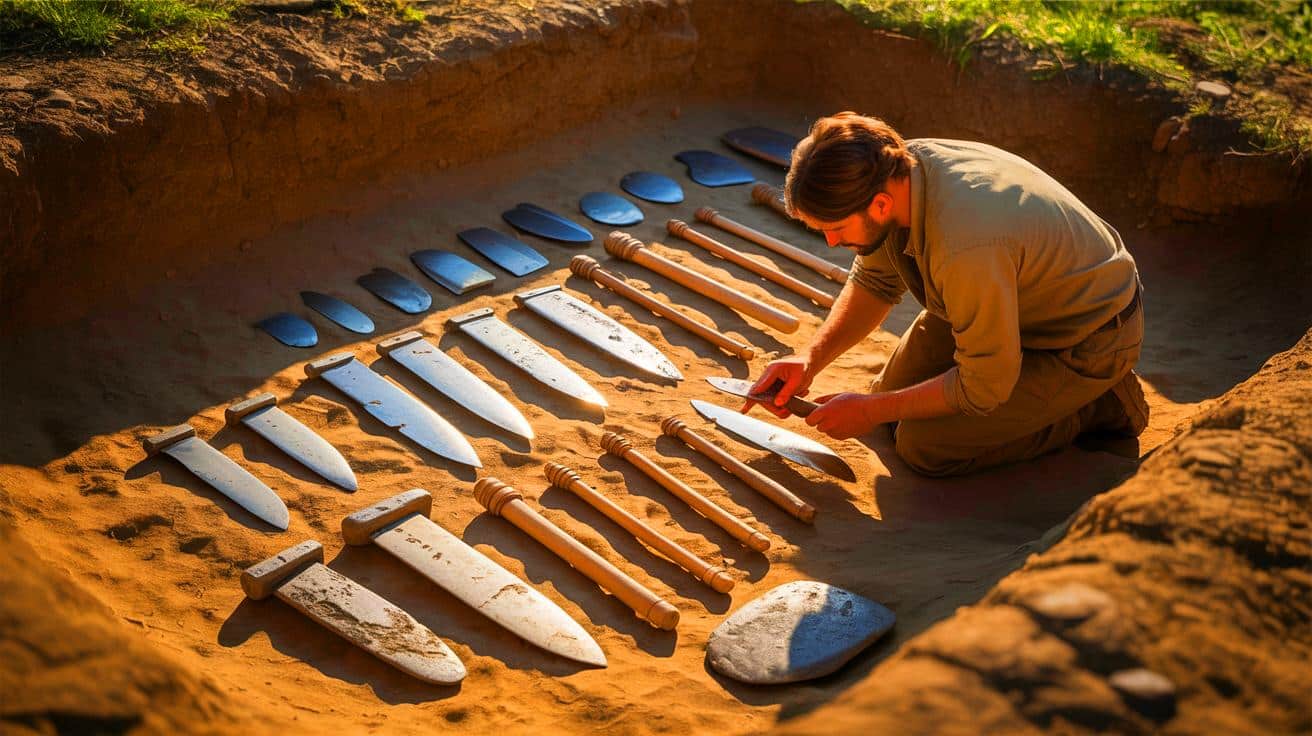
The Milovice IV site is a treasure trove of Upper Paleolithic artifacts, with evidence of human activity spanning several millennia. The stone tools recovered from this site have been precisely dated between 30,250 and 29,550 years ago. These tools were discovered in a clustered formation, suggesting they were stored in a container made from perishable materials. This context distinguishes them from other scattered Paleolithic finds and implies they were part of a single person’s toolkit, possibly abandoned or discarded at a residential camp.
Dominik Chlachula, the lead author of the study, emphasizes the importance of the discovery’s context. He highlights that the grouping of tools indicates they were likely used by one individual during hunting expeditions, initial game butchering, and possibly for weapon maintenance or exploiting woody plant resources. This toolkit provides a rare opportunity to study the personal gear of a Stone Age individual in detail.
Insights into the Gravettian Culture
This discovery is linked to the Gravettian culture, which emerged around 33,000 years ago. The Gravettian people were known for their advanced hunting techniques and development of sophisticated tools. The toolkit from Milovice IV offers crucial insights into their daily activities, particularly how they processed meat, prepared animal hides, and crafted weapons.
Among the 29 tools, some appear to have been used as projectiles, while others were employed for cutting, scraping, and drilling. These tools were essential for the survival of Gravettian hunter-gatherers, who relied heavily on hunting large game like mammoths. The toolkit thus illustrates the complex cultural, technological, and social behaviors of these prehistoric people.
A Personal Glimpse into Prehistoric Life
What makes this discovery particularly remarkable is the personal glimpse it provides into the life of a single Stone Age individual. Unlike most Paleolithic sites, which offer only fragmented or scattered tools, the Milovice IV toolkit likely belonged to one person. This offers a rare opportunity to examine the personal gear used by a prehistoric hunter-gatherer.
The toolkit may have been abandoned during a residential stay, possibly after use in a hunting or migration journey. This context allows archaeologists to better understand prehistoric behavior during such trips, which often leave little trace in the archaeological record. The preservation of these tools offers insights into how Stone Age hunter-gatherers navigated their environment and relied on these tools for survival.
The Broader Impact of the Discovery
This discovery not only enriches our understanding of prehistoric life but also highlights the complexity of early human societies. It underscores the importance of technological innovation and social organization in the survival of hunter-gatherer communities. The toolkit reflects the adaptive strategies of early humans, providing a tangible connection to our distant past.
Such discoveries are pivotal in piecing together the history of human evolution. They challenge existing narratives and offer new perspectives on how early humans interacted with their environment. As we uncover more artifacts like those found at Milovice IV, we gain a deeper appreciation for the ingenuity and resilience of our ancestors.
The discovery of the Stone Age toolkit at Milovice IV is a significant contribution to our understanding of human prehistory. It offers a rare glimpse into the tools and technologies that shaped the lives of early humans. As researchers continue to study these artifacts, what other aspects of prehistoric life might we uncover? How might these findings reshape our understanding of human evolution and cultural development?
Continue reading