


Bettongs’ Shocking Comeback Reveals How They Outsmart Deadly Predators After 120 Years Of Disappearance
 By
Kwame Asante
By
Kwame Asante
| IN A NUTSHELL |
|
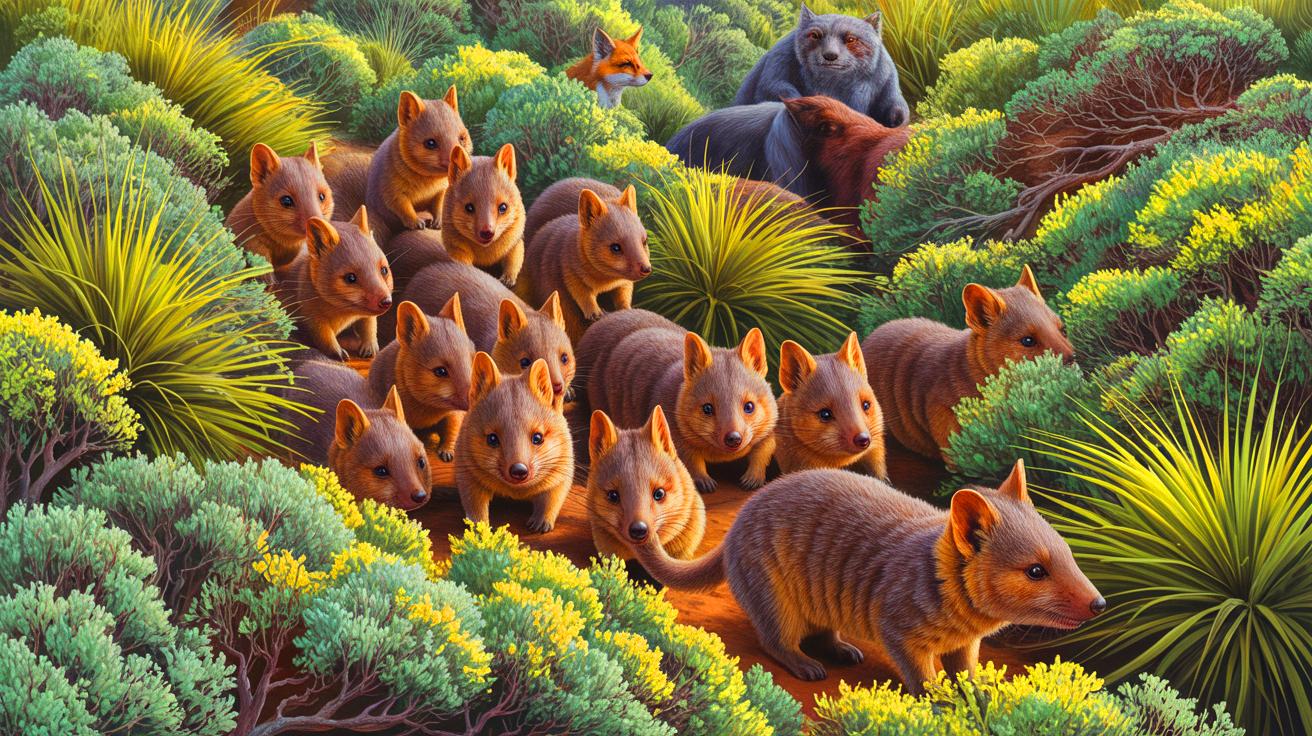
After more than a century of absence, bettongs have made a remarkable return to their native habitat in South Australia. These small, rabbit-sized marsupials, often referred to as rat-kangaroos, were once a common sight across the continent. Their disappearance left a noticeable void in the ecosystem, as they played a crucial role in soil aeration and seed dispersal. The recent reintroduction of bettongs to the Yorke Peninsula is not just a conservation success story but also a fascinating study in adaptation and survival. With the presence of invasive predators like foxes and feral cats, the question remains: can these resilient creatures truly thrive in their ancestral homeland?
The Return of Bettongs to Yorke Peninsula
The reintroduction of bettongs to the Yorke Peninsula marks the end of a 120-year absence. Historically, these marsupials were victims of habitat loss, colonization, and the spread of invasive predators. Their disappearance had wide-reaching ecological impacts, as bettongs are natural diggers that aerate soil and disperse seeds and fungi. This role is vital for maintaining healthy native bushland.
Between 2021 and 2023, a bold experiment was conducted to reintroduce 200 brush-tailed bettongs to the wild at Dhilba Guuranda-Innes. This area is no fenced sanctuary; it is real bushland where predators like foxes and cats roam. The aim was not only to see if bettongs could survive but to observe if they could coexist and thrive amidst these challenges. With moderate predator control measures in place, the results have been promising.
Global Warming Reveals Chilling Truth: How It Could Plunge The Entire World Into A New Ice Age
A Tale of Three Populations: Lessons in Adaptation
To understand how bettongs could survive in a predator-rich environment, scientists introduced individuals from three distinct populations. Each group came with its own history and traits:
- Wedge Island bettongs, introduced to an offshore island in the 1980s, had no experience with predators but grew in a predator-free environment.
- Tone-Perup Nature Reserve bettongs were larger and had prior exposure to predators, giving them an edge in hostile environments.
- Dryandra Woodland National Park bettongs, also experienced with predators, faced challenges due to timing and resource competition.
Researchers tracked these bettongs with radio collars, observing a population increase from 200 to about 400 animals by December 2023. Notably, the Tone-Perup bettongs, with their size and predator-savviness, had the highest survival rates. Surprisingly, the Wedge Island bettongs adapted well despite their initial naivety. The Dryandra group, however, struggled to establish themselves due to late arrival and limited resources.
Thriving Amidst Predators: A New Reality
The success of this reintroduction program suggests that bettongs can indeed adapt to environments with invasive predators. This has been made possible through targeted predator control and the natural protection offered by dense native vegetation. The Yorke Peninsula’s thickets and shrubs make it difficult for predators like cats and foxes to hunt effectively.
Bettongs, being low to the ground and quick, can navigate through underbrush more easily than their predators. This natural advantage, combined with strategic management, has allowed them to reestablish their presence in the wild. While complete eradication of predators in Australia is unlikely, this experiment offers hope and strategies for future conservation efforts.
The Future of Bettong Conservation
The bettong’s return to South Australia is a testament to the resilience of nature and the effectiveness of thoughtful conservation strategies. However, the long-term success of this initiative depends on continued management and adaptation to changing ecological dynamics. As scientists and conservationists monitor the situation, there remains a broader question: What other native species can benefit from similar reintroduction efforts, and how can we ensure their survival in the face of ongoing environmental challenges?