


Ancient Colombian Death Masks Reveal Shocking Secrets That Will Terrify You And Change History Forever
 By
Joseph Mwangi
By
Joseph Mwangi
| IN A NUTSHELL |
|
In a remarkable marriage of technology and archaeology, digital advancements have unveiled the hidden faces behind centuries-old Colombian death masks, providing a rare glimpse into the lives of pre-Hispanic individuals. This groundbreaking project by a team of researchers at Liverpool John Moores University involves the digital reconstruction of four mummified individuals from the Colombian Andes. By employing cutting-edge techniques such as CT scanning and virtual sculpting, scientists have managed to “unmask” these ancient figures, revealing what they may have looked like centuries ago. This innovative approach not only preserves the delicate remains but also offers new insights into the cultural practices of the time.
Digital Unmasking of Ancient Remains
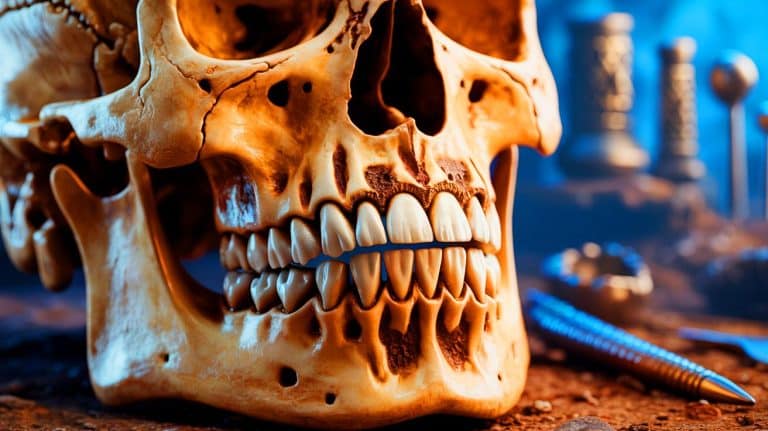
In a groundbreaking effort, scientists utilized CT scans to virtually remove the death masks covering the faces and jaws of four mummified individuals from the Colombian Andes. These mummies, dated between 1216 and 1797, include a child aged 6 to 7, a female in her 60s, and two young adult males. The masks, made of resin, clay, wax, and maize, were carefully studied despite significant damage, with some ornamental beads around the eyes still intact.
This digital “unmasking” allows archaeologists to study the underlying skulls without disturbing the fragile remains physically, offering a safer and more precise method to explore the past. By peeling back layers of time through digital means, researchers can reconstruct faces while conserving the invaluable historical artifacts that hold these stories.
The ability to examine these ancient faces without physical disturbance marks a significant advancement in archaeological methodology.
Virtual Reconstruction Techniques
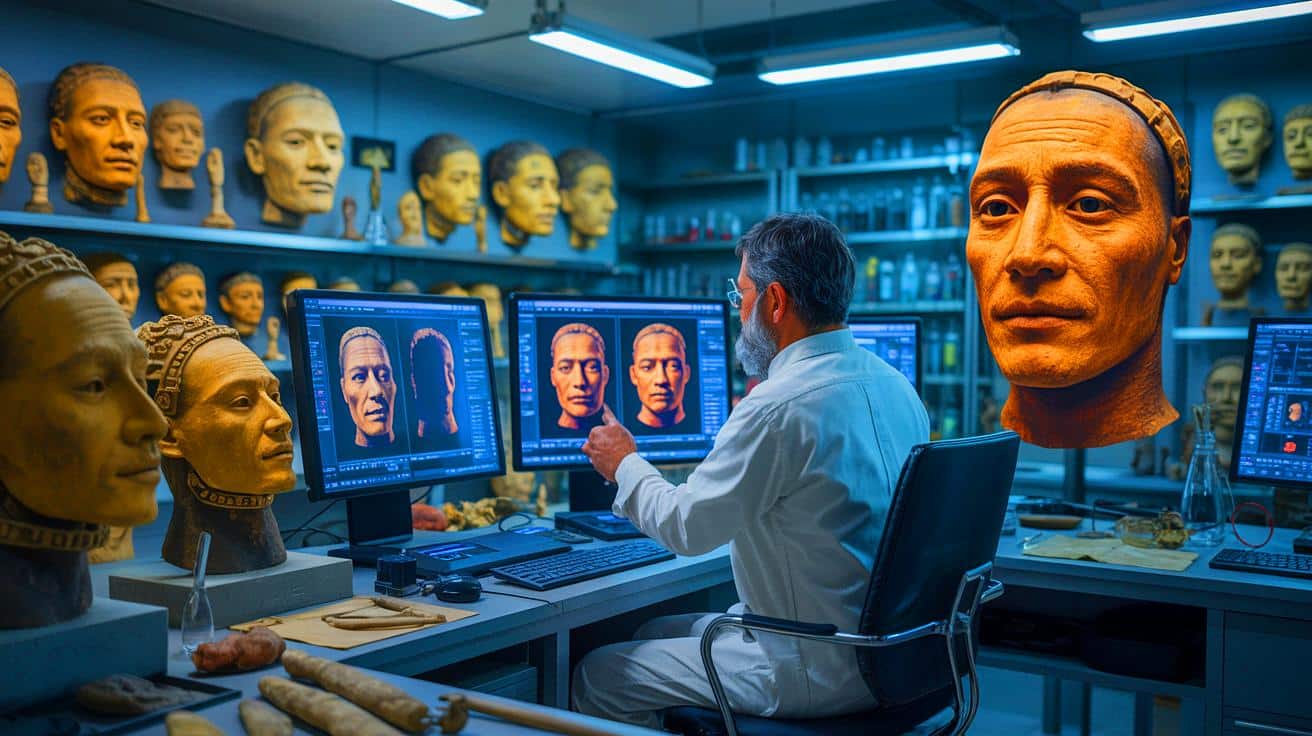
Once the masks were digitally removed, the team applied advanced software and haptic tools to reconstruct muscles, soft tissue, and fat onto the unmasked skulls. This process, akin to virtual sculpting, relies heavily on the anatomical scaffolding of each skull to achieve realistic proportions. For the two adult males, modern tissue depth data from contemporary Colombian populations provided guidance.
For the child and female, no equivalent contemporary data exists, so the researchers used careful adjustments to approximate their facial features. Nose shapes were inferred directly from the bony structure, selecting the best-fitting models from an array of possibilities. This meticulous approach ensures that while the reconstructions may not be exact replicas, they are deeply rooted in scientific plausibility.
Capturing Regional Features and Expressions
The researchers ensured that the reconstructed faces reflected the physical traits typical of the Eastern Cordillera region. Skin, eye, and hair colors were assigned based on known regional characteristics, while facial expressions were intentionally neutral to avoid speculative interpretations of personality. The most intricate part of the reconstruction involved adding fine details such as wrinkles, eyelashes, freckles, and pores.
This stage required constant refinement, as the actual textures – potential scarring, tattoos, or precise skin tone – remain unknown. The final digital portraits, while not exact replicas, offer a tangible glimpse of what these individuals could have looked like during their lifetimes. This careful attention to detail brings a humanizing aspect to the study of ancient cultures, bridging the gap between past and present.
Insights into Pre-Hispanic Cultural Practices
These reconstructions illuminate unique mortuary customs of pre-Hispanic Colombian societies, practices that were otherwise rare in the region compared to other parts of South America. The use of highly stylized death masks demonstrates the cultural significance attached to facial representation and the rituals surrounding death. Archaeologists gain insights into both the physical characteristics of these ancient populations and the symbolic role of funerary masks in their communities.
Understanding these customs provides a deeper connection to the societal values and beliefs of pre-Hispanic Colombians. It underscores the importance of facial identity and the elaborate methods used to honor the deceased, reflecting a profound respect for ancestry and heritage.
Ethical and Interpretive Considerations
Jessica Liu, project manager for Face Lab at Liverpool John Moores University, emphasizes the interpretive limits of these reconstructions: “Texture is always the biggest challenge, just because we simply don’t know how they would present themselves, whether or not they have any facial scarring or tattoos, or if that actually is the skin tone. What we present in terms of texture is an average representation, based on what we know of these individuals.”
“This is an important point,” Liu said, “because they are creating faces based on group averages, ‘but nobody is ever an average.’ This means that these freshly unmasked faces are not accurate portraits of these individuals; they show ‘what they could have looked like rather than ‘this is what they looked like,’ she said.”
These digital reconstructions raise important questions about the interpretive nature of archaeology and the ethical considerations in representing ancient peoples.
As digital technology continues to evolve, the potential for uncovering the past in new and exciting ways grows exponentially. The digital unmasking of ancient Colombian remains marks a significant milestone in archaeological research, offering both a window into history and an avenue for ethical debate. As we look to the future, how might these advancements shape our understanding of other ancient cultures and the stories they hold?
Continue reading