


“It Was a Green Paradise Once”: This Lost Valley Discovery Reveals How Climate Change Drove the First Humans Out of Africa
 By
Nomvula Dlamini
By
Nomvula Dlamini
| IN A NUTSHELL |
|
The Jordan Rift Valley, a parched and challenging landscape today, has long been considered a critical passageway for early human migration out of Africa. Recent research suggests that this seemingly inhospitable region once offered a lush and fertile corridor, providing the resources necessary for early hominins to traverse into Eurasia. By examining ancient sediments and artifacts, scientists are piecing together the environmental changes that facilitated these monumental journeys. This research not only sheds light on the adaptability of early humans but also highlights the complex interplay between climate change and human evolution.
Rediscovering Ancient Pathways
The Jordan Rift Valley, located east of the Mediterranean, is a region that currently presents a harsh and barren landscape. However, it holds a significant place in the history of human migration. According to archeologist Michael Petraglia from Griffith University, the valley served as a crucial land bridge for early humans leaving Africa. This was a time when the climate and geography of the region were strikingly different from today.
Research conducted by geochronologist Mahmoud Abbas and his team from Shantou University has provided evidence of this ancient migration route. By analyzing sediment samples dating back 84,000 years, they discovered traces of stone tools and organic materials that suggest a once-lush environment. The presence of these tools indicates that early hominins may have attempted to navigate this corridor, seeking new territories to inhabit.
The Role of Climate Change
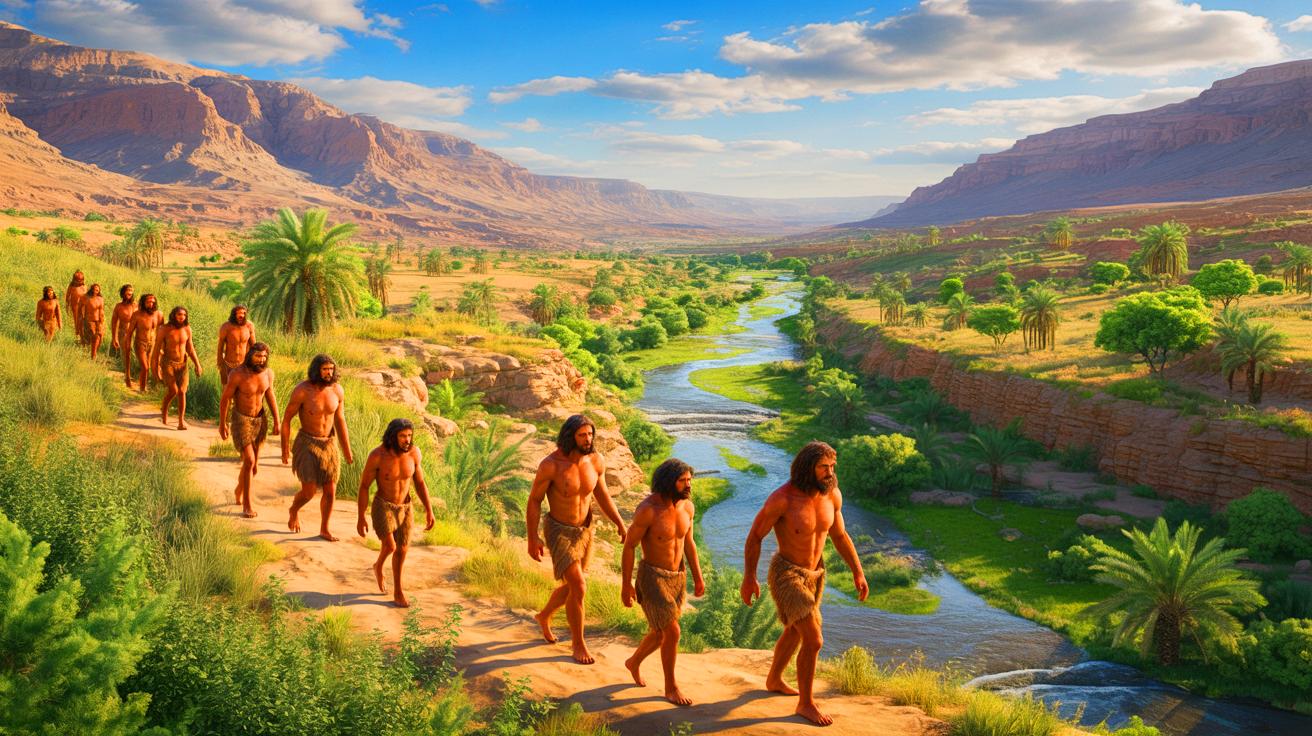
The findings from the Jordan Rift Valley demonstrate how climate change played a pivotal role in shaping early human migration patterns. During the Mid to Late Pleistocene, approximately 129,000 to 71,000 years ago, the region experienced increased rainfall. This led to the formation of wetlands amidst an otherwise arid landscape, creating a favorable environment for humans and other mammals to expand their territories.
The transformation from dry desert to savannah grasslands provided the much-needed resources for survival. These grasslands offered food and water, making the journey out of Africa and into southwest Asia feasible for early humans. As Abbas explains, the Levant acted as a "well-watered corridor," facilitating the dispersal of modern humans during this period of climatic change.
Evidence of Early Human Presence
The research team studied thirteen sediment samples from various Rift Valley sites, revealing a wealth of information about the region's past. Layers of sand and gravel were interspersed with rich organic matter, including mud containing root casts. This indicates a landscape once teeming with vegetation, supporting the hypothesis of a hospitable corridor for human migration.
In addition to sediments, other studies have uncovered artifacts, footprints, and fossils in nearby caves that date to the same period. These findings point to a significant human presence in the area, suggesting that the Jordan Rift Valley was more than just a passageway. It was a vital region that supported human life and facilitated interactions with the surrounding environment.
The Legacy of Human Migration
The movement of humans from Africa to Eurasia was not a single event but a series of migrations over time. Some of these journeys through the Jordan Rift Valley were successful, leading to the spread of human populations into Europe and Asia. These early travelers are likely the ancestors of many people with European and Asian heritage today.
Petraglia emphasizes the importance of understanding the relationship between climate change and human migration. The research highlights how environmental shifts have historically impacted human survival and movement, offering insights into the adaptability and resilience of our species. This knowledge can inform our understanding of contemporary climate challenges and their potential impact on human populations.
The study of ancient migration routes like the Jordan Rift Valley not only deepens our understanding of human history but also underscores the enduring influence of climate on human existence. As we continue to explore the past, what lessons can we learn about the future of human migration in the face of ongoing environmental change?
Continue reading