


This Colossal Statue Unearthed in Nineveh Stuns Archaeologists And Forces a Rewrite of Everything You Knew About Ancient Power
 By
Joseph Mwangi
By
Joseph Mwangi
| IN A NUTSHELL |
|
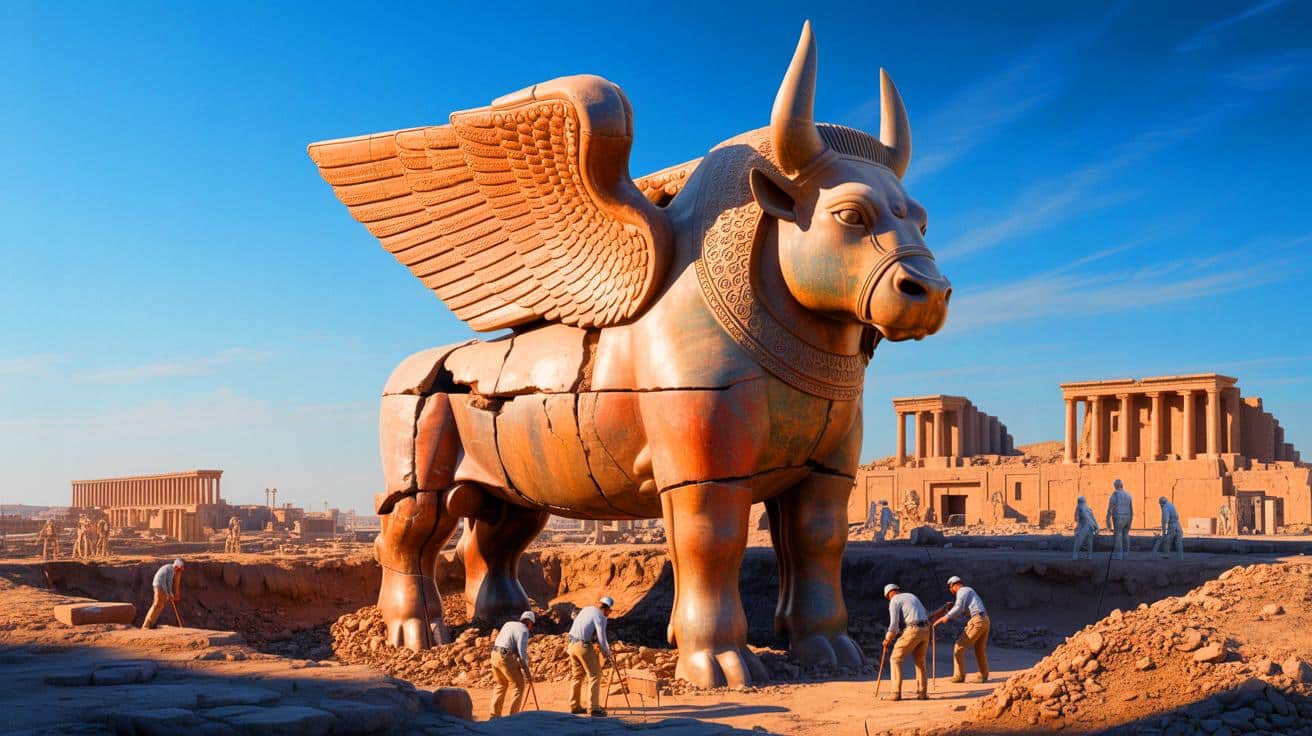
A monumental discovery has emerged from the ancient ruins of Nineveh in northern Iraq, shedding new light on the grandeur of Assyrian art and history. Unveiled at the historic site of Tell Nabi Yunus, near Mosul, a colossal lamassu statue has been unearthed, marking the largest of its kind ever found. Standing approximately 20 feet tall, this winged bull with a human head exceeds the size of other known examples housed in prestigious institutions like the British Museum and the Louvre. This discovery offers scholars a unique opportunity to explore Assyrian monumental art on an unprecedented scale, providing fresh insights into the cultural and historical significance of the Neo-Assyrian Empire.
The Historical Significance of the Mosul Lamassu
The lamassu was discovered at Tell Nabi Yunus, a site with deep historical and religious roots. For over a century, the area was believed to be the tomb of the Prophet Jonah, which prevented any significant archaeological excavations. The site’s religious significance kept it largely untouched, preserving its hidden treasures for future discovery. The lamassu’s unearthing marks a significant milestone in archaeology, revealing the rich history buried beneath the surface.
Following the destruction of the mosque covering the mound by Islamic State militants in 2014, new opportunities for excavation arose. The militants’ actions, while devastating, inadvertently opened up the site for archaeological exploration. Since 2018, teams from the Iraqi State Board of Antiquities and Heritage and Heidelberg University have been working diligently to uncover remnants of Assyrian architecture, including this extraordinary lamassu. Their efforts have illuminated a lost chapter of history, offering a glimpse into the artistic and cultural achievements of the Assyrian Empire.
Esarhaddon’s Throne Room and the Power of the Lamassu
This newly discovered lamassu was originally situated within the ruins of Esarhaddon’s throne hall, a place imbued with the authority and might of the Assyrian king. It is believed to have been part of a pair flanking the main gate to the throne room, a focal point for grand ceremonies and displays of royal power. Smaller lamassu statues had been found at the site in previous years, but none rivaled the size and impact of this latest discovery.
Lamassu statues served a dual purpose: they were both artistic representations and protective deities. With the body of a lion or bull, the wings of an eagle, and a human head, they symbolized divine protection and acted as guardians of royal palaces and temples. The sheer size of this lamassu raises questions about its purpose - was it a statement of Esarhaddon’s dominance, or does it represent a lost tradition of colossal Assyrian sculpture that we have yet to fully comprehend?
The Reign of Esarhaddon and the Empire’s Legacy
Esarhaddon reigned from 681 to 669 BCE and is considered one of the most formidable kings of the Neo-Assyrian Empire. He rose to power after a brutal internal struggle within the royal family, succeeding his father, Sennacherib, and paving the way for his son, Ashurbanipal. During his reign, Esarhaddon expanded Assyrian influence into Egypt and Syria, further solidifying the empire's dominance in the region.
His ambitious projects, including the reconstruction of Babylon and the construction of grand palaces, reflected his desire to impress and intimidate both subjects and adversaries. The palace complex at Nineveh, which housed the lamassu, was a testament to his vision. It featured barracks, workshops, courtyards, and a throne room that blended Assyrian and neighboring cultures. The discovery of the lamassu within these ruins highlights Esarhaddon’s pursuit of power and the divine protection he sought to maintain his empire's supremacy.
Unraveling the Mysteries of Assyrian Art
As archaeologists continue to explore the site, the discovery of this lamassu invites further examination of Assyrian art and its cultural implications. The monumental scale of the statue challenges existing perceptions of Neo-Assyrian art, suggesting the existence of a tradition of colossal sculpture that historians have only begun to uncover. This raises intriguing questions about the artistic capabilities and ambitions of Assyrian craftsmen.
Beyond its artistic value, the lamassu offers insights into the social and political fabric of the Assyrian Empire. It reflects the empire's emphasis on divine protection and the role of art in asserting royal authority. As researchers delve deeper into the site, the lamassu serves as a gateway to understanding the complexities of Assyrian civilization and its enduring influence on the ancient world.
The discovery of the lamassu in Nineveh is a testament to the enduring allure of Assyrian history and art. It not only enriches our understanding of the past but also raises new questions about the cultural and historical dynamics of the Neo-Assyrian Empire. As archaeologists continue their work, what other secrets might the ruins of Nineveh reveal about the ancient world and its lost traditions?