

“Nothing Matches Their DNA”: This Cave Discovery Shatters Everything We Knew About How Humans First Spread Across the World
 By
Kwame Asante
By
Kwame Asante
| IN A NUTSHELL |
|
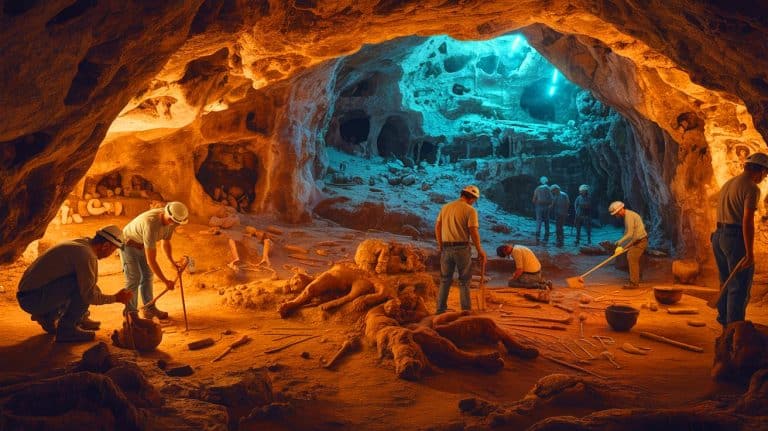
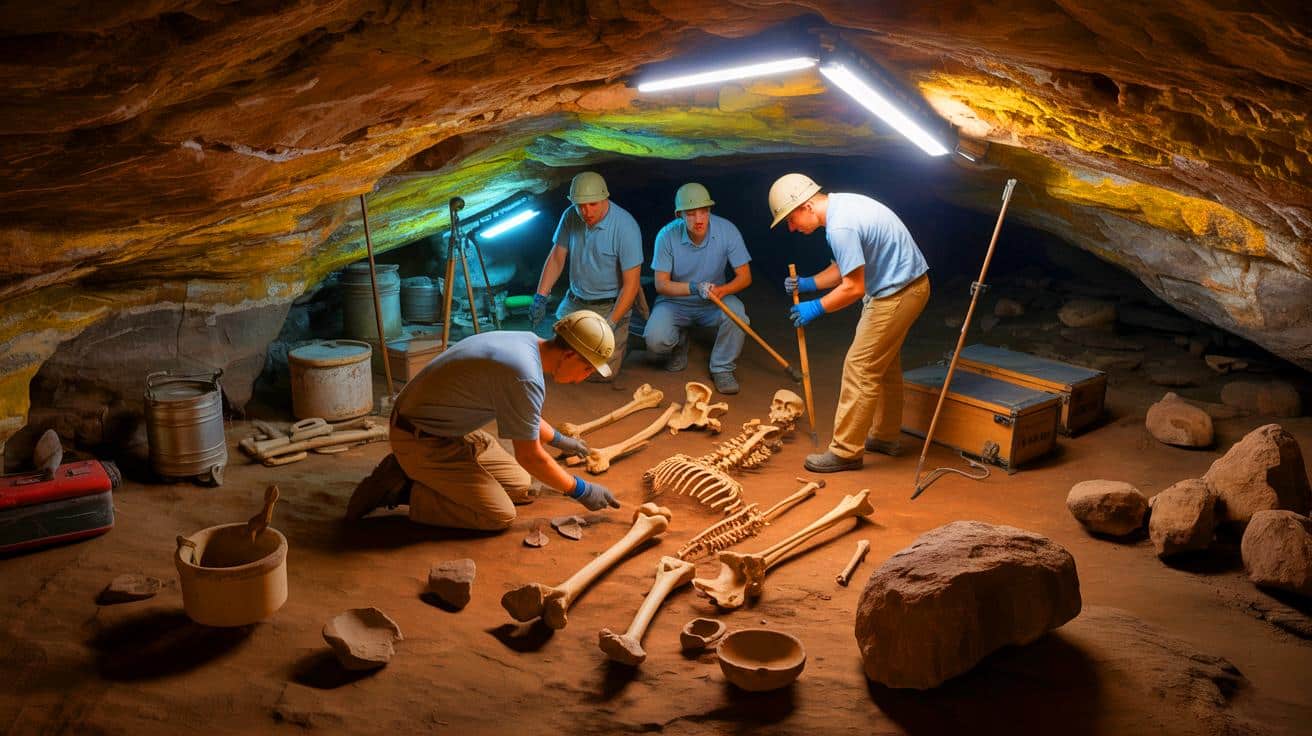
In the heart of Bulgaria, Bacho Kiro Cave reveals secrets that challenge our understanding of human migration. Recent discoveries from this cave have sparked fresh debates among scientists about how modern humans spread across the globe. These bones, dated to approximately 45,000 years ago, are the oldest known Upper Paleolithic remains in Europe. They offer insights into a complex journey of human migration, one that involves unexpected twists and intertwined lineages. By examining these ancient remains, researchers are piecing together a narrative that may redefine the pathways our ancestors took to populate various parts of the world.
Unraveling the Genetic Tapestry
The genetic analysis of bone fragments from Bacho Kiro Cave has provided a fascinating glimpse into the past. The remains suggest a deep connection to East Asian populations rather than contemporary Europeans. This finding hints at a more intricate migration pattern than previously believed. Researchers from the Universities of Padova and Bologna propose that our ancestors’ migration might have been more of a stutter than a straightforward journey.
The study indicates that ancient humans from this region were more closely related to modern East Asians and Native Americans than to present-day Europeans. This surprising genetic link suggests that the migration paths of early humans were not unidirectional but rather consisted of multiple waves and branches. It seems that the story of human migration is more of a complex web of interactions and movements across continents.
“Then, around 45 thousand years ago, a new expansion emanated from the hub and colonized a wide area spanning from Europe to East Asia and Oceania,” explains Leonardo Vallini, a molecular anthropologist from the University of Padua.
https://africatimes.com/30000-year-old-discovery-reveals-shocking-secrets-that-could-shatter-everything-we-thought-about-stone-age-life/207/
The Role of Neanderthal Ancestry
The presence of Neanderthal DNA in the genetic makeup of these individuals adds another layer of complexity to the narrative. The infusion of Neanderthal genes into the human lineage suggests significant interaction between the two species. These interactions may have played a crucial role in the adaptation and survival of early human populations in diverse environments.
The genetic evidence from Bacho Kiro Cave shows that the individuals had recently acquired Neanderthal ancestry. This mingling of genes raises questions about the nature of interactions between Homo sapiens and Neanderthals. Did these interactions facilitate the spread of modern humans, or did they create obstacles along their journey? The answers to these questions could provide valuable insights into the dynamics of early human populations.
The Enigmatic Western Migration
While the eastward migration seems to have been more successful, the western branch presents a puzzle. A second study on remains found in Czechia suggests a separate, perhaps unsuccessful, western migration. Although carbon dating has yet to confirm an exact age, genetic evidence implies these individuals lived even earlier than those from Bacho Kiro Cave.
Interestingly, this ancient population did not have a lasting genetic impact on modern European or Asian populations. Their story seems to have ended without leaving a trace in the genetic record of today's humans. This raises intriguing questions about what might have caused the decline of these early settlers in Europe.
“It is curious to note that, around the same time, also the last Neanderthals went extinct,” remarks Giulia Marciani, an archaeologist from the University of Bologna.
The Central Hub of Migration
The notion of a central hub from which waves of human migration emanated is a fascinating concept. This hub, possibly located somewhere in Eurasia, acted as a launching point for human populations moving both east and west. The evidence from Bacho Kiro Cave suggests that this hub was a dynamic center of human activity, with populations repeatedly expanding and contracting over time.
The question remains: what prompted these migrations? Environmental changes, resource availability, or social dynamics could have driven these movements. Understanding the factors that influenced these migrations could shed light on the adaptability and resilience of early human societies.
Despite the vast distances and challenges, these early humans managed to spread across continents, leaving behind a complex tapestry of genetic and cultural legacies. The story of human migration is far from complete, and each new discovery adds another piece to the puzzle.
The discoveries at Bacho Kiro Cave have opened new chapters in the story of human migration. They reveal a complex interplay of genetics, culture, and environment that shaped the spread of our species. As researchers continue to explore these ancient remains, they uncover new questions about our past. What other secrets lie hidden in the sediments of time, waiting to redefine our understanding of human history?
Continue reading