



This Mysterious Creature Reveals An Ancient Secret That Terrifies Scientists And Changes Everything We Know About Evolution
 By
Kwame Asante
By
Kwame Asante
| IN A NUTSHELL |
|
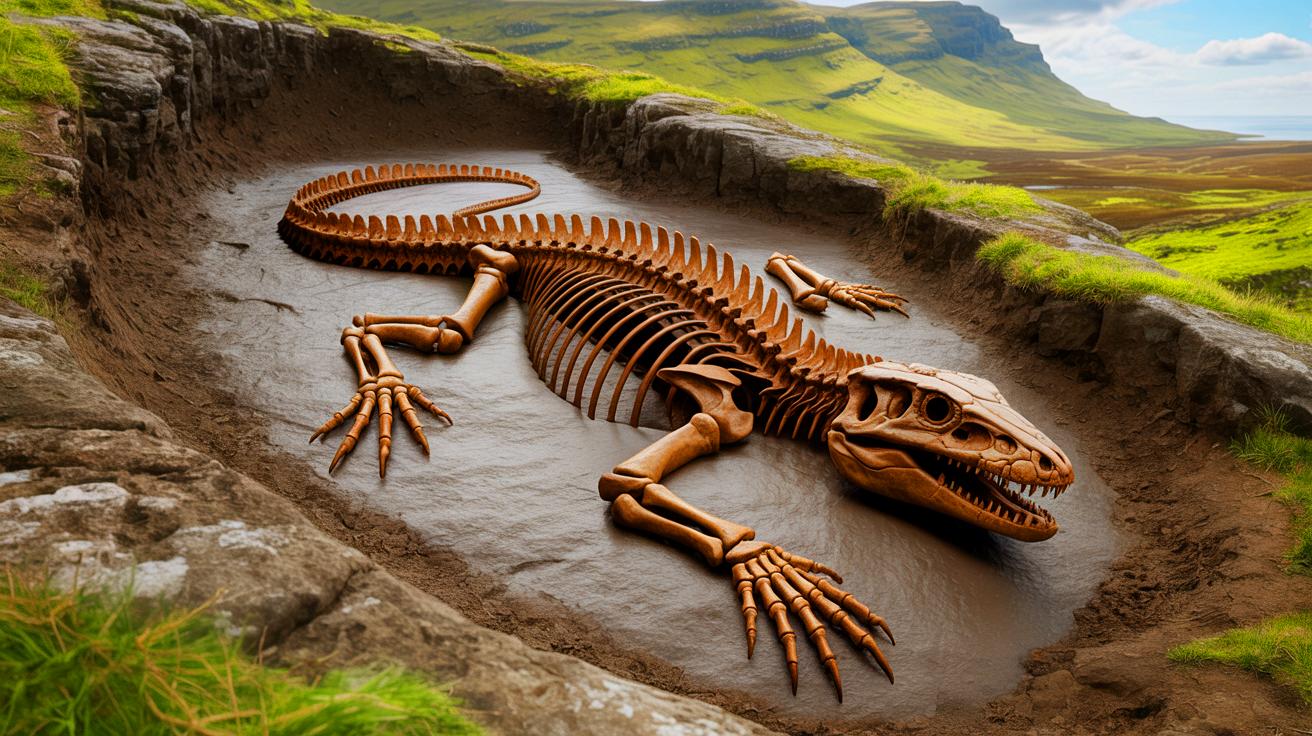
On a remote part of the Isle of Skye, a remarkable fossil discovery has the potential to reshape our understanding of reptilian evolution. Unearthed by researchers, the fossil belongs to an ancient creature named Breugnathair elgolensis, which roamed the Earth approximately 160 million years ago. This unique find is particularly intriguing as it blurs the lines between snakes and lizards, two groups that have long fascinated scientists. The implications of this discovery could be far-reaching, offering new insights into the evolutionary pathways that led to the diversity of reptiles we see today.
The Discovery of Breugnathair Elgolensis
In 2015, paleontologists made a significant find near the village of Elgol on the Isle of Skye. The fossil they uncovered belonged to Breugnathair elgolensis, an ancient reptile that exhibits characteristics of both snakes and lizards. Known as the “false snake of Elgol,” this creature lived around 167 million years ago. It was a relatively large reptile for its time, measuring approximately 16 inches in length. This fossil is among the oldest and most complete lizard-like specimens discovered, providing researchers with valuable insights into its ecological role during the Jurassic period.
The fossilized remains suggest that B. elgolensis shared its environment with early mammals and small dinosaurs, making it a key player in its ecosystem. Its discovery adds a new piece to the puzzle of Squamata evolution, the order that includes both lizards and snakes. This find contributes to a broader understanding of how these reptiles began to diversify millions of years ago.
Unique Features of a Hybrid Creature
The anatomy of B. elgolensis presents a fascinating blend of snake and lizard traits. While its body was more lizard-like, complete with limbs, its teeth bore a striking resemblance to those of modern snakes. The hooked and curved nature of its teeth suggests a predatory lifestyle, allowing it to effectively hunt smaller creatures like early mammals and juvenile dinosaurs. Its jaw structure further supports this hypothesis, indicating that B. elgolensis could grasp and hold prey with ease.
In addition to its teeth, the skull of B. elgolensis showed gecko-like features, hinting at its complex evolutionary background. These characteristics provide tantalizing clues about the creature’s place in the evolutionary tree and its potential links to modern reptilian species. As researchers continue to study this unique fossil, they hope to uncover more about its evolutionary lineage and the broader implications for snake evolution.
Implications for Understanding Evolution
The discovery of B. elgolensis has significant implications for our understanding of reptilian evolution, particularly within the Squamata group. Susan Evans, a co-author of the study, emphasizes the importance of this fossil in shedding light on the early diversification of lizards during the Jurassic period. The unique combination of features in B. elgolensis challenges previous assumptions and suggests a more complex evolutionary trajectory for snakes.
“The Jurassic fossil deposits on the Isle of Skye are of world importance for our understanding of the early evolution of many living groups, including lizards, which were beginning their diversification at around this time,” Evans stated.
Here’s The Discovery That Shatters Everything You Know About Humanity’s First Home Outside Africa
This discovery opens new avenues for research, prompting scientists to re-evaluate the evolutionary pathways that led to the development of snake-like features. The presence of python-like teeth and jaws in B. elgolensis suggests that these adaptations may have originated earlier than previously thought.
The Role of Technology in Paleontology
The study of B. elgolensis was made possible by advancements in imaging technology. Researchers utilized high-powered X-rays and CT scans to analyze the fossil in unprecedented detail. These tools allowed scientists to explore the internal structure of the fossil, revealing features that would have otherwise remained hidden. This technological leap has revolutionized the field of paleontology, enabling the study of fossils that were once considered too fragmented or complex.
Stig Walsh, a senior curator involved in the study, remarked on the impact of this technological approach:
“I first described parviraptorids some 30 years ago based on more fragmentary material, so it’s a bit like finding the top of the jigsaw box many years after you puzzled out the original picture from a handful of pieces.”
By embracing these advanced techniques, researchers can gain deeper insights into ancient species, piecing together evolutionary stories that were previously beyond our reach.
Continuing the Quest for Answers in Evolutionary Biology
The discovery of Breugnathair elgolensis provides an essential piece of the puzzle in understanding the evolution of snakes and lizards. Yet, it also raises new questions. While this fossil offers clues about the origins of snake-like features, the evolutionary lineage of snakes remains a subject of ongoing investigation. Scientists continue to explore whether B. elgolensis represents a direct link between lizards and snakes or if it evolved its traits independently.
As research progresses, the study of B. elgolensis may illuminate broader evolutionary patterns, challenging existing theories and inspiring further exploration. With each new discovery, the complex tapestry of reptilian evolution becomes richer, inviting us to delve deeper into the origins of these fascinating creatures. How might future discoveries alter our current understanding of evolution, and what other secrets might the ancient world hold?
Continue reading