


“This Shouldn’t Be Happening”: This Mysterious Pulse Beneath Africa Is Tearing the Continent Apart (and a New Ocean Is Forming)
 By
Joseph Mwangi
By
Joseph Mwangi
| IN A NUTSHELL |
|
Deep in the Afar region of northeastern Ethiopia, an enigmatic geological phenomenon is quietly unfolding. Scientists have identified a rhythmic pulse emanating from the Earth’s mantle, suggesting that powerful forces are actively shaping the African continent. As the Arabian, Nubian, and Somalian tectonic plates gradually drift apart, this newly discovered pulse may hold the key to understanding the future of the region. The implications are profound, signaling the potential formation of a new ocean and offering a unique glimpse into the Earth’s dynamic processes.
Uncovering a Hidden Pulse
Scientists at the University of Southampton, under the leadership of geologist Emma Watts, have made a groundbreaking discovery in the Afar Triple Junction. This region, where three tectonic plates meet, is exhibiting a pulse-like movement deep within the Earth’s mantle. Published in Nature Geoscience, the study details how this pulse was detected through chemical signatures in volcanic rocks. The mantle, traditionally seen as a static layer, is now understood to move in periodic bursts.
According to Watts, this discovery challenges conventional geological understanding. “The mantle beneath Afar is not uniform or stationary,” she explained. The pulses are closely linked to the ongoing rifting of the African continent, suggesting that the Earth’s crust is being pulled apart. This movement sets the stage for the eventual creation of a new ocean basin, redefining the landscape of northeastern Africa.
Tectonic Forces at Work
The Afar Triple Junction is a hotspot of geological activity. It is one of the few places on Earth where a new ocean is starting to form. The Arabian, Nubian, and Somalian plates are slowly separating, driven by the pulsing movements of the mantle. This separation is actively reshaping the region’s landscape, particularly in the Red Sea Rift. As the crust weakens, the possibility of a new body of water forming becomes increasingly likely.
These tectonic movements are influenced by mantle upwellings – plumes of hot, molten material rising from the Earth’s depths. These plumes interact with the tectonic plates, pushing them apart and contributing to volcanic activity and seismic events. The discovery of mantle pulses adds a new dimension to our understanding of these geological processes, extending beyond previous knowledge and highlighting the dynamic nature of the Earth’s interior.
The Role of Volcanic Activity
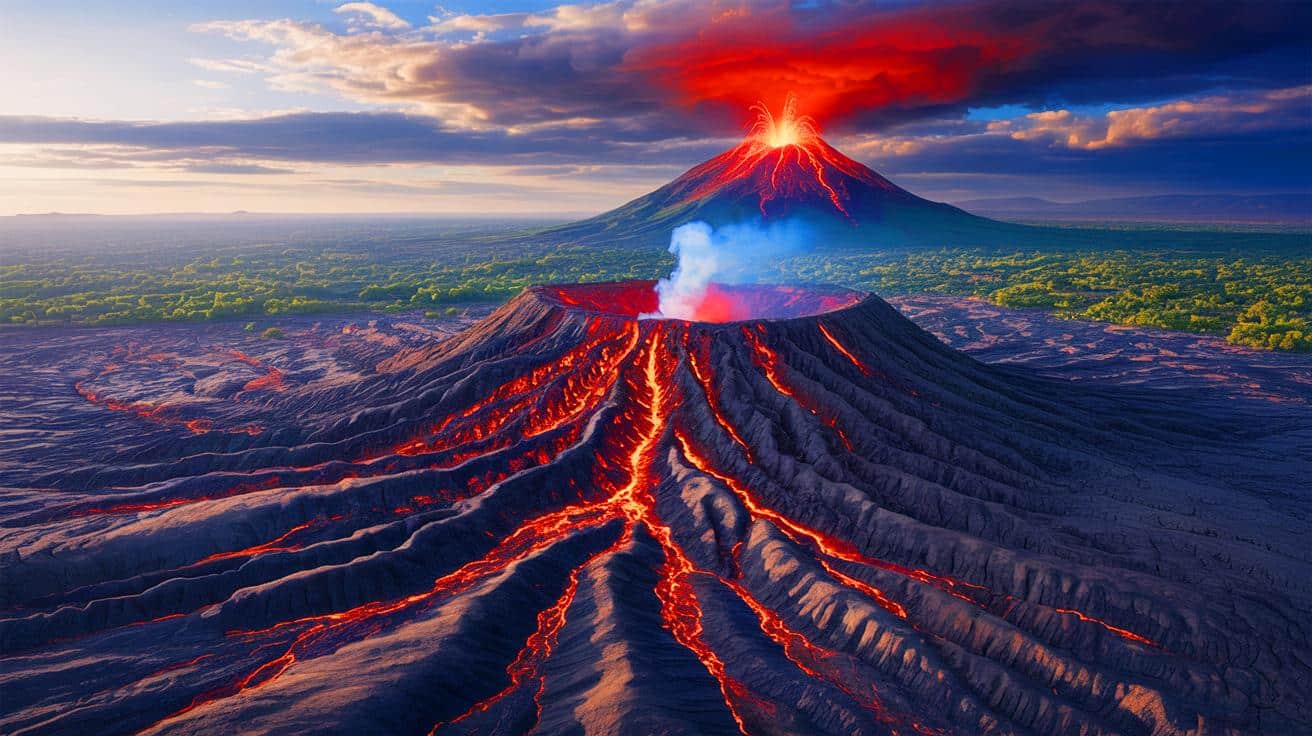
The Afar region is renowned for its volcanic activity, with notable features like Erta Ale, a continuously erupting volcano with a lava lake. Researchers, including Watts and her team, have collected volcanic rock samples to analyze the chemical signatures left by the mantle’s movements. The findings suggest that these volcanic materials reflect deep mantle processes that influence the land above.
Through their research, scientists observed consistent chemical bands across the region, indicating a pulsating upwelling of mantle material. This upwelling acts like a natural pump, pushing magma upward and furthering the rifting process. As the crust continues to thin, the land may eventually sink, leading to the creation of a new ocean as seawater floods in from the Red Sea.
Implications for Continental Breakup
The ongoing rifting in Afar provides a rare opportunity to observe continental breakup in action. Over millions of years, the Afar Triple Junction is expected to transform into a fully formed ocean. This process mirrors the formation of the Atlantic Ocean, offering a live case study for scientists. The interaction between the mantle and tectonic plates, coupled with pulse-like magma movements, reveals the active role that Earth’s interior processes play in shaping the surface.
This research underscores the importance of understanding mantle dynamics in predicting future geological changes. As scientists continue to study the Afar region, they gain insights into the mechanisms driving tectonic and volcanic activity. The findings could have broader implications for understanding geological processes worldwide, potentially offering new perspectives on how continents evolve over time.
The discovery of a pulsing mantle beneath the Afar region raises compelling questions about the Earth’s geological future. As the African continent continues to shift and evolve, the implications of this phenomenon are profound. How will these dynamic processes influence the formation of new geological features, and what can they teach us about the Earth’s ever-changing landscape?
Continue reading