


“They Warn It’s Already Underway”: McGill Scientists Say Rising Seas Could Engulf 100 Million Buildings - Entire Coastal Communities at Risk
 By
Joseph Mwangi
By
Joseph Mwangi
| IN A NUTSHELL |
|
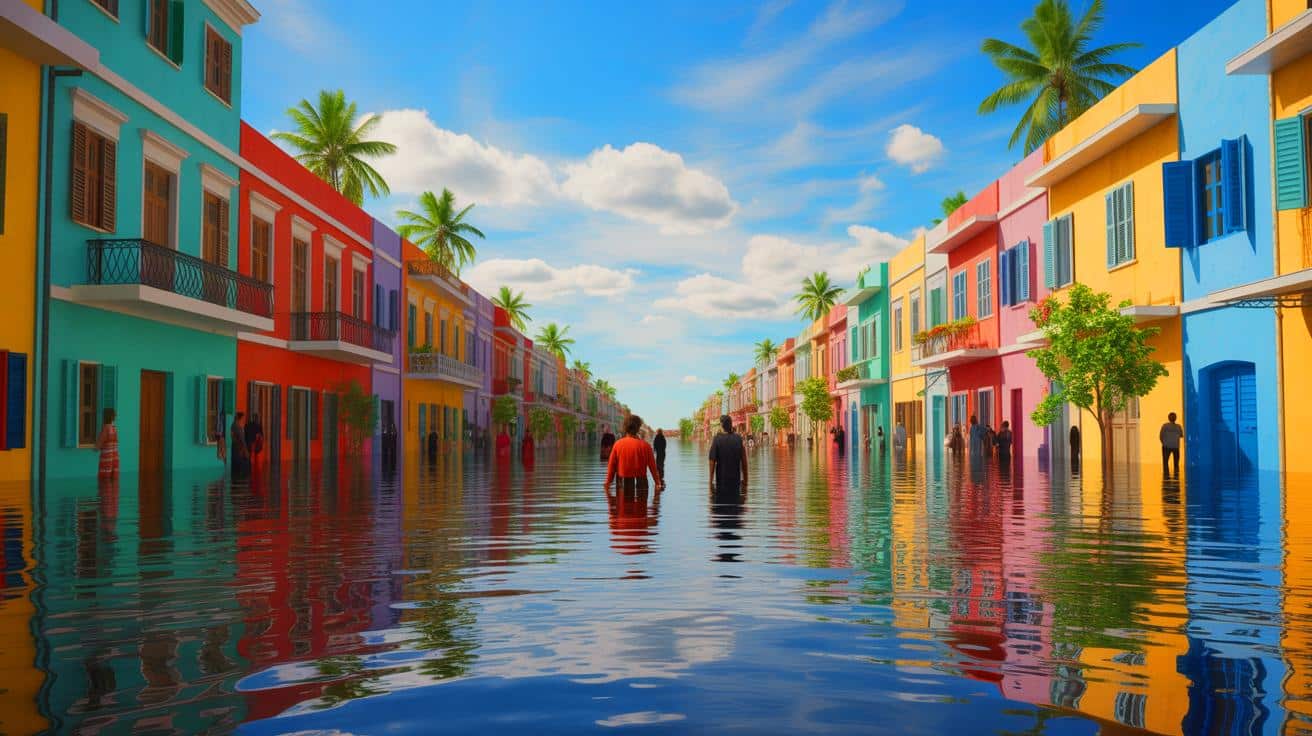
Sea level rise, a byproduct of climate change, poses a significant threat to global communities. A new study led by McGill University has issued a grave warning for the Global South. The research suggests that if fossil fuel emissions aren’t significantly reduced, rising sea levels could jeopardize over 100 million buildings. This potential flooding risk represents a severe challenge for regions in Africa, Southeast Asia, and Central and South America. The study’s detailed, building-by-building analysis paints a stark picture of the future if current emissions trends continue. The findings serve as a crucial call to action for policymakers around the world.
Understanding the Scope of the Threat
The McGill University study meticulously analyzed the potential impacts of varying degrees of sea level rise. Using satellite imagery and elevation data, the researchers assessed how many structures would be submerged at different increments of rising sea levels. The study evaluated scenarios ranging from a modest rise of 1.6 feet to a catastrophic increase of 65.6 feet. Even under the most optimistic circumstances, a rise of 1.6 feet could flood three million buildings.
In high-emission scenarios, the projections are even more alarming. The researchers highlight that if fossil fuel use continues unabated, sea levels could rise by over 16 feet in the coming centuries. This would put entire communities and critical infrastructure at risk. The analysis underscores the urgent need for comprehensive climate action to mitigate these potential outcomes.
Regions at Greatest Risk
The study identifies particularly vulnerable regions, noting that low-lying coastal areas with dense populations face the greatest threat. The specific geography and coastal topography of these areas exacerbate their susceptibility to flooding. This includes not only residential buildings but also infrastructure and cultural heritage sites.
Professor Jeff Cardile from McGill University noted, “Some coastal countries are much more exposed than others, due to details of the coastal topography and locations of buildings.” The data offers a crucial tool for urban planners and policymakers aiming to develop effective adaptation strategies. By understanding which areas are most at risk, efforts can be focused on protecting these vulnerable communities.
The Broader Implications of Sea Level Rise
Beyond the immediate threat to coastal buildings, the study stresses the broader implications of rising sea levels. Coastal infrastructure is integral to the global economy, particularly ports that facilitate international trade. Disruptions in these areas could have far-reaching effects on the worldwide economy and food supply.
The interconnected nature of global systems means that the impact of sea level rise extends far beyond the affected regions. Maya Willard-Stepan, the lead author, emphasized, “The sooner coastal communities can start planning for it, the better chance they have of continuing to flourish.” Proactive planning is essential to minimize the potential economic and social disruptions caused by rising seas.
Data-Driven Solutions for Adaptation
To aid in adaptation efforts, the study offers an interactive map available through Google Earth Engine. This tool allows decision-makers to visualize areas with the highest exposure to sea level rise. By leveraging this data, communities can implement targeted strategies to protect vulnerable areas.
Possible adaptation measures include constructing protective infrastructure, such as sea walls, and adjusting land use planning to account for future risks. The study’s insights can guide these efforts, providing a foundation for informed decision-making. As Professor Natalya Gomez stated, “Sea level rise is a slow, but unstoppable consequence of warming that is already impacting coastal populations and will continue for centuries.”
The challenge of rising sea levels demands immediate and decisive action. While the threat is significant, the study also highlights opportunities for proactive adaptation and mitigation. The data-driven insights provided by the research offer a valuable resource for communities seeking to navigate this complex issue. As countries grapple with the realities of climate change, the question remains: how will global leaders respond to the looming threat of rising seas?