



Since 2016, highly organized and dangerous criminal syndicates rooted in the Western Balkans – already key players in Europe’s and Latin America’s drug markets – have expanded their reach into West Africa. Operating largely under the radar until recently, these groups have strategically positioned the region as a new staging ground for large-scale cocaine trafficking.
According to the report, Western Balkan networks have successfully transported multi-tonne shipments of cocaine from Brazil and other Latin American export hubs to several coastal states across West Africa.
Using their established foothold in Latin American cocaine-exporting countries, these groups have turned West Africa into a logistical stronghold – a hub for storing, re-packaging, and redistributing cocaine bound for European markets and, in some cases, beyond. Rising European cocaine demand, stricter enforcement on direct trafficking routes, and strengthened alliances with Latin American cartels – particularly Brazil’s Primeiro Comando da Capital (PCC) – have facilitated this expansion, explains Fatjona Mejdini, director of the GI-TOC’s Observatory of Illicit Economies in South Eastern Europe.
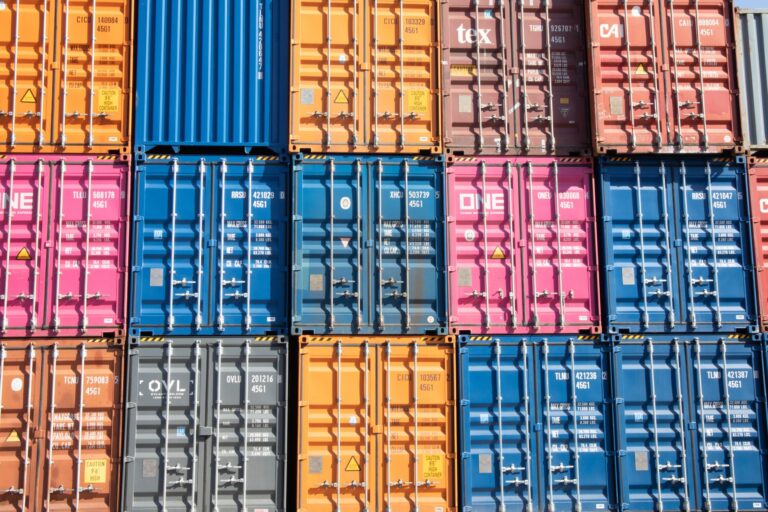
The report reveals that Balkan groups in West Africa employ a wide range of trafficking methods. These include fully containerized maritime routes, smaller uncontainerized vessels, mid-sea trans-shipments, and the re-containerization of shipments within the region to disguise the cocaine’s original source. At the core of their strategy are local brokers, who coordinate logistics, navigate local networks, and establish critical links between international groups. “These brokers are central to the operation, providing adaptability and creating intersections between different criminal factions,” notes co-author and GI-TOC senior analyst Sasa Djordjević.
This expansion has helped transform West Africa into a crucial transshipment corridor for EU-bound cocaine, says Lucia Bird, director of the GI-TOC’s West Africa Observatory. The region’s importance within the global cocaine trade continues to grow rapidly.
Among the most prominent Western Balkan players in West Africa are Montenegro’s Kavač clan and its rival, the Škaljari clan. Albanian-speaking groups – already influential in Spain and Brazil – have also established operations in Senegal and The Gambia, occasionally working alongside Italy’s ‘Ndrangheta or the PCC. These organizations typically operate through small, tightly knit units supported by trusted collaborators. They exploit systemic weaknesses and corruption, forging alliances with compromised law enforcement, port officials, and members of security services.
The report suggests that Balkan criminal groups may increasingly act independently in West Africa, reducing reliance on established alliances with organizations such as the ‘Ndrangheta or PCC. Instead, they are likely to directly invest in local infrastructure, protection mechanisms, and influence networks. As seen in Latin America, this growing autonomy may fuel deeper corruption, outbreaks of violence, and a fragmentation into smaller, more agile cells. West Africa may also evolve into a refuge for Balkan fugitives and a convenient base for money laundering operations.
To confront this growing threat, the report proposes a coordinated strategy built on three key pillars:
-
Strategic Partnerships: Strengthening cross-continental cooperation between law enforcement agencies, incorporating political and economic context, and involving international maritime shipping companies through public – private partnerships.
-
Enhanced Intelligence: Developing more detailed, real-time, multi-source data systems that can better map the cocaine trade in West Africa and improve profiling and risk assessment, particularly at European port entry points.
-
Targeted Disruption: Focusing enforcement efforts on brokers – who act as pivotal connectors within criminal ecosystems – while conducting parallel financial and criminal investigations.
As Western Balkan criminal networks deepen their roots in West Africa, their footprint is reshaping global cocaine trafficking routes and posing new challenges for international security, governance, and the rule of law.