


Thousands In Kenya Terrified: US-Africa Trade Deal Collapse Shatters Job Security And Threatens Immediate Economic Disaster
 By
Kwame Asante
By
Kwame Asante
| IN A NUTSHELL |
|
The expiration of the African Growth and Opportunity Act (AGOA) has cast a shadow over trade relations between the United States and Africa, leaving many stakeholders grappling with uncertainty. Established in 2000, AGOA enabled thousands of African products to enter U.S. markets duty-free, catalyzing growth in sectors such as textiles and apparel in countries like Kenya. As this pivotal trade agreement ends, Kenyan manufacturers and workers face a precarious future. The potential loss of competitive advantage against Asian exporters raises fears of economic disruption, job losses, and a significant impact on livelihoods, particularly in Kenya’s garment districts.
AGOA’s Impact on Kenya’s Textile Sector
Since its inception, AGOA has been instrumental in bolstering Kenya’s textile and apparel industry. By providing duty-free access to the U.S. market, the agreement allowed Kenyan manufacturers to compete effectively with their Asian counterparts. This has been particularly beneficial for products such as jeans, which have become a staple in the export portfolio. The sector’s exports to the U.S. have seen remarkable growth, rising from approximately $50 million at the start of AGOA to around $500 million today.
Industry leaders, however, express deep concern over the expiration of this agreement. Pankaj Bedi, CEO of United Aryan clothing factory, underscores the gravity of the situation, stating,
“Clearly if AGOA goes away we have zero chance to compete with the Asian countries. There is no way we can survive.”
The loss of AGOA’s benefits threatens the very foundation of the textile sector, which has been a key driver of Kenya’s economy.
Employment at Stake
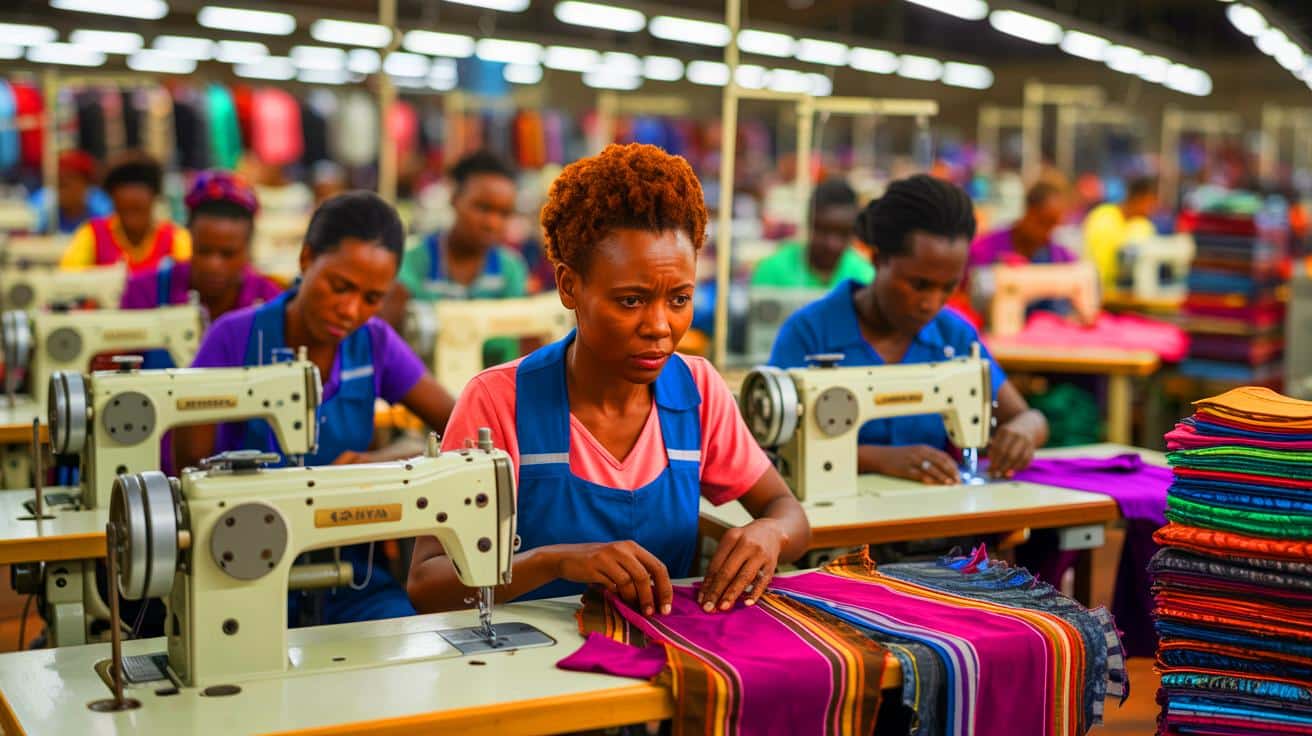
The end of AGOA places more than 66,000 Kenyan jobs at risk, a significant portion of which are held by women. These jobs, primarily in textile and apparel factories, have been a lifeline for many families. In Nairobi’s garment districts, the anxiety over potential job cuts is palpable. For workers like machinist Julia Shigadi, the loss of employment could be devastating. “For all those years this has been my bread and butter. I only depend on this job. So if it is gone, it means my life is gone too,” she laments.
The ripple effects of AGOA’s expiration extend beyond individual livelihoods. The broader economic implications could be profound, affecting not only direct employees but also ancillary industries and services that rely on the textile sector. The potential for widespread economic hardship looms large as the country grapples with this new reality.
Policy Responses and Global Implications
In response to the looming economic challenges, Kenyan President William Ruto has advocated for a five-year extension of AGOA. Speaking at the United Nations General Assembly, he highlighted the critical importance of the agreement for Kenya’s economic stability. However, the U.S. administration under President Trump has shown limited support, proposing a mere one-year extension. This uncertainty complicates the planning and investment strategies of affected industries.
Beyond Kenya, the expiration of AGOA, coupled with new U.S. tariffs, threatens several African economies. Some African nations now face tariffs exceeding 10%, placing them at a disadvantage in the global market. Public policy expert Raphael Obonyo warns of the long-term consequences, stating,
“In the short run, it looks manageable but in the long run, the challenges are going to be devastating and they are going to spill over.”
The need for strategic policy responses is urgent to mitigate these potential economic shocks.
Future Prospects for U.S.-Africa Trade
As AGOA ends, the future of U.S.-Africa trade relations remains uncertain. African nations, now deprived of duty-free access, must navigate a complex trade landscape. The potential for renegotiated trade agreements offers a glimmer of hope, but the path forward is fraught with challenges. The need for diversified trade partnerships and increased competitiveness is more pressing than ever.
For Kenya, exploring avenues beyond AGOA will be essential. Strengthening intra-African trade and expanding markets beyond the U.S. could provide new opportunities. The transition, however, requires strategic investment in capacity building and infrastructure to enhance the global competitiveness of Kenyan industries.
The expiration of AGOA marks a pivotal moment in Kenya’s economic trajectory. As stakeholders navigate this uncertain landscape, the question remains: How will Kenya and other African nations adapt to the changing tides of global trade and secure a sustainable economic future?