


Archaeologists Discover 5,000-Year-Old Monumental Building in Iraq, Shedding New Light on Early Civilization
 By
Kwame Asante
By
Kwame Asante
| IN A NUTSHELL |
|
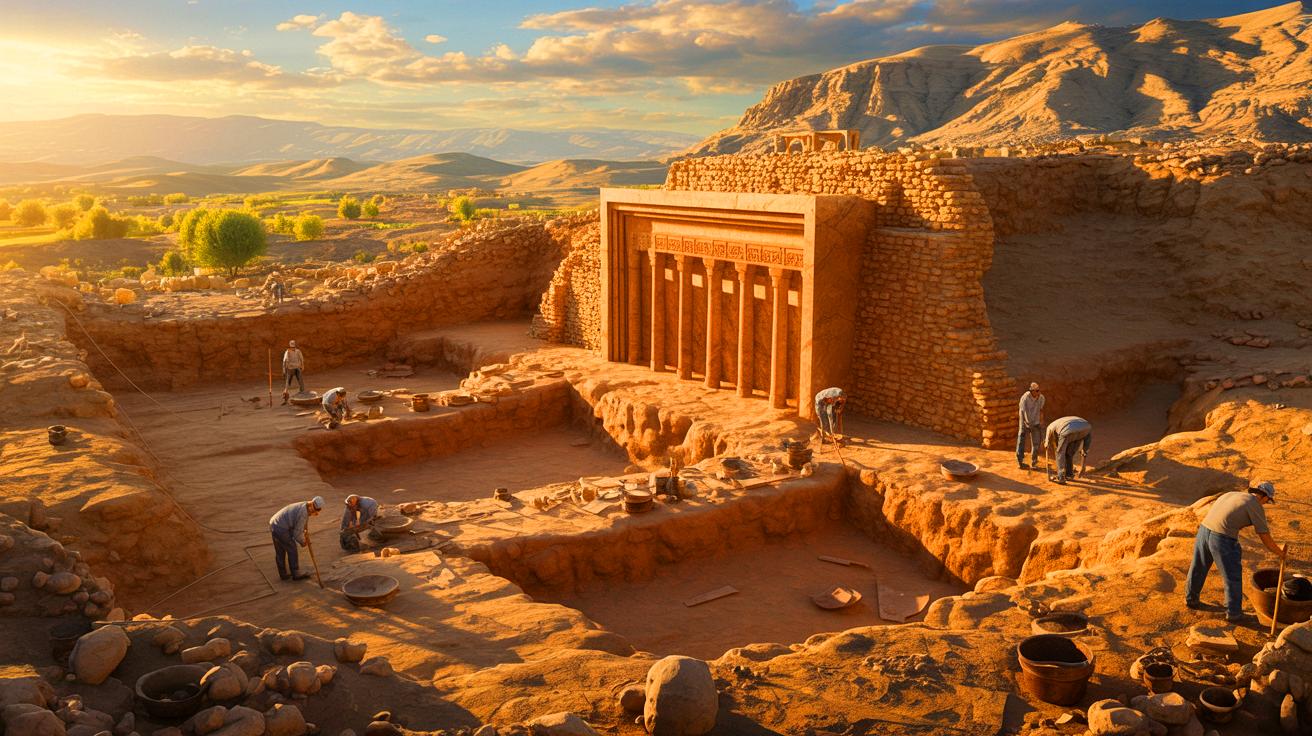
The discovery of a 5,000-year-old cultic space in northern Iraq is reshaping our understanding of early urban societies and their spiritual underpinnings. This significant archaeological find, located in Kani Shaie in the Kurdistan Region, promises a fresh perspective on the religious life of the world’s first cities. With its monumental structure, the site is believed to have been a hub of ritual activities, potentially altering our view of ancient Mesopotamian civilization. As researchers continue their work, this site could provide crucial insights into the early spread of urbanization across the Near East.
Echoes of Uruk: A Monumental Discovery Linking Cities and Faith
An international team, including scholars from the University of Coimbra, has uncovered a vast architectural complex at Kani Shaie. This site is central to understanding the development of early Mesopotamian societies. The newly discovered structure dates back to around 3000 BCE, coinciding with the rise of Uruk, the world’s first major city.
The implications of this find are profound. “If the monumental nature of this building is confirmed,” researchers stated, “the discovery could transform our understanding of Uruk’s relationship with surrounding regions.” This suggests that early Mesopotamian influence might have penetrated further into the highlands than previously thought, challenging existing ideas about the geographic and cultural boundaries of early urbanization.
The architectural layout and artifacts unearthed at the site suggest it served ritual or administrative functions, possibly linked to the dissemination of Urukian religious ideologies. Preliminary evidence points to a complex societal structure where faith, governance, and trade were intertwined, characteristic of early Mesopotamian city-states.
Kani Shaie: A Forgotten Crossroads of Early Civilization
Kani Shaie is strategically situated east of the Tigris River, marking a critical junction between the Mesopotamian lowlands and the Zagros foothills. The site’s extensive occupation history provides a seamless timeline from the Early Bronze Age through the 3rd millennium BCE, crucial for tracing the development of organized societies in the region.
The research team emphasized, “Kani Shaie is regarded as the most important archaeological site east of the Tigris River for understanding the sequence of human occupation from the Early Bronze Age through to the 3rd millennium BC.” This makes it a vital point of reference for mapping the transition from small agrarian villages to the first urban centers.
Artifacts such as pottery fragments, seal impressions, and architectural elements suggest connections between Kani Shaie and the Uruk sphere of influence. These findings support the notion that ideas, goods, and cultural practices circulated broadly across the Mesopotamian frontier, creating a network of shared religious and economic systems.
Rethinking the Birth of Civilization
The discovery at Kani Shaie is contributing to a reevaluation of the traditional narrative of Mesopotamian civilization as a solely southern phenomenon. Instead, it indicates a more intricate model of mutual exchange and cultural hybridity, where peripheral regions actively contributed to shaping early city life.
Researchers are utilizing cutting-edge techniques, including 3D mapping, radiocarbon dating, and geoarchaeological sampling, to reconstruct the site’s original layout and function. These methods could unveil how spiritual spaces were integrated into early political systems and how religion might have influenced the emergence of urban governance.
The interdisciplinary approach employed by the University of Coimbra team combines archaeology, anthropology, and material science, heralding a new phase in Mesopotamian studies. As investigations continue, Kani Shaie may emerge as a crucial link between the sacred landscapes of the past and the origins of organized civilization.
The ongoing excavations at Kani Shaie not only challenge long-standing assumptions but also offer a new lens through which to view the interconnectedness of early civilizations. As researchers delve deeper, the site could reveal how early societies balanced spiritual and political life. What other hidden histories might lie beneath the shifting sands of the Mesopotamian frontier?
Continue reading