


Liberia Faces Backlash Over Landmark Carbon Credit Deal With UAE Firm
 By
Joseph Mwangi
By
Joseph Mwangi
Critics warn that the million-hectare agreement could undermine land rights and environmental governance.
Liberia is facing growing domestic and international criticism over a proposed carbon offset deal that would hand control of nearly 10% of the nation’s land to Blue Carbon, a Dubai-based company founded by Sheikh Ahmed Dalmook Al Maktoum, a member of the Emirati royal family.
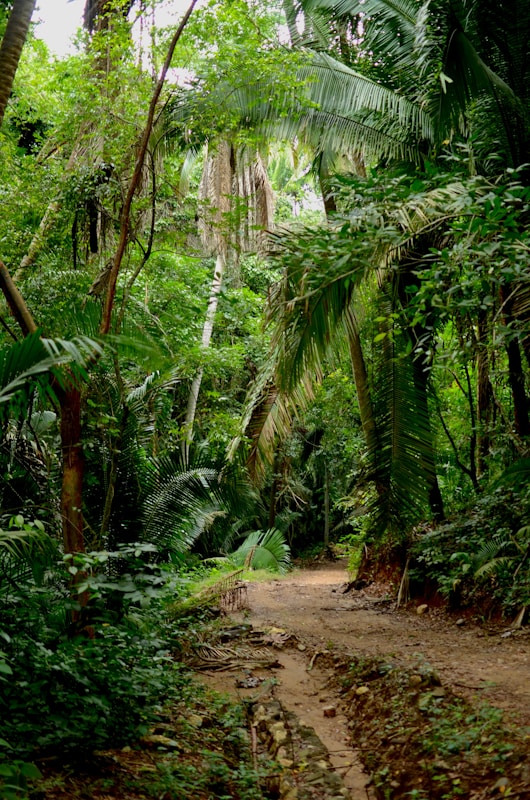
According to a leaked draft of the agreement, the one-million-hectare concession would grant Blue Carbon sweeping rights to manage Liberia’s forests for 30 years, generating carbon credits to sell on international markets. Environmental and community groups warn that the deal could override customary land rights and violate national laws safeguarding community ownership.
A Controversial Partnership
The deal would allow Blue Carbon to develop protected forest areas and market carbon credits either through voluntary carbon markets or bilateral agreements with governments seeking to meet emission targets.
Blue Carbon, launched in October 2022, describes its mission as creating “environmental assets and nature-based solutions” to offset emissions. Within a year, it has signed memoranda of understanding (MOUs) with Tanzania and Zambia to establish similar carbon credit projects.
However, the Liberian proposal represents the company’s most ambitious venture yet – effectively granting it influence over much of the country’s remaining intact rainforest.
Legal and Ethical Concerns
Liberian civil society groups have condemned the proposed agreement. The Independent Forest Monitoring Coordinating Mechanism (IFMCM) – a coalition of seven environmental and community rights organizations – warned that transferring land rights to a foreign company would contradict the 2018 Land Rights Law, a landmark reform recognizing communities’ legal ownership of their ancestral territories.
“Claiming the legal rights to market the forest carbon has clear implications for property rights,” the coalition said. “It affects communities’ rights to decide how their land is used.”
The draft contract requires both parties to make “best efforts” to obtain free, prior and informed consent (FPIC) from affected communities within three months. But experts say it would be logistically impossible to conduct meaningful consultations across hundreds of thousands of residents spanning one million hectares.
The agreement also stipulates that project areas must be free of “encumbrances” – an unrealistic expectation in Liberia, where nearly all rural land is occupied or claimed by local communities. “There is no community in Liberia that is free of encumbrances,” said Jonathan Yiah of the Sustainable Development Institute.
Political and International Reactions
Liberia’s People’s Party has demanded an immediate suspension of talks until affected communities are properly consulted. Meanwhile, 14 environmental organizations from Europe, China, and the United States have criticized the deal for its lack of transparency and unclear benefits for Liberians.
The Daylight, a Liberian environmental news outlet, reported that the country’s forestry authorities made an unusual request for Blue Carbon to bypass the competitive bidding process normally required under national law. Blue Carbon has not responded to media requests for comment.
Forestry Sector Under Scrutiny
The controversy comes amid rising deforestation in Liberia, which ranked among the world’s top 10 countries for deforestation growth between 2020 and 2022, according to the World Resources Institute. Enforcement of forestry laws has weakened, with allegations of illegal logging permits and threats against officials who attempt to uphold regulations.
Proponents of carbon trading argue that such markets could provide sustainable income to governments and communities, reducing the economic pressure to log or mine. But critics warn that, without accountability, carbon projects can replicate the exploitative dynamics of past resource deals.
Questions Over Carbon Integrity
Blue Carbon’s draft contract claims compliance with REDD+ standards, yet it remains unclear how the company will measure the “additionality” – or genuine emissions savings – of its projects. Some of the proposed project sites include existing nature reserves, such as Sapo National Park, raising doubts about whether protecting already protected land can legitimately generate new carbon credits.
“Additionality is a complex thing to assess,” said Jonathan Crook of Carbon Market Watch. “If it’s already a conservation area where logging is prohibited, that raises significant doubts about the credibility of the offset.”
The contract also fails to specify whether credits will be sold through voluntary markets or direct government-to-government deals. Experts like Kate Dooley from the University of Melbourne warn that bilateral carbon trades often lack independent oversight or verification, allowing governments to set their own, opaque rules.
“There doesn’t have to be a third party involved,” Dooley said. “These agreements could be negotiated privately between Liberia and another government – perhaps the UAE – with minimal transparency.”
Profit Sharing and Community Impact
Under the draft terms, Blue Carbon would pay Liberia a 10% royalty on gross revenue from carbon sales and would not owe further payments until it recoups its initial investment. Afterward, the company would pay a 30% share of profits, while remaining exempt from taxes for 10 years.
Roughly half of the proceeds allocated to the government would, in theory, be distributed to communities within the project zones. However, spending decisions would rest with five-member committees dominated by company and government representatives – potentially sidelining community voices.
Similar revenue-sharing schemes in Liberia’s forestry sector have historically failed to deliver. The government still owes nearly US$7 million in logging-related payments to rural communities.
Opacity and Timing
The deal is being negotiated as the UAE prepares to host COP28, where carbon markets and human rights standards are expected to top the agenda. Critics argue that signing such a sweeping agreement ahead of the global climate summit risks undermining Liberia’s environmental credibility.
The draft contract includes a confidentiality clause, meaning the final version may not be publicly disclosed.
“We’re just looking at a contract, and we don’t know what the intentions are,” said Dooley. “But nothing about it looks good. Nothing. I’ve never seen a deal like this on this scale.”