


Ancient Skeletons in Sahara Challenge Understanding of Human Ancestry with Unique DNA, Unrelated to Modern Populations
 By
Kwame Asante
By
Kwame Asante
| IN A NUTSHELL |
|
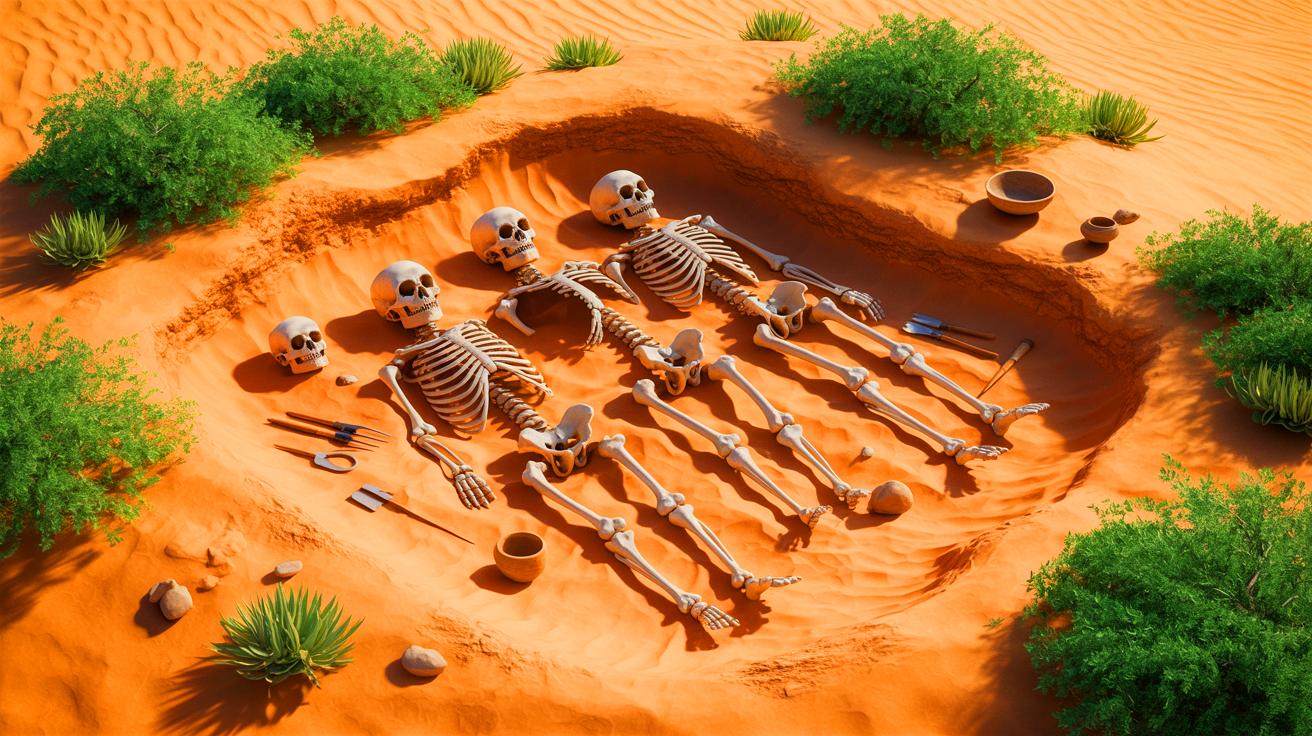
Recent archaeological findings in the Sahara Desert have unveiled a tantalizing glimpse into a long-lost lineage of ancient North Africans. DNA extracted from 7,000-year-old skeletons discovered at the Takarkori rock shelter in Libya reveals a genetic profile disconnected from any known modern populations. This discovery, published in the journal Nature, offers a unique perspective on the prehistoric inhabitants of the region and challenges existing narratives about human migration and cultural evolution in Africa. The research, led by geneticists from the Max Planck Institute, provides a window into a time when the Sahara was not a harsh desert but a thriving, verdant landscape.
The Green Sahara and Its Ancient Inhabitants
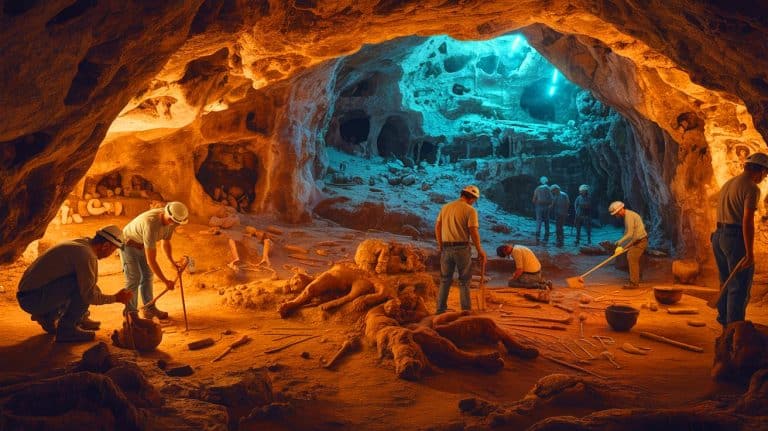
Approximately 7,000 years ago, the Sahara Desert was a vastly different environment. During the African Humid Period, northern Africa experienced significantly wetter conditions, transforming into a patchwork of grasslands, lakes, and savannas. This lush setting supported human communities, as evidenced by archaeological finds at the Takarkori rock shelter. Situated in Libya’s Tadrart Acacus Mountains, this site has revealed traces of human activity spanning over 10,000 years.
The discovery of two women’s remains at Takarkori has been particularly illuminating. Their naturally mummified bodies have provided the first ancient human genomes from the central Sahara. This genetic material, preserved through time, offers insights into the long-lost lineage of these ancient North Africans. The DNA analysis has identified a unique genetic branch, distinct from modern populations, highlighting the diversity that once existed in the region.
The findings contribute to a broader understanding of Africa’s genetic history, a topic that has often been underrepresented in global genetic studies. By examining the genetic makeup of ancient populations, scientists are piecing together the complex tapestry of human evolution on the continent, revealing a rich mosaic of lineages and cultures that have shaped modern populations.
A Pastoral Society and the Spread of Livestock
When the Takarkori women were laid to rest, their community had already transitioned from a hunter-gatherer lifestyle to one rooted in pastoralism. The domestication of cattle, sheep, and goats marked a significant cultural shift, reflecting wider societal changes across the Sahara. This evolution is evident in the burial patterns at Takarkori, where remains predominantly belong to women, children, and teenagers, indicative of a settled society.
The spread of pastoralism across the Sahara appears to have occurred through cultural exchange rather than mass migration. As Nada Salem, the lead researcher, points out, the movement of ideas and practices, such as animal husbandry, was more prevalent than large-scale population displacements.
“This discovery reveals how pastoralism spread across the Green Sahara, likely through cultural exchange rather than large-scale migration.”
The genetic evidence from Takarkori supports this view, suggesting that the population adapted to new practices while maintaining their core identity. Unlike earlier migrations, which often saw one group replacing another, the Takarkori people integrated livestock into their existing way of life, illustrating a more nuanced understanding of cultural diffusion in prehistoric Africa.
Genomic Discoveries and North Africa’s Unique Lineages
One of the study’s most intriguing revelations is the identification of a distinct North African genetic lineage. The Takarkori genomes indicate that these ancient individuals were part of a group that split from other human populations around 50,000 years ago. Over time, this lineage became increasingly isolated, diverging from Sub-Saharan African and Eurasian populations.
Despite subsequent migrations, this ancient genetic signature has not been entirely supplanted. Instead, it persists in the region, influencing modern North African genetics. Similar patterns observed at other archaeological sites, such as Morocco’s Taforalt Cave, underscore the enduring nature of these ancestral lineages.
This discovery challenges previous assumptions about human migration in Africa, revealing a more complex picture of genetic continuity and cultural interaction. It suggests that the genetic diversity seen in contemporary North African populations stems from deep-rooted lineages that have interacted with, but not been overridden by, incoming groups.
Rethinking Human Evolution in the Sahara
The discovery of these ancient genomes invites a reevaluation of human evolution in the Sahara. It underscores the role of the region as a dynamic landscape of human activity, where cultural and genetic exchanges have shaped the course of history. This research highlights the importance of Africa in the broader narrative of human evolution, providing insights into the adaptability and resilience of ancient societies.
As scientists continue to uncover and analyze ancient DNA, new questions arise about the interactions between prehistoric populations and the environment. How did these ancient peoples adapt to the dramatic climatic changes that transformed the Sahara from a fertile expanse to one of the world’s harshest deserts? What do their stories tell us about the resilience of human cultures in the face of environmental adversity? These questions remain at the forefront of exploring humanity’s complex and interconnected past.
Continue reading