



New Trapdoor Spider Discovery Beneath California Beaches Sparks Fascination and Insight into Coastal Biodiversity
 By
Nomvula Dlamini
By
Nomvula Dlamini
| IN A NUTSHELL |
|
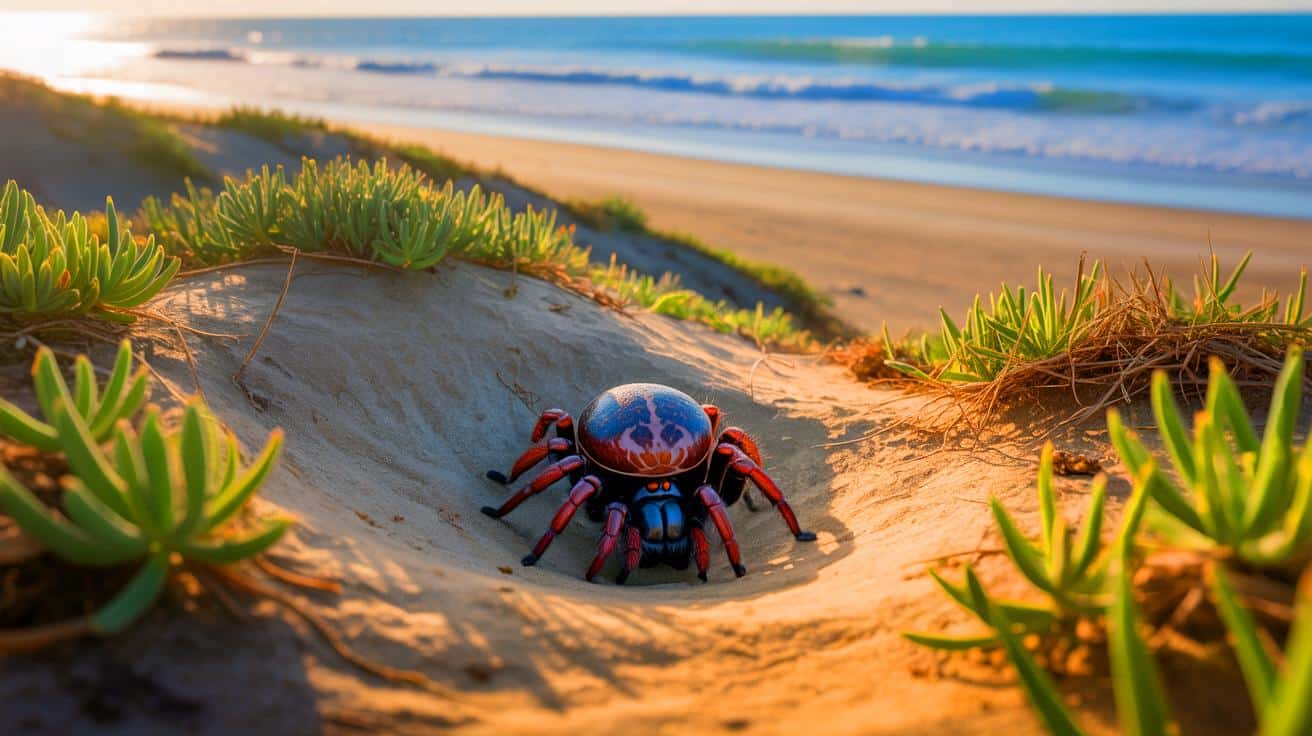
A new species of trapdoor spider has been discovered beneath the sun-drenched beaches of California, offering an intriguing look into the hidden biodiversity of coastal dunes. This remarkable find, situated in areas regularly visited by beachgoers, highlights the rich yet largely unexplored world of arachnids that thrive underfoot. The discovery, published in the journal Ecology and Evolution, underscores how much remains to be discovered in these fragile ecosystems. As scientists continue to uncover new species, this spider adds a vital piece to the puzzle of coastal biodiversity and the ecological roles these small yet significant creatures play.
Hidden Hunters Beneath the Sand
The recent research featured in Ecology and Evolution has unveiled a previously unknown species of trapdoor spider living along California’s coastal dunes. Unlike their web-spinning counterparts, these spiders dig burrows lined with silk and capped with a camouflaged trapdoor, from which they launch their ambushes on unsuspecting prey. According to Jason Bond, a professor in the UC Davis Department of Entomology and Nematology, while over 50,000 spider species are currently documented worldwide, many more remain undiscovered, even in well-trodden coastal areas.
The study identifies four known species of trapdoor spiders native to these dune habitats, each uniquely adapted to its environment. The newly described species boasts a surprisingly wide distribution, ranging from Moss Landing near Monterey to Baja California. This extensive range is particularly notable given the spider’s stationary lifestyle; they rarely leave their burrows, making such a distribution unusual for trapdoor spiders.
“There are now four known species of trapdoor spiders in California that live exclusively in coastal dune habitats,” explained Emma Jochim, the study’s corresponding author and a doctoral student at UC Davis.
Fragile Web of Survival
Despite their seemingly broad range, the future of these spiders is uncertain. Emma Jochim notes that their natural history and behavior limit their ability to spread to new areas, making them particularly vulnerable to environmental changes. Rising sea levels and coastal development pose significant threats to their limited dune habitats.
“They’re definitely at risk, especially the lineage Aptostichus simus,” she added. “The new species has a much wider range, but Aptostichus simus is now really only found in San Diego, and projections for sea-level rise in that area are very grim. These spiders are not really able to adapt that quickly to new habitats.”
These spiders play crucial roles in their ecosystems by regulating insect populations and contributing to overall biodiversity. However, their elusive nature has led to an underestimation of their ecological importance. The potential loss of these species could trigger cascading effects, impacting not just the dunes but the broader ecological network.
Mapping the Unknown
The discovery of this new spider species extends beyond immediate ecological insights, highlighting the broader importance of biodiversity studies. As Emma Jochim notes, understanding the number of species and their genetic diversity is critical for conservation efforts. Without this knowledge, it is challenging to identify which areas require the most protection. Cataloging hidden species like these spiders provides a clearer picture of global biodiversity and identifies at-risk habitats.
These findings support a growing movement among biologists to study and preserve lesser-known creatures before they disappear. California’s coastal dunes, while familiar to many, remain one of the state’s most enigmatic landscapes, holding evolutionary secrets just beneath the surface.
A Call for Greater Awareness
The trapdoor spider’s discovery underlines a critical need for more comprehensive research and conservation strategies to protect the biodiversity of California’s coastal dunes. These dunes, teeming with life, are often overlooked in conservation discussions. By directing attention to these habitats, researchers hope to foster a deeper understanding and appreciation for the complex ecosystems that exist in seemingly mundane environments.
As climate change and human activities continue to threaten these fragile ecosystems, the need for proactive conservation measures becomes increasingly urgent. The trapdoor spider serves as a symbol of the hidden wonders that nature has yet to reveal, urging us to consider the ecological significance of even the smallest inhabitants of our planet.
The discovery of this new trapdoor spider species invites us to reflect on the vast array of life that remains unexplored. What other hidden species might be living right beneath our feet, waiting to be discovered? As we continue to explore and document our natural world, how will we balance the demand for development with the need to preserve these critical ecosystems?