

Archaeologists Discover Ancient Roman Camp High in the Alps, Offering New Insights into Roman Military History
 By
Kwame Asante
By
Kwame Asante

| IN A NUTSHELL |
|
In a remarkable archaeological breakthrough, researchers have uncovered a Roman military camp perched 7,000 feet above sea level in the Swiss Alps. This discovery offers unprecedented insights into the tactical brilliance of the Roman Empire, revealing strategies that enabled the Romans to dominate diverse terrains and expand their influence across Europe over 2,000 years ago. The site, unveiled by a team from the University of Basel, illuminates the complex military operations and daily lives of Roman soldiers in this rugged landscape. As researchers continue to piece together the past, the findings promise to enrich our understanding of Roman military prowess and its enduring impact on European history.
The Roman Military Camp in the Swiss Alps: A Monument to Roman Strategy
The recent discovery of a Roman military camp at Colm la Runga in the Swiss Alps marks a significant advancement in our understanding of Roman military strategy. Located at a staggering 7,000 feet above sea level, the camp offers a unique vantage point, providing Roman soldiers with sweeping views of the surrounding valleys and mountain passes. This strategic positioning was no accident; it was a deliberate choice that allowed the Romans to maintain control over critical geographical features in the region now known as Switzerland.
The camp overlooked four key valleys – Landwassertal, Albulatal, Domleschg, and Surses – as well as the crucial Lenzerheide mountain pass. These vantage points were vital for monitoring troop movements and defending against potential threats. The well-preserved site, with its ditches, walls, and ramparts, serves as compelling evidence of the sophisticated military strategies employed by the Romans to navigate and control such challenging landscapes. This discovery not only sheds light on the Roman army’s presence in the Alps but also on their broader territorial ambitions and military acumen.
Archaeological Techniques That Revealed the Hidden Camp
The uncovering of the Roman military camp in the Swiss Alps was not a straightforward excavation but rather a triumph of modern archaeological techniques. The use of LiDAR (Light Detection and Ranging) technology was instrumental in identifying the site. LiDAR employs laser pulses to generate detailed topographical maps, revealing subtle elevation changes that are invisible to the naked eye. This advanced technology enabled researchers to detect the artificial fortifications of the hilltop, despite the site’s remote and rugged location.
The Canton of Graubünden played a pivotal role in supporting this research, emphasizing the historical importance of the discovery. The camp is now a focal point in a broader investigation into Roman warfare and territorial expansion. As researchers delve deeper into the site’s history, they are uncovering how Roman forces maneuvered through the Alps, providing fresh insights into the scope and sophistication of their military operations. This technological approach represents a significant leap forward in archaeological methods, allowing us to uncover hidden truths about ancient civilizations.
The Artifacts Speak: What They Reveal About Roman Military Life
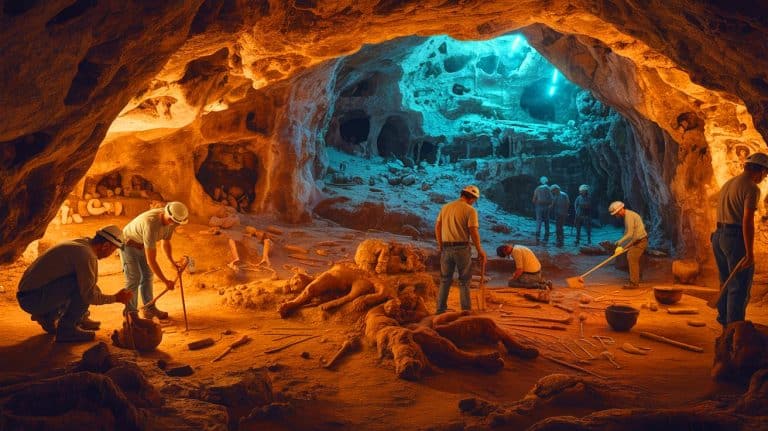
The artifacts unearthed from the site offer a window into the daily lives of Roman soldiers stationed at such high-altitude outposts. Among these discoveries are lead sling bullets, some bearing the emblem of the Roman 3rd Legion. These artifacts not only highlight the types of weaponry used by Roman soldiers but also establish a direct connection to specific Roman military campaigns in the region.
Additionally, the discovery of boot nails provides tangible evidence of the challenging conditions faced by Roman troops as they traversed the treacherous mountain terrain. These artifacts contribute to a more comprehensive understanding of Roman military life, offering a glimpse into the practical realities of maintaining control over vast and difficult landscapes. By examining these relics, researchers can reconstruct the experiences of Roman soldiers and gain insights into the logistical and tactical challenges they overcame.
Strategic Military Insights: Connecting the Past with Modern Understanding
The discovery of the Roman military camp at Colm la Runga offers profound historical insights into the empire’s expansion strategies. A representative from the University of Basel noted, “The discovery of the Roman military camp at Colm la Runga allows us to precisely trace the advance of Roman forces over 2,000 years ago from Bergell over the Septimer Pass to the Tiefencastel area and onward toward Chur and the Alpine Rhine Valley.”
This revelation is crucial for historians studying the Roman Empire’s territorial ambitions and its efforts to consolidate control over newly acquired regions. Roman military camps like Colm la Runga were not merely places for soldiers to rest and resupply. They were integral to maintaining dominance over strategic mountain passes and valleys, securing trade routes, and defending against potential invasions. This discovery underscores the significance of military strategy in the Roman Empire’s success, highlighting how the Romans leveraged geography to their advantage and maintained control over expansive territories.
Why the Swiss Alps? The Role of the Alps in Roman Strategy
While the Swiss Alps might seem an unusual location for Roman military outposts, their strategic significance is undeniable. The Alps served as a natural barrier between the Roman Empire and rival territories, making them crucial for maintaining control. The Romans were adept at exploiting the landscape, establishing military camps in locations that allowed them to monitor enemy movements and protect key passes and valleys.
The camp at Colm la Runga, for instance, was strategically positioned to oversee movement through the Septimer Pass – a critical route leading from Bergell over the Alps toward Roman territories in northern Italy. By stationing soldiers in such high, remote locations, the Romans ensured they could respond swiftly to any military threats while securing essential trade and communication routes. This strategic foresight underscores the Roman Empire’s ability to adapt to challenging environments and maintain its expansive reach across Europe.
The discovery of the Roman military camp at Colm la Runga is not just an archaeological achievement; it is a testament to the enduring legacy of the Roman Empire’s strategic genius. Through modern technology and meticulous research, we gain a deeper understanding of how the Romans navigated and controlled difficult terrains. As more discoveries emerge, they will continue to shape our comprehension of Roman influence in the Swiss Alps and beyond. What new insights will future excavations reveal about this fascinating chapter of history?
Continue reading