



Terror Bird Fossil Discovery in Colombia Reveals Insights Into Ancient Predators and Prehistoric Ecosystems
 By
Joseph Mwangi
By
Joseph Mwangi
| IN A NUTSHELL |
|
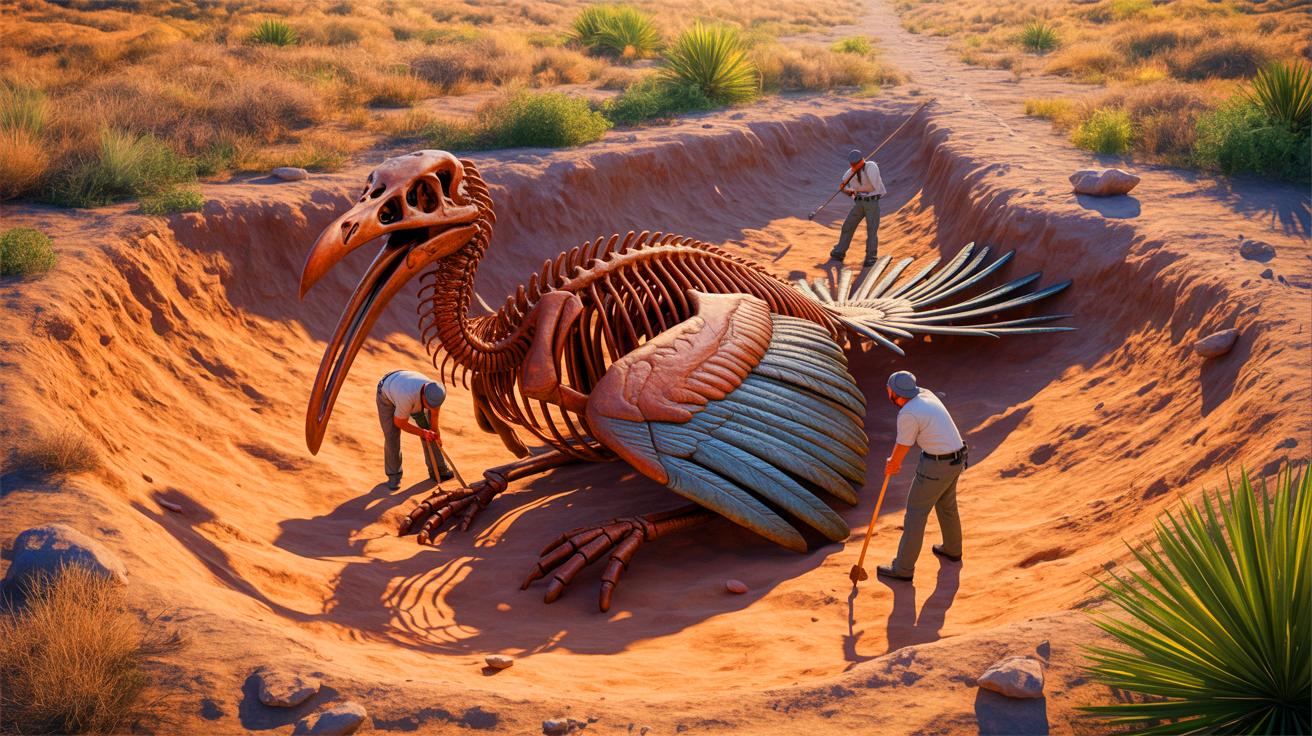
The discovery of a fossil in Colombia’s Tatacoa Desert has illuminated the existence of a colossal prehistoric predator known as the terror bird. This fossil, a tibiotarsus or lower leg bone, belonged to a species that lived approximately 12 million years ago. Remarkably, this species is estimated to have been between 5% and 20% larger than any previously known terror bird. The revelation offers significant insights into the ecological dynamics of ancient South America, where these flightless birds once reigned supreme. This finding not only contributes to our understanding of prehistoric ecosystems but also challenges previous notions about the geographic distribution of these formidable predators.
Terror Birds: Giants of Prehistoric South America
The terror birds, scientifically known as Phorusrhacidae, were apex predators during the Cenozoic era. These formidable creatures were characterized by their enormous size, powerful legs, and menacing, hooked beaks. Unlike modern birds, terror birds were flightless and relied on their speed and strength to hunt and capture prey. “Terror birds lived on the ground, had limbs adapted for running, and mostly ate other animals,” asserts Dr. Siobhán Cooke, a researcher from Johns Hopkins University School of Medicine.
The recently unearthed fossil provides an invaluable glimpse into the life of these ancient predators. It was discovered at the La Venta fossil site, offering a temporal marker that ties it to the middle Miocene period. The fossil’s size, estimated to be significantly larger than previously known specimens, suggests that this bird was a dominant force within its ecosystem. It lived in an era when South America was isolated, leading to the evolution of unique and sometimes gigantic creatures.
A Monumental Size: Breaking New Ground in Paleontology
The discovery of this fossil is groundbreaking due to its sheer size. Previous findings indicated that terror birds ranged from 3 to 9 feet tall. However, this new specimen suggests a much larger bird, potentially reshaping our understanding of its role within its environment. “Previously discovered fossils indicate that terror bird species ranged in size from 0.9 to 2.7 meters (3-9 feet) tall,” explains Dr. Cooke. This larger size likely aided the bird in hunting and defending itself against other predators.
Utilizing advanced imaging techniques, researchers were able to measure the fossil without causing damage. The comparison of this fragment with other known fossils has enabled scientists to estimate the full size of this bird. Additionally, the fossil’s location in northern South America expands the known territory of terror birds, suggesting they roamed a much larger area than previously thought.
A Clash with Giants: Evidence of Predator vs. Predator
The fossil not only informs us about the size and distribution of these birds but also reveals interactions with other predators. Bite marks on the leg bone are consistent with those made by a gigantic caiman, an extinct crocodilian that could grow up to 30 feet long. This evidence points to a violent encounter, possibly at the water’s edge, between the terror bird and the caiman. “We suspect that the terror bird would have died as a result of its injuries given the size of crocodilians 12 million years ago,” Dr. Cooke notes.
This encounter sheds light on the perilous environment in which these birds lived. It suggests that terror birds, despite their predatory prowess, were not invincible. They faced significant threats from other large predators, which shaped their behavior and evolution. This fossil captures the dynamic and often dangerous interactions that characterized ancient ecosystems.
Understanding Ancient Ecosystems
The discovery contributes to a broader understanding of the Miocene ecosystem, a period before the connection of North and South America. During this time, South America hosted a variety of land and aquatic predators. Terror birds were crucial components of this ecosystem, occupying a high trophic level. The presence of both terrestrial and aquatic dangers created a complex environment where survival required both strength and adaptability.
The study, published in the journal Paleontology, emphasizes the importance of predator-prey interactions in shaping ancient ecosystems. By examining these dynamics, researchers gain insights into ecological shifts and evolutionary pressures of the time. This research not only enriches our understanding of terror birds but also provides a window into the broader ecological history of South America.
As we continue to uncover fossils like the terror bird, our understanding of prehistoric life deepens. These discoveries challenge our assumptions and invite us to reconsider the complexity of ancient ecosystems. What other secrets might still lie buried, waiting to be discovered in the expansive tapestry of Earth’s history?
Continue reading