



Clarion Island Iguanas Reveal Ancient Roots, Living Unchanged for 425,000 Years Before Human Arrival
 By
Kwame Asante
By
Kwame Asante
| IN A NUTSHELL |
|
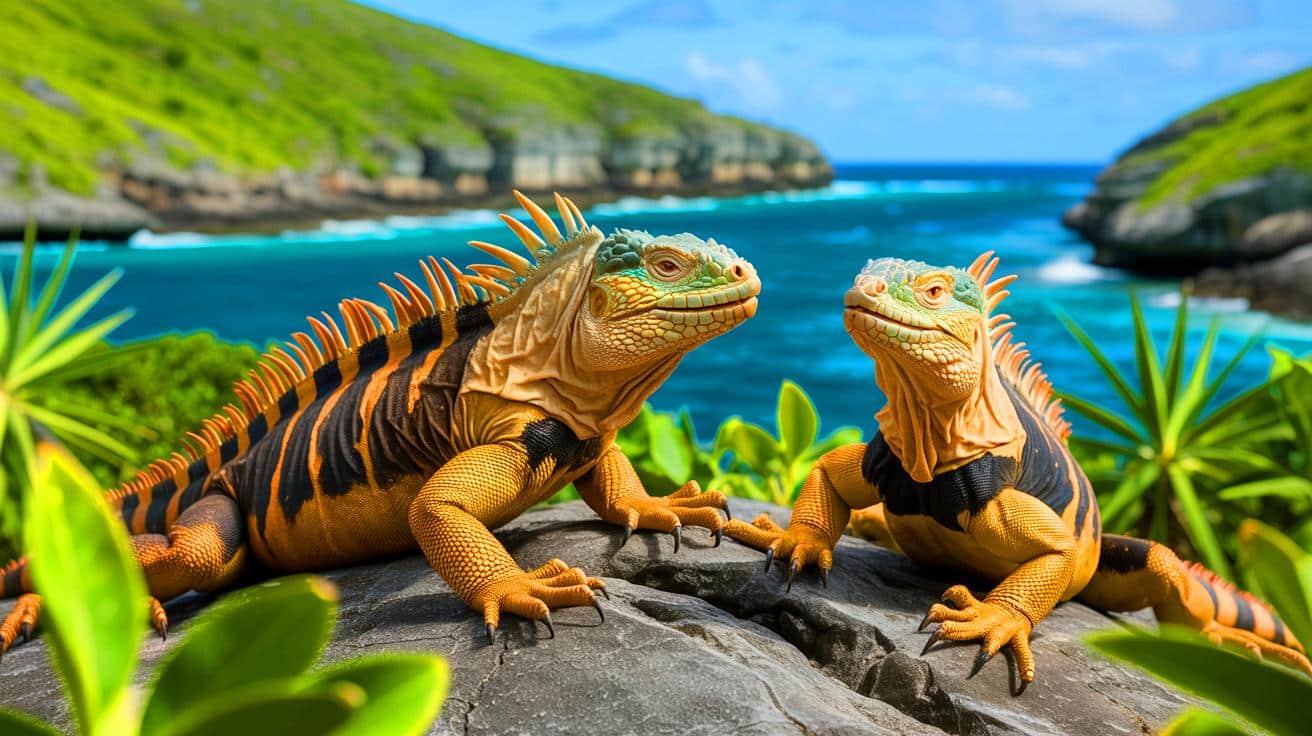
On the remote Clarion Island, a recent discovery has rewritten the history of its spiny-tailed iguanas. These iguanas, once thought to be a product of human introduction, are now believed to have existed on the island for 425,000 years, long before humans arrived in the Americas. This groundbreaking revelation challenges previous assumptions about the island’s wildlife and highlights the complex interplay between natural history and human impact. The study, published in Ecology and Evolution, provides new insights into the evolutionary journey of these iguanas and forces a reconsideration of conservation strategies on the island.
The Mysterious History of Clarion Island’s Iguanas
Clarion Island, located off Mexico’s western coast, has long intrigued scientists due to its unique ecology and distinct wildlife. Among its notable inhabitants are the spiny-tailed iguanas, Ctenosaura brachylopha. Until recently, the origins of these iguanas were debated. It was widely believed that they were introduced by humans in the mid-20th century, when the Mexican military established a base on the island. Along with this military presence came domesticated animals like sheep, pigs, and rabbits, which altered the island’s ecology. This led scientists to assume that the iguanas were also part of this human-induced disruption.
However, recent findings suggest a far more ancient story. Genetic analyses indicate that these iguanas arrived much earlier, long before humans set foot in the Americas. The divergence between the Clarion Island iguanas and their mainland relatives is estimated to have occurred approximately 425,000 years ago. This predates human migration to the continent, which is believed to have occurred around 16,000 years ago. As a result, the iguanas should be recognized as native fauna, prompting a reevaluation of wildlife management on the island.
DNA Evidence Unveils the True Origins
The pivotal shift in understanding came from DNA analysis. Researchers, including those from the Museum für Naturkunde in Berlin, scrutinized the genetic makeup of a Clarion Island iguana specimen. They compared it with mainland spiny-tailed iguanas and found clear evidence of a deep evolutionary link. Using Bayesian evolutionary methods, the researchers estimated that the species diverged from its mainland relatives around 425,000 years ago. This finding suggests that the iguanas’ presence is not a recent phenomenon but part of a long evolutionary history.
The study proposes that the iguanas, like many other species in the Revillagigedo Archipelago, likely reached the island via water dispersal. This could have involved floating mats of vegetation, a method that has helped other reptiles and birds colonize remote islands. This new understanding not only reshapes the narrative of Clarion Island’s wildlife but also highlights the resilience and adaptability of these iguanas over millennia.
The Role of Humans in Shaping the Island’s Ecology
Human activities have significantly impacted Clarion Island’s ecology, particularly during the 20th century. The introduction of non-native species such as sheep, pigs, and rabbits drastically altered the landscape. These animals cleared dense vegetation, paving the way for invasive species to take hold and threaten the island’s endemic wildlife. During this period, biologists first observed the iguanas and mistakenly assumed they were part of the introduced fauna.
It was only later, with a fresh look at historical and genetic data, that researchers began questioning this assumption. The dense vegetation that initially concealed the iguanas from explorers might have allowed them to go unnoticed for years. As invasive species peaked in the 1970s and vegetation was cleared, the iguanas became more visible, leading to their misidentification as non-native. The recent findings underscore the need for a nuanced understanding of the island’s ecological history.
Implications for Conservation and Wildlife Management
This newfound understanding of the iguanas’ ancient origins has significant implications for conservation efforts on Clarion Island. Recognizing the iguanas as native fauna shifts the focus from managing them as an introduced species to protecting them as an integral part of the island’s ecosystem. This calls for a strategic approach to conservation that considers the iguanas’ historical presence and their role in maintaining ecological balance.
The need to reassess wildlife management practices highlights a broader challenge: balancing human activities with the preservation of natural ecosystems. As researchers continue to uncover the island’s complex history, they must address how best to protect its unique biodiversity. This includes considering how past assumptions may have influenced conservation strategies and working to ensure that future efforts are informed by the latest scientific insights.
The revelation of the iguanas’ ancient lineage invites a deeper reflection on how we understand and interact with natural environments. As conservationists and scientists reevaluate their approaches, a critical question remains: How can we effectively integrate new scientific findings into sustainable conservation practices that honor both history and biodiversity?
Continue reading